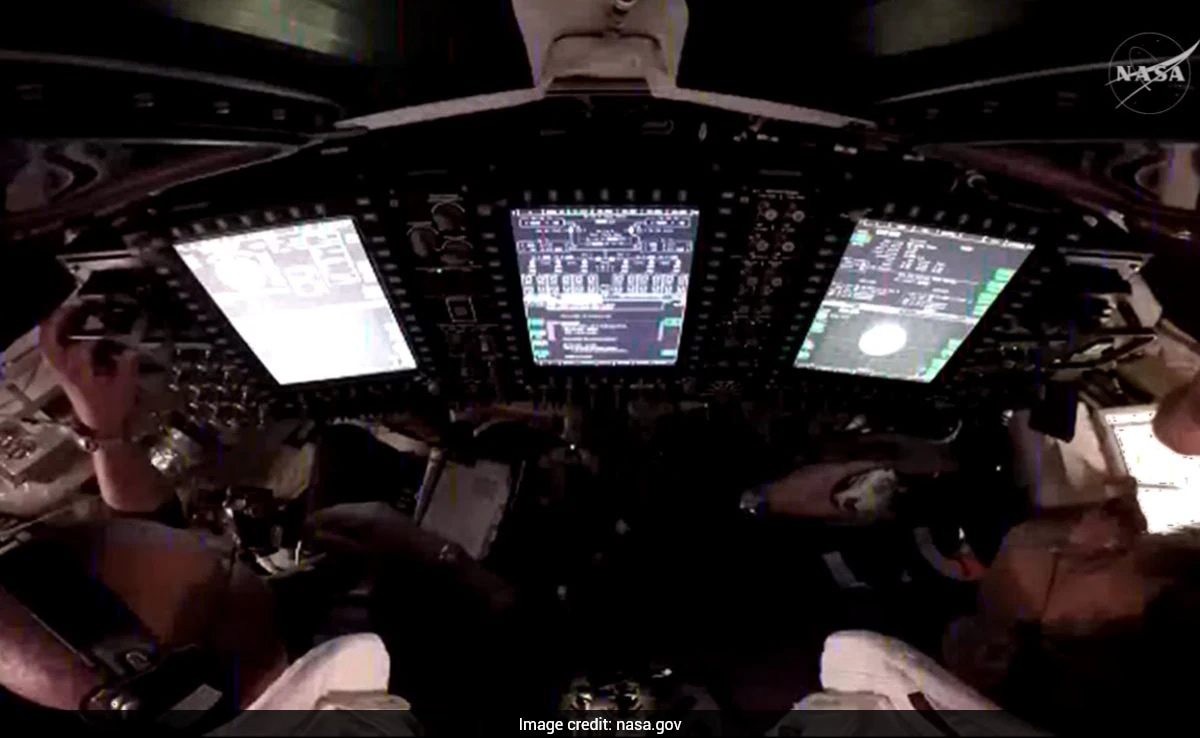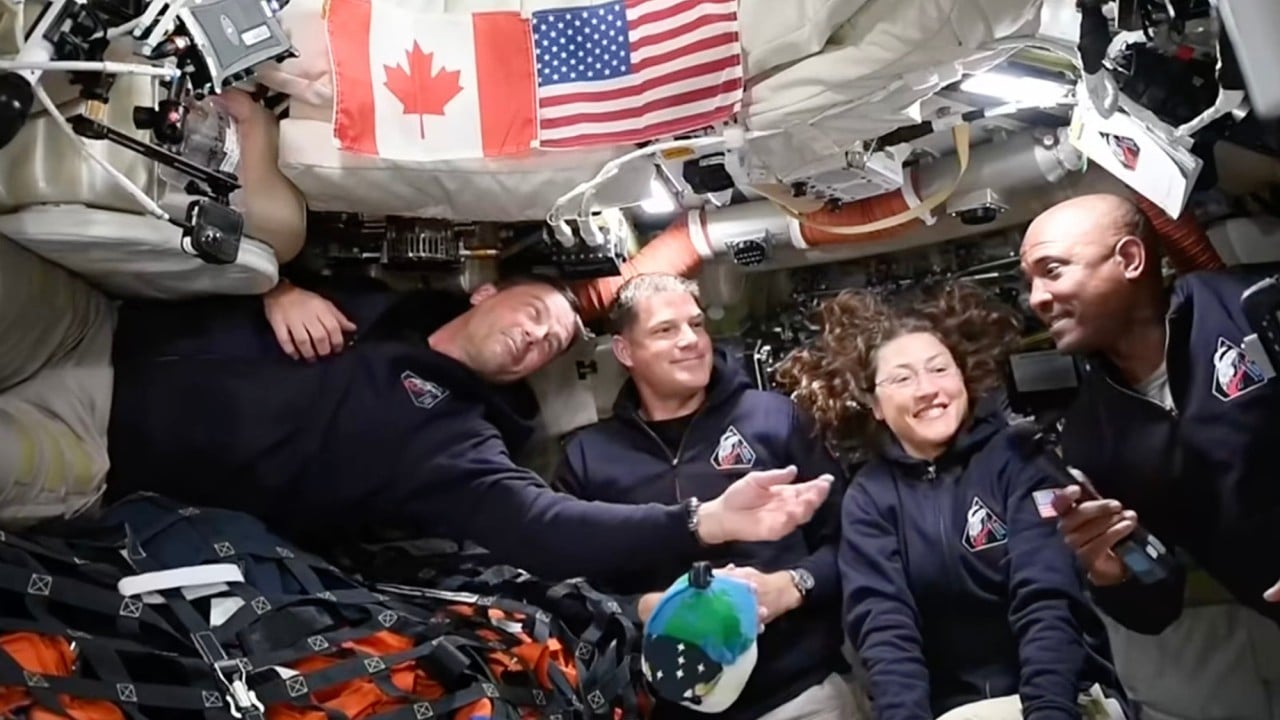
Imagine being 200,000 miles from the nearest plumber with a $30 million toilet that won’t flush. That’s not a hypothetical nightmare; it’s the reality for the four astronauts currently hurtling toward the moon on NASA’s Artemis II mission. While the world watches the sleek Orion capsule break distance records, the crew is busy fighting a battle against floating waste and "blinking amber lights" on the dashboard.
It’s easy to joke about, but in the vacuum of space, a broken toilet isn't just an inconvenience. It’s a mission-critical failure that can end a multi-billion dollar trip before it even reaches lunar orbit.
The $30 Million Plumbing Problem
The Artemis II crew—Reid Wiseman, Victor Glover, Christina Koch, and Jeremy Hansen—launched on April 1, 2026, marking the first time humans have headed for the moon in over 50 years. But just an hour after liftoff, the high-tech Universal Waste Management System (UWMS) essentially quit. Christina Koch had to call Houston to report a "urine filter without beads" and a jammed fan.
This isn't your bathroom at home. On Earth, gravity does the heavy lifting. In microgravity, you need a complex system of suction and airflow to ensure that what goes out doesn't come back to haunt you. When the fan jams, the suction dies. When the suction dies, you’re looking at a scenario where waste could literally drift through the cabin.
Ground teams in Houston spent hours walking Koch through a "space plumbing" routine. They eventually got it running, but as of April 4, the system is still acting up. Engineers now suspect that ice might be blocking the external vent lines, preventing urine from being flushed overboard.
Why We Can’t Just Use Bags Like Apollo
People love to point out that the Apollo astronauts didn't have a toilet. They used "relief tubes" for pee and plastic bags taped to their backsides for everything else. It was gross, it smelled terrible, and yes, there are actual mission transcripts of "stray" waste floating through the Apollo 10 cabin.
But we aren't in the 1960s anymore. Artemis II is a 10-day mission, but the goal is to build a sustainable presence on the moon. You can’t ask a crew to live in a floating petri dish for weeks or months. The UWMS was designed to be:
- More inclusive: Specifically designed to accommodate female astronauts (like Koch), which the old Apollo "condom-style" tubes definitely didn't.
- Compact: It fits into a space about the size of a small airplane lavatory, tucked into the floor of the Orion capsule.
- Privacy-oriented: Unlike previous missions, there’s actually a door and a curtain.
NASA spent roughly $30 million developing this system because managing human waste is one of the hardest engineering challenges in spaceflight. If you can’t manage the biology of the humans on board, the fancy rockets don't matter.
The Reality of Space Plumber Duty
Right now, the crew is toggling between the UWMS and "Collapsible Contingency Urinals" (CCUs). These are basically high-tech bags. It’s the ultimate backup plan, but it’s messy and creates a massive storage headache.
The smell is also becoming an issue. NASA officials confirmed that the crew reported a lingering odor in the cabin. In a sealed environment like Orion, which is about the size of two SUVs, there’s nowhere for that smell to go. The life support system has to work overtime to scrub the air, adding more strain to a spacecraft already pushing its limits.
The Mission Beyond the Commode
Despite the plumbing drama, Artemis II is making history. On Monday, April 6, the crew will reach the lunar far side. They’re on track to break the distance record set by Apollo 13, traveling over 252,000 miles from Earth.
Victor Glover is the first person of color to head to the moon; Christina Koch is the first woman. Jeremy Hansen is the first non-American. These are the details that will be in the history books, but the "space toilet saga" tells us more about the bridge between "getting there" and "staying there."
What Happens if it Breaks Permanently
If the UWMS fails completely before the return trip, the crew will have to rely entirely on fecal collection bags and urine bags for the remaining days of the mission. It won't stop them from orbiting the moon, but it will make the 40,000 km/h reentry on April 10 incredibly unpleasant.
NASA is using these glitches as data points. Every time a fan jams or a valve freezes, it’s a lesson for the Artemis III mission, which aims to actually land humans on the lunar surface. We’re learning that deep space isn't just about big engines; it's about the small, gritty details of keeping humans alive and clean in a place that wants to kill them.
If you’re following the mission, don't just look at the moon photos. Listen to the NASA live feeds for the "IT support" calls between Houston and Orion. It’s a reminder that even the most advanced explorers in history still have to deal with the same basic human problems we do—just with much higher stakes and no way to open a window.