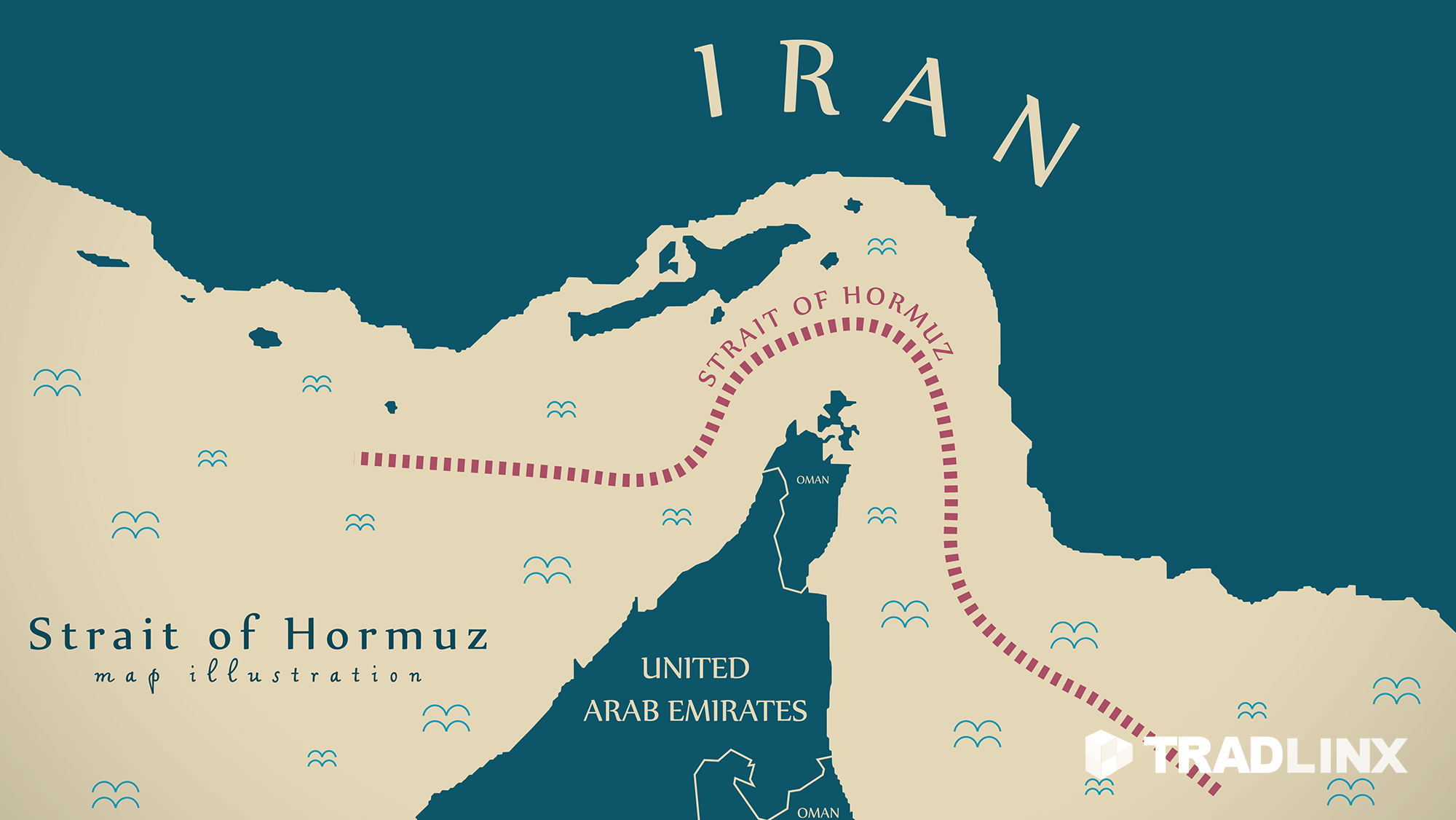
South Korea’s industrial economy functions as a high-velocity processing engine that converts imported caloric and hydrocarbon energy into high-value exports. This model contains a fundamental structural flaw: an extreme dependency on the Strait of Hormuz, through which roughly 70% of the nation’s crude oil imports pass. Any disruption in Iranian supply or a broader regional escalation does not merely increase prices; it threatens the physical continuity of the South Korean manufacturing sector. The current volatility in the Middle East exposes the fragility of a "Just-in-Time" energy procurement strategy in a deglobalizing geopolitical environment.
The Triad of Macroeconomic Pressure
The impact of an Iranian oil shock on Seoul is best understood through three distinct transmission vectors: the input cost surge, the currency devaluation spiral, and the manufacturing margin squeeze.
1. The Input Cost Surge
South Korea’s refining capacity is among the largest in the world. Its refineries are specifically calibrated to process Middle Eastern medium and heavy crudes. While light sweet crude from the United States or West Africa can be substituted, the technical configuration of these plants means that switching costs are non-trivial. A sudden removal of Iranian barrels or a blockade of the Strait forces refiners to bid for spot cargoes in an overheated market. This creates an immediate "tax" on every sector of the Korean economy, from the petrochemical giants in Ulsan to the logistics networks in Gyeonggi.
2. The Currency Devaluation Spiral
South Korea is an energy-dependent importer with a trade-weighted currency. When oil prices spike, the demand for US Dollars to settle energy contracts increases. This puts downward pressure on the Won. A weaker Won then makes future oil purchases even more expensive in local terms, creating a self-reinforcing inflationary loop. The Bank of Korea (BoK) finds itself in a policy trap: raising interest rates to protect the currency risks crushing domestic consumption, while holding rates steady risks a capital flight and runaway imported inflation.
3. The Manufacturing Margin Squeeze
Unlike service-based economies, South Korea’s GDP is heavily weighted toward energy-intensive sectors: semiconductors, shipbuilding, steel, and automotive.
- Semiconductors: While the power cost is a smaller fraction of the final chip value, the chemical precursors derived from petroleum are essential.
- Steel and Shipbuilding: These industries operate on razor-thin margins. A sustained 20% increase in energy costs can flip a profitable quarter into a catastrophic loss.
- Petrochemicals: This sector uses naphtha as a primary feedstock. If naphtha prices rise in lockstep with crude, the entire downstream value chain—plastics, resins, and synthetic fibers—becomes uncompetitive against North American rivals who utilize cheaper ethane from shale gas.
Strategic Petroleum Reserves and the Illusion of Safety
South Korea maintains a Strategic Petroleum Reserve (SPR) managed by the Korea National Oil Corporation (KNOC). While the government frequently cites a 90-day supply buffer, this metric is deceptive.
The 90-day figure represents total consumption under normal operating conditions. In a true "worst-case scenario" involving a total cessation of Middle Eastern flows, the industrial demand would likely be prioritized, leading to severe rationing in the civilian sector. Furthermore, the SPR is not a monolithic tank of usable fuel; it is a mix of crude oil and refined products. The time required to process crude reserves into usable diesel or aviation fuel creates a temporal bottleneck that could disrupt logistics within days of a supply shock.
The strategic limitation of the SPR is that it is a finite bridge, not a solution. If a conflict in the Persian Gulf extends beyond a single fiscal quarter, the reserve depletion rate would force the South Korean government to implement draconian "Energy Emergency" protocols, likely involving mandatory factory shutdowns to preserve heating and power for the general population during winter months.
Technical Substitution and the Infrastructure Gap
A common rebuttal to the Iran shock thesis is the possibility of sourcing oil from the United States, Brazil, or the North Sea. However, this ignores the logistical physics of the global tanker market.
South Korea’s maritime infrastructure is optimized for the "Middle East to East Asia" route. The Very Large Crude Carriers (VLCCs) that service this route represent a specialized segment of the global fleet. Rerouting supply from the Atlantic Basin adds 15 to 20 days to the transit time. This "floating inventory" requires significantly more capital to finance and increases the vulnerability of the supply chain to maritime bottlenecks like the Cape of Good Hope.
Moreover, the chemical composition of crude matters. South Korean refineries are designed for "sour" crude (high sulfur content). Much of the incremental growth in global supply, particularly from US shale, is "light sweet" crude. Processing light sweet crude in a refinery optimized for heavy sour crude leads to suboptimal yields and higher wear on the equipment. The capital expenditure required to retool these refineries is measured in billions of dollars and years of construction, making it an ineffective response to a sudden geopolitical crisis.
The Geopolitical Risk Premium and Credit Markets
The "Worst-Case Scenario" planning in Seoul is not just about the physical arrival of oil; it is about the cost of credit. South Korean conglomerates (Chaebols) rely on massive amounts of short-term debt to fund operations. When the perceived risk of an energy-driven economic collapse increases, the "Korea Discount" in international credit markets widens.
This increases the cost of borrowing for firms like Samsung, Hyundai, and SK Hynix. In a high-oil-price environment, these firms face a "double hit": their operational costs go up while their financing costs also rise. This creates a liquidity crunch. The South Korean government has historically stepped in to provide liquidity, but its ability to do so is constrained by its own debt-to-GDP ratio and the need to maintain foreign exchange reserves to defend the Won.
Structural Decoupling as a Survival Imperative
To mitigate the recurring threat of an Iranian oil shock, South Korea is forced to accelerate three structural shifts, each with its own set of risks and limitations.
- Nuclear Baseload Expansion: The current administration has reversed the previous "nuclear phase-out" policy. By increasing the share of nuclear power in the grid, South Korea reduces its reliance on LNG and oil for electricity generation. However, this does not solve the petrochemical feedstock problem or the liquid fuel requirements for heavy transport.
- Hydrogen Economy Infrastructure: South Korea is betting heavily on hydrogen, particularly for heavy industry and long-haul shipping. The logic is to decouple industrial activity from carbon-based fuels. The limitation here is that "green" hydrogen requires massive amounts of renewable energy that the mountainous Korean peninsula struggles to produce, while "blue" hydrogen still requires natural gas imports.
- The US-ROK Energy Alliance: Increasing the volume of long-term supply contracts with US producers is a primary diplomatic goal. This reduces the Strait of Hormuz risk but introduces a different risk: dependency on a single, increasingly protectionist superpower.
The Probability of a "Hormuz Closure"
Analysts must distinguish between a price spike and a physical blockade. A price spike is manageable through fiscal policy and SPR releases. A physical blockade of the Strait of Hormuz is an existential threat to the South Korean state.
Iranian military doctrine emphasizes "A2/AD" (Anti-Access/Area Denial) in the Gulf. This includes the use of fast attack craft, sea mines, and shore-based anti-ship missiles. For South Korea, the primary risk is not that Iran targets Korean tankers specifically, but that the resulting spike in insurance premiums (War Risk Surcharge) makes it economically impossible for shipowners to enter the Gulf.
The moment Lloyd’s of London or other major insurers declare the Persian Gulf a "no-go" zone, South Korea’s energy supply effectively ceases, regardless of the physical status of the tankers. This "financial blockade" is a much more likely trigger for a crisis than a physical sinking of ships.
Strategic Recommendation for Industrial Navigators
The current situation demands a departure from traditional procurement. Organizations must move beyond "average price" forecasting and adopt a "volatility-first" model.
The immediate strategic play is the aggressive build-out of private-sector storage capacity and the diversification of refinery inputs toward non-Hormuz origins, even at the cost of short-term margin compression. Companies must also stress-test their liquidity under a "Won-Devaluation" scenario where the currency hits 1,500 KRW/USD or higher.
The era of cheap, reliable Middle Eastern energy is over. The "worst-case" is no longer a tail risk; it is a structural probability that must be priced into the core of every South Korean business strategy. The focus must shift from "efficiency" to "resilience," prioritizing the security of the physical supply over the optimization of the purchase price.
Monitor the spread between Dubai and Brent crude; as this narrows or flips, it signals the market's internal pricing of the Hormuz risk. Increase hedging positions on naphtha and diesel immediately to insulate against the inevitable lag between crude price spikes and downstream product adjustments.