The sky over Abu Dhabi isn't just a flight path anymore; it's the world's most expensive shooting gallery. When the Iranian barrage started on February 28, 2026, the United Arab Emirates (UAE) wasn't just relying on the usual American-made hardware we've seen in the news for decades. Instead, a relatively new player from Seoul stepped into the ring and, frankly, stole the show.
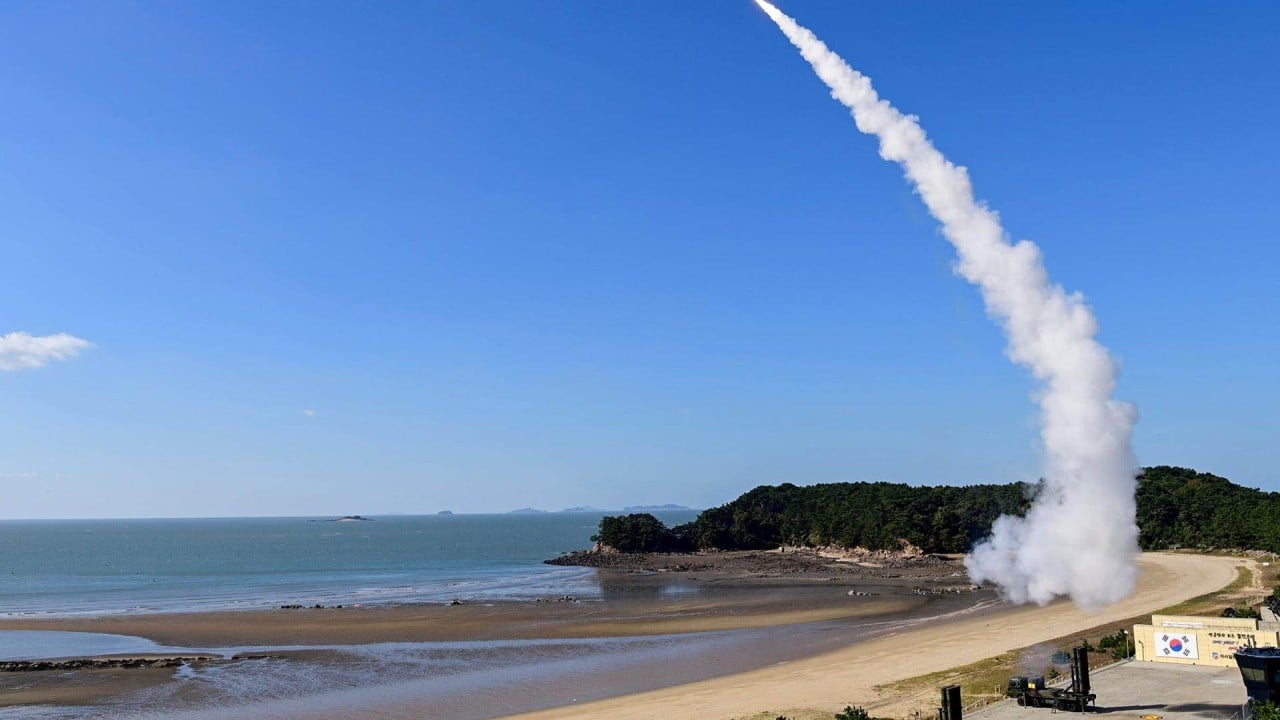
The Cheongung II—often called the "Heaven's Bow" or M-SAM II—just finished its first real-world combat debut. It didn't just survive; it crushed it. While Iran launched a massive wave of 186 ballistic missiles and over 800 drones toward the Emirates, the South Korean system reportedly maintained a near-perfect kill rate. This isn't just a win for the UAE’s safety; it’s a massive shift in how global defense works.
Breaking the American Monopoly on Missile Defense
For years, if you wanted to stop a ballistic missile, you bought American. You got the Patriot or the THAAD (Terminal High Altitude Area Defense). They’re good, but they’re also incredibly expensive and come with a mountain of political strings attached. The UAE decided to diversify, signing a $3.5 billion deal with South Korea in 2022 for ten Cheongung II batteries.
Fast forward to March 2026, and only two of those batteries are currently active on the ground. Yet, even with that limited footprint, the system was responsible for a significant chunk of the 172 successful ballistic missile interceptions reported by the UAE Ministry of Defence.
The stats are staggering. The UAE reported a 92% overall interception rate for ballistic missiles. When you look at the Cheongung II specifically, industry insiders are whispering about a 100% success rate during this specific engagement. It’s hit-to-kill technology, meaning the interceptor doesn't just explode near the target; it physically rams into the incoming missile at Mach speeds to pulverize it.
Why the Cheongung II Outperformed Expectations
You might wonder why a Korean system, developed with some legacy Russian technical DNA from Almaz-Antey, is suddenly the talk of the town. It comes down to three things: cost, agility, and availability.
- The Price Tag: A single Patriot interceptor can set you back $4 million. A Cheongung II missile costs about half that. When you're facing a saturation attack where the enemy is trying to bleed your treasury dry by firing $20,000 drones, the math of the Patriot starts to look like a losing game.
- Cold Launch Tech: Unlike the Patriot, which angled-launches its missiles, the Cheongung II uses a "cold launch" system. The missile is popped out of the tube by compressed gas before the engine ignites. This allows for 360-degree coverage from a single vertical launcher, making it much harder for a saturation attack to find a "blind spot."
- The Multi-Function Radar: The Hanwha-produced radar can track dozens of targets simultaneously, distinguishing between a harmless piece of debris and a high-speed warhead headed for a desalination plant.
The Desperate Scramble for More Batteries
The performance was so convincing that on March 5, 2026, the UAE officially asked South Korea to speed up the delivery of the remaining eight batteries. They aren't the only ones watching. Saudi Arabia and Iraq are already in the queue, realizing that the U.S. supply chain is stretched thin.
The reality is that Lockheed Martin can only build about 600 Patriot missiles a year. In a high-intensity conflict like the one we're seeing now, a country can burn through a month's worth of global production in a single weekend. South Korea's ability to actually deliver hardware without the decade-long wait times associated with American systems is a massive strategic advantage.
Navigating the Layered Defense Reality
Don't get it twisted; the Cheongung II isn't a silver bullet that replaces everything else. The UAE operates what experts call a "layered" defense.
- High Altitude: THAAD handles the big stuff coming in from space.
- Medium Altitude: This is the sweet spot where the Cheongung II and Patriot PAC-3 operate.
- Low Altitude/Point Defense: This is where the Pantsir-S1 and C-RAM systems try to catch the drones and cruise missiles that slip through.
The problem in this latest conflict hasn't been the quality of the tech, but the sheer volume of the threat. Interceptor exhaustion is a real nightmare. If you fire two interceptors at every incoming threat to guarantee a kill, you run out of ammo fast. The UAE has been forced to use F-16s and French Rafale jets to hunt drones with air-to-air missiles just to save their ground-based interceptors for the ballistic missiles that the jets can't stop.
What This Means for the Future of the Middle East
The success of the "Heaven's Bow" has fundamentally changed the leverage South Korea has in the region. We're no longer talking about "alternative" tech; we're talking about a primary contender.
If you're looking at the defense sector or just trying to understand why the UAE hasn't been leveled by these attacks, keep your eyes on the production lines in Seoul. The UAE is already pushing for the development of "Cheongung III," seeking even more range and better drone-swarming countermeasures.
If you want to track how this affects the broader market, watch the stock prices of LIG Nex1 and Hanwha Aerospace. They’re currently the only companies proving their tech can handle a modern, high-volume missile barrage in real-time. The era of undisputed American dominance in the skies is over, and it's being replaced by a more competitive, more affordable, and frankly, more efficient Korean alternative.
Check the latest updates from the UAE Ministry of Defence for official interception tallies, as these numbers are shifting daily as the conflict evolves.