In Havana, you learn to listen to the electricity. It isn’t a silent force. It hums in the erratic vibration of a Soviet-era tabletop fan. It buzzes in the flickering fluorescent tube of a corner bodega. It whirs in the heavy, laboring breath of a refrigerator keeping a family’s week of rations from turning into a biohazard.
When the power fails in Cuba, the first thing you notice isn’t the darkness. It’s the silence. It is a heavy, suffocating quiet that feels like the city has suddenly held its breath.
This week, that silence fell over the island again. For the third time in a month, the national grid collapsed, plunging millions into a state of suspended animation. While official reports now say that "most of the country" has seen service restored, that phrase carries a hollow ring for the people sitting in the dark in Artemisa or Holguín. Restoration is a fickle ghost. It visits for an hour, flickers twice, and vanishes again.
The collapse of a power grid is usually described in technical jargon: "total disconnection," "frequency failure," or "generation deficit." These words are sterile. They mask the reality of a grandmother climbing four flights of stairs in the pitch black because the elevator is a dead metal box. They ignore the frantic smell of thawing pork—a luxury saved for a special occasion—now bleeding juice onto a kitchen floor because the ice has melted.
The Anatomy of a Breaking Point
Cuba’s energy crisis isn't a sudden accident. It is a slow-motion car crash that has been unfolding for decades. The island relies on eight aging thermoelectric plants that are, quite literally, held together by the ingenuity of engineers who haven't seen a new spare part since the Cold War.
Imagine trying to keep a 1950s Chevy running as a daily commuter vehicle. Now imagine that Chevy is the size of a city block and provides the lifeblood for two million people.
The Antonio Guiteras plant, the crown jewel of the system, is a temperamental beast. When it trips, the entire island staggers. The infrastructure is exhausted. It’s tired of the salt air corroding its joints and the lack of investment thinning its blood. The government points to the U.S. embargo, which makes sourcing parts and fuel an expensive, cloak-and-dagger affair. Critics point to systemic mismanagement and a failure to pivot toward the Caribbean’s most abundant resource: the sun.
But for Maria, a hypothetical but very real composite of the women I’ve interviewed in Vedado, the "why" matters less than the "now."
Maria doesn't think about fuel oil tankers or geopolitical sanctions. She thinks about her daughter’s asthma nebulizer. When the grid dies, Maria has about forty minutes of battery life on a small portable unit before she has to start wondering which neighbor has a car battery and a prayer.
The Luxury of Light
We take the "always-on" nature of the modern world for granted. We treat electricity like oxygen—invisible until it’s gone. In Cuba, electricity is a guest that arrives unannounced and leaves without saying goodbye.
During this latest blackout, the government reported that the "National Electro-energetic System" (SEN) suffered a "total disconnection." This is the technical way of saying the heart stopped beating. When this happens, engineers have to perform a delicate, high-stakes dance called a "black start." They use small generators to create enough of a spark to jump-start a larger plant, which then feeds the next, slowly stitching the country back together like a frayed quilt.
If they rush it, the system overloads and collapses again. It’s like trying to light a match in a hurricane.
While the lights are back on in much of Havana, the "restoration" is fragile. The gap between how much power the country needs and how much it can actually produce remains cavernous. On any given day, the deficit can be as high as 30 percent. This means that even when the grid is "functional," the government must resort to "scheduled" blackouts.
They call them alumbrones—the "big lights." It’s a bit of Cuban gallows humor. You don’t have blackouts; you have "light-ons." You live your life in the dark and celebrate the brief, miraculous intervals when the fan actually turns.
The Invisible Stakes
There is a psychological toll to living in a state of energy insecurity that no news report can fully capture. It is a constant, low-level anxiety that dictates every movement.
You cook when there is power, even if you aren't hungry. You charge every device the moment the outlet goes live. You learn to navigate your own home with your eyes closed, memorizing the distance from the bed to the water pitcher because you know the darkness is coming.
This isn't just about comfort. It’s about the erosion of a society's ability to plan for the future. How do you run a small business—a mipyme—when your inventory rots? How do you study for a medical exam by the light of a kerosene lamp that makes your eyes ache after twenty minutes?
The recent restoration is a victory of sorts, but it is a pyrrhic one. The underlying illness hasn't been treated. The ships carrying fuel from Russia and Venezuela arrive less frequently now. The tankers are diverted, or the payments are delayed, or the geopolitics shift, and suddenly, the Matanzas terminals are dry.
A Caribbean Paradox
There is a cruel irony in watching the sun bake the streets of Havana while the city starves for energy. The island sits in one of the most solar-dense regions of the planet. Yet, renewable energy accounts for a tiny fraction of Cuba's output. The transition requires capital—billions of dollars—that the country simply does not have.
Instead, the government leases floating power plants from Turkey. These massive ships sit in the harbor like life support machines, humming away and burning expensive fuel to keep the lights on. They are a temporary bandage on a severed artery.
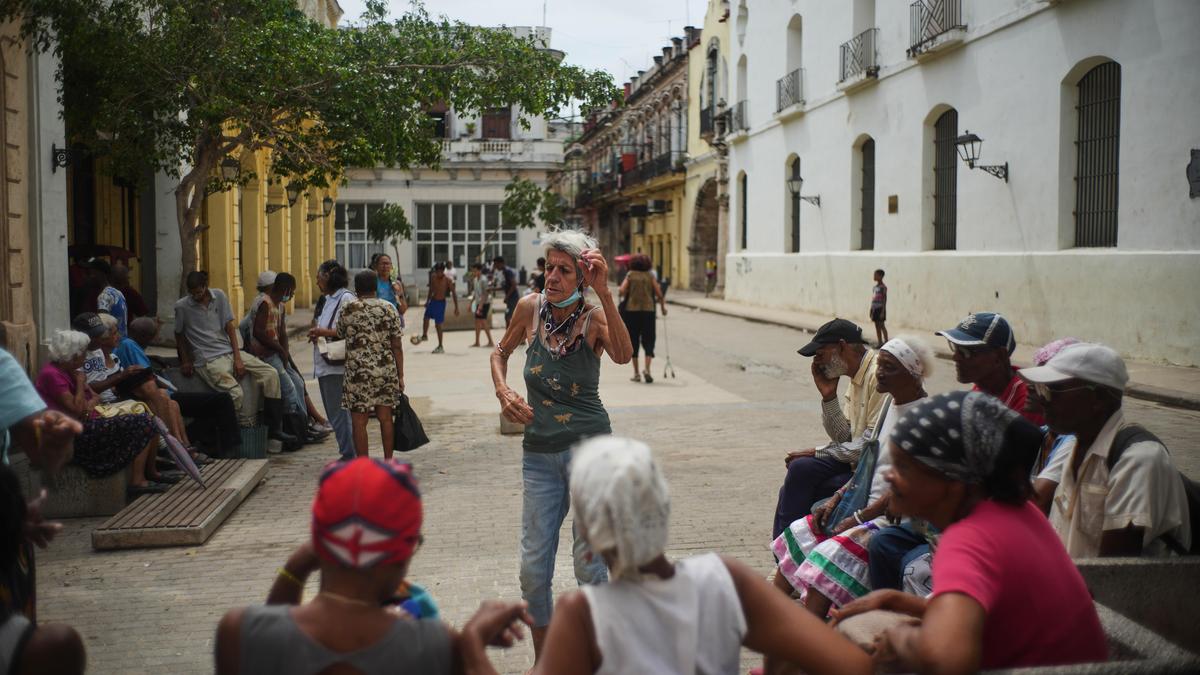
When the power returned this week, there were no cheers in the streets. There was only the sound of a thousand compressors kicking back to life. People went about their business with a practiced, weary efficiency. They washed the clothes that had been sitting in the machine. They froze bottles of water to act as ice packs for the next time. They didn't celebrate; they prepared for the next silence.
The sun sets over the Malecón, painting the sky in bruises of purple and gold. For now, the streetlights are flickering on. The tourists in the old plazas sip their mojitos, perhaps unaware that the coldness of their ice is a fragile miracle.
Behind the colonial facades and the colorful laundry hanging from balconies, the people of Cuba are listening. They are listening for the hum. They know that the darkness isn't gone; it’s just waiting in the wings.
The fridge is running. For today, that is enough.
Tonight, a child in Central Havana will fall asleep to the white noise of a fan. It is a beautiful, mechanical lullaby. But his father will stay up a little longer, watching the bulb in the hallway, waiting to see if it trembles. He knows that in this city, the light doesn't just go out. It vanishes, taking the modern world with it, leaving only the heat and the quiet.