The air in Paris during Fashion Week doesn't just feel cold; it feels expensive. It is a scent composed of diesel fumes, high-end espresso, and the intimidating musk of archival leather. For decades, this city has functioned as the ultimate velvet rope. If you were a brand from the "Global South," you were historically invited as an exotic guest, a colorful diversion, or a couture curiosity. You were rarely there as the clothes people actually wear to buy groceries or lead a boardroom meeting.
Then came March 2026. For a more detailed analysis into similar topics, we suggest: this related article.
Amidst the towering egos of the Place Vendôme and the frantic clicking of street-style photographers, a different kind of vibration emerged. W, an Indian high-street staple, didn’t arrive with the hushed tones of a niche boutique. They arrived with the confidence of a brand that already dresses millions of women from Delhi to Mumbai. It was the first time an Indian high-street label—the kind of brand you find in a bustling mall, not just a hidden atelier—stepped onto the global stage in Paris.
This wasn't just a runway show. It was a demographic shift rendered in silk and cotton. For broader details on this topic, in-depth coverage can also be found on Refinery29.
The Weight of the Invisible Stitch
To understand why this matters, you have to look past the flashing bulbs. Think of a woman named Ananya. She is a hypothetical composite of the modern Indian professional, but her reality is felt by millions. Ananya wakes up in a high-rise in Gurgaon. She has a 9:00 AM presentation. She wants to look Indian because that is who she is, but she needs to move with the speed of a global economy.
For years, the "fusion" she wore was often a compromise. It was either too traditional for a swivel chair or too Western to feel like home. W spent years obsessing over Ananya’s shoulders, the way a dupatta could be reimagined as a structured vest, and how an ethnic print could be sharpened into something that looked as at home in a Parisian cafe as it did in a Bangalore tech park.
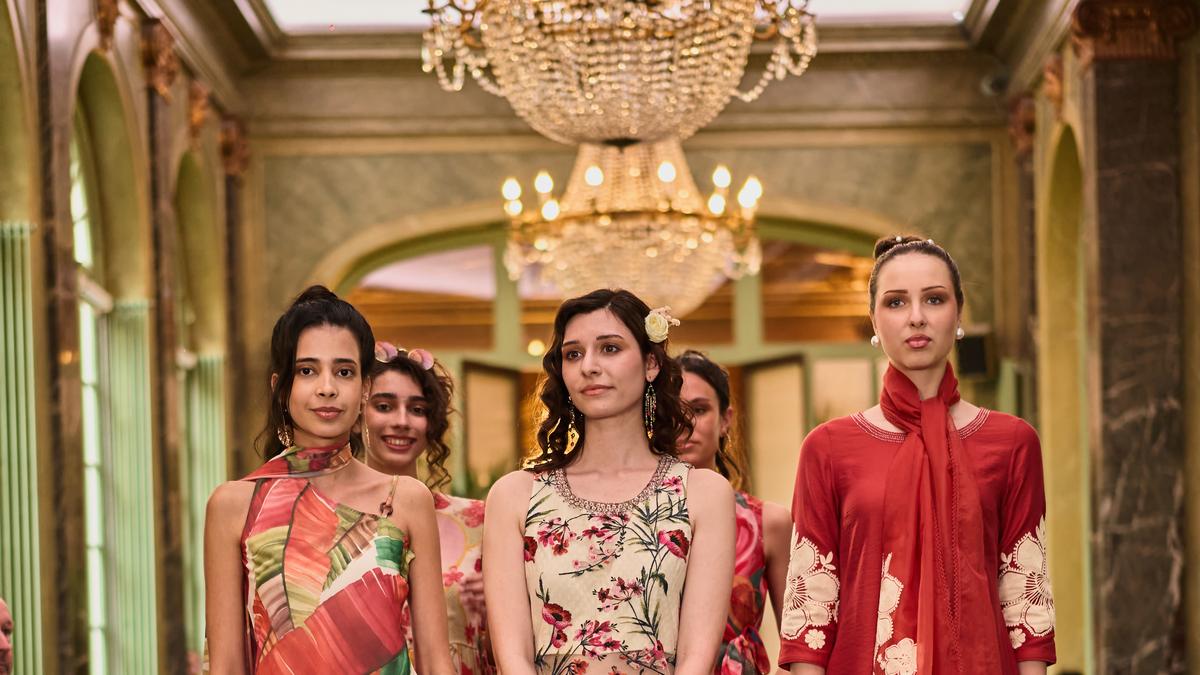
When W took their Fall-Winter 2026 collection to Paris, they weren't just bringing clothes. They were bringing Ananya’s lived reality. They were proving that "high street" doesn't have to mean "disposable Western basics." It can mean "cultural identity at scale."
The Geometry of the Kurta
The technical challenge of this showcase was immense. Indian silhouettes are traditionally built on flow, drape, and the celebration of the curve. Parisian high fashion often leans into the architectural, the rigid, and the avant-garde. Merging these two worlds without losing the soul of either is a tightrope walk.
Consider the craft. The collection featured intricate hand-embroidery and traditional Indian motifs, but they were applied to silhouettes that felt startlingly modern. Longline tunics became duster coats. Traditional prints were reimagined through a lens of minimalism.
The observers in the room—the buyers, the critics, the influencers who usually look at their phones more than the models—started to lean in. There is a specific kind of silence that happens when a room realizes it is seeing something it didn't know it was missing. It was the realization that the Indian aesthetic isn't a "costume." It is a design language as robust and versatile as any Italian tailoring or French draping.
The High Street Revolution
Why is the term "high street" so vital here? In the fashion hierarchy, couture is the dream, but high street is the heartbeat. Couture is what we admire; high street is what we live in.
For a long time, the narrative of Indian fashion on the global stage was dominated by the greats—the Sabyasachis and Rahul Mishras of the world. Their work is breathtaking. It is art. But it is also inaccessible to the woman who needs a sharp outfit for her Friday afternoon.
By bringing a high-street sensibility to Paris, W broke the glass ceiling for the everyday. They signaled that Indian mass-market design has reached a level of sophistication and quality control that can compete with the Zara’s and H&M’s of the world on their own turf.
It is a massive gamble. The logistical nightmare of moving a high-street operation to the center of the fashion universe is enough to break most brands. There are the shipping delays, the casting calls for models who can carry the specific weight of Indian textiles, and the terrifying scrutiny of the Parisian press.
But the stakes were higher than just a successful show. The stake was the validation of a billion-person market.
A New Geography of Style
The geography of fashion is no longer a one-way street. We used to see trends move from the West to the East, filtered down through lookbooks and department stores. Now, the tide is turning.
The collection shown in Paris was a testament to the "Indian Modernist" movement. It utilized sustainable fabrics and conscious manufacturing processes, reflecting a global shift in consumer values. But it did so with a specific Indian warmth. There were deep maroons that hinted at Himalayan sunsets and intricate threadwork that whispered of centuries-old artisanal lineages.
But the real magic wasn't in the clothes alone. It was in the eyes of the young Indian designers backstage. For them, Paris was no longer a fortress to be stormed. It was a venue they had earned.
The show ended not with a roar, but with a lingering sense of arrival. As the models took their final walk, the sound of traditional Indian jewelry clinking softly against the minimalist backdrop created a strange, beautiful harmony. It was a sound that belonged.
As the crowds spilled out onto the rain-slicked streets of Paris, they carried a piece of India with them. Not as a souvenir. Not as a trend. But as a permanent part of the global wardrobe. The velvet rope hadn't just been moved; it had been unhooked.
The woman in Gurgaon and the woman in the 16th Arrondissement were suddenly looking at the same rack.
In the end, fashion isn't about the fabric. It’s about the audacity to stand in a room where you weren't expected and act like you’ve always lived there. W didn't just showcase a collection. They rewrote the map.
The Seine kept flowing, indifferent as ever, but for a few hours, its grey waters reflected a vibrance it hadn't seen before. The high street had found its way to the palace. And it didn't look out of place at all.