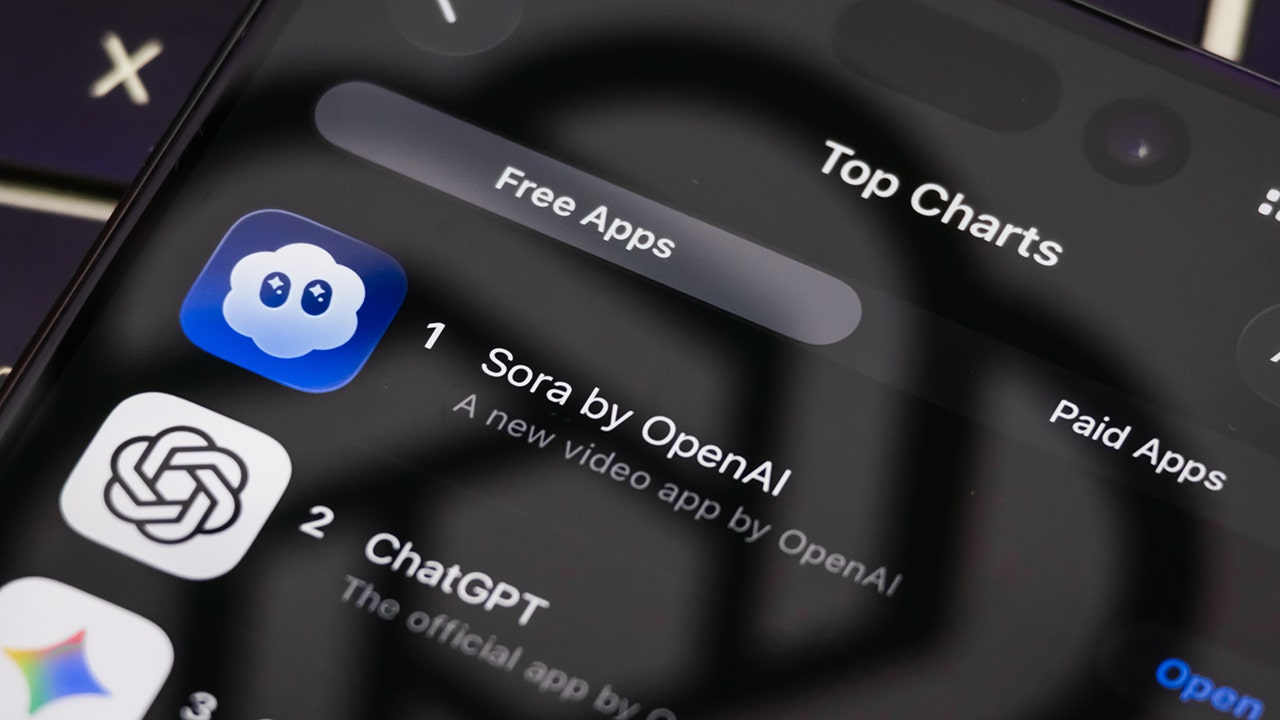
Everyone thought Sora was the end of Hollywood. When OpenAI first dropped those clips of golden retrievers in windows and neon Tokyo streets, the collective gasp from the creative industry was audible. It looked like magic. Then, the cracks appeared. The physics didn't work. People merged into chairs. The "world simulator" turned out to be a very expensive, very glitchy hallucination machine.
Now that the hype has cooled and Sora feels less like a revolution and more like a cautionary tale, skeptics are shouting about an AI bubble. They see a stalled product and assume the whole industry is a house of cards. They're wrong.
The mistake people make is tying the entire generative AI market to the success of a single video model. Sora failing to replace Pixar by next Tuesday doesn't mean the tech is dead. It just means we hit a wall with specific types of spatial reasoning. That's a engineering hurdle, not a death knell for the trillion-dollar shift we're seeing in infrastructure and data processing.
The Myth of the Video First Future
The obsession with video as the ultimate AI metric is a distraction. Video is incredibly hard. It requires a level of consistency that current transformer architectures struggle to maintain over more than a few seconds. If a hand has six fingers in a static image, you might not notice. If a hand grows a sixth finger while opening a door in a 4K video, the illusion breaks instantly.
Most people looking at the AI market are watching the wrong scoreboard. While we're all debating if Sora can handle gravity, the real money is moving into backend efficiency. The "bubble" isn't bursting because the demand for compute isn't tied to making viral videos. It's tied to the fundamental way we process information.
Companies like NVIDIA and Microsoft aren't betting the farm on your ability to make a movie from a text prompt. They're betting on the fact that every piece of software on the planet is currently being rewritten to use large language models as an interface. That's the real shift.
Why Sora Hit a Wall
The technical reality is that Sora isn't a world simulator. It's a pixel predictor. It doesn't understand that a glass of water has mass or that if you drop it, it should shatter. It just knows that in its training data, "dropping glass" is often followed by "shattered glass" pixels.
When the "demise" of Sora gets discussed, it’s usually about this lack of physical understanding. Critics point to the high cost of inference. It takes a massive amount of GPU power to render a 60-second clip that might still have a person walking backwards through a wall.
Business leaders see this and pull back on the "AI will do everything" narrative. That's actually a good thing. It’s a return to sanity. We're moving from the "everything is magic" phase to the "what does this actually do for our bottom line" phase.
The Infrastructure Reality Check
If the AI bubble was really about to pop, we'd see data center construction grinding to a halt. Instead, the opposite is happening. Google, Amazon, and Meta are still pouring billions into physical hardware. Why? Because generative video is just one tiny branch of the tree.
Think about it this way. In the late 90s, pets.com died. It was a stupid idea with a bad business model. People said the internet was a scam. They were wrong because they confused a single bad application with the underlying utility of the network. Sora is the pet.com of this era—flashy, expensive, and maybe a bit ahead of its time. But the "network" (the LLMs and the compute power) is still growing at a rate that makes the dot-com era look slow.
Where the Money is Actually Going
The smart money isn't chasing text-to-video anymore. It's moved into:
- Agentic Workflows: Systems that don't just talk, but actually do things inside your browser or your CRM.
- Edge Computing: Running smaller, highly specialized models on your phone or laptop rather than in a massive cloud.
- Custom Silicon: Every big tech player is now building their own chips to avoid the "NVIDIA tax."
These aren't the moves of companies that think a bubble is about to burst. These are the moves of companies building a new foundation for the next twenty years of computing.
Learning from the Hype Cycle
We've been here before. Every major technological leap has a moment where the initial shiny toy breaks. The Wright brothers didn't start with a 747. They started with a wooden glider that barely stayed up for a minute.
Sora's struggles are just the "wooden glider" phase of generative video. It's clunky. It's buggy. It's way too expensive to be practical for most people. If you're a filmmaker, you probably shouldn't sell your cameras just yet. But if you're an investor, don't confuse a product delay with a systemic failure.
The "bubble" talk usually comes from people who don't understand the difference between consumer-facing apps and enterprise-level infrastructure. While the public looks at Sora and laughs at a cat with two tails, engineers at Palantir or Databricks are using these same types of architectures to solve logistics problems that save hundreds of millions of dollars.
The Problem with Public Expectations
OpenAI didn't help themselves here. They marketed Sora as a finished-ish product when it was really a research preview. They invited the hype. When you tell the world you've solved video and then can't actually release a stable version for a year, people get suspicious.
That suspicion is healthy. It forces the industry to be more honest about what these models can and cannot do. It stops the mindless "AI is god" rhetoric and starts a conversation about utility.
Moving Past the Sora Distraction
Stop looking at the video demos. They're just marketing. To understand why the AI market is still solid, look at how many companies are integrating "small" models into their daily operations. Look at the rise of RAG (Retrieval-Augmented Generation). These aren't flashy. They won't make a viral TikTok. But they are making workers 10% more efficient across the board.
In a global economy, a 10% efficiency gain is worth trillions. That's why the bubble isn't bursting. It doesn't matter if Sora ever makes a full-length movie. The tech that powers it is already being used to write code, summarize legal documents, and design new protein sequences for medicine.
If you're waiting for a crash, you might be waiting a long time. The "pop" people are expecting is really just a pivot. We're moving away from the era of "look at this cool trick" and into the era of "how does this save me time?"
The next move is simple. Look for the companies that aren't talking about Sora. Look for the ones building the boring stuff—the databases, the specialized small models, and the security layers. That's where the real value is hiding while everyone else is distracted by a glitchy video of a golden retriever.
Audit your current tech stack. If you're still waiting for a "magic" solution like Sora to fix your content workflow, you're behind. Start implementing specialized LLMs for specific tasks today. The "bubble" is only a problem for those who bet on the hype instead of the utility.