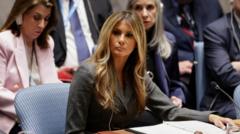
The press release writes itself. A high-profile figure sits at the head of a horseshoe-shaped table, cameras flash, and the world is told that "awareness" is being raised. While the media fixates on the optics of Melania Trump chairing a UN Security Council meeting on children in armed conflict, the actual mechanics of geopolitics remain untouched. It is a masterclass in performative diplomacy that treats systemic violence as a PR hurdle rather than a structural failure.
The consensus view is that having a First Lady—or any high-profile surrogate—lead these discussions brings "much-needed attention" to the plight of children. This is a lie. Attention is the one thing these conflicts have in abundance. What they lack is a shift in the incentive structures that make child soldiers and "collateral damage" a feature of modern warfare rather than a bug.
The Illusion of Influence
Most pundits view these sessions as a victory for "soft power." They argue that a non-political figure can bridge gaps that hardened diplomats cannot. I’ve spent years watching how these international bodies operate behind the curtain, and the reality is far more cynical. These meetings are often scheduled precisely because they are toothless.
When the Security Council discusses children in conflict amid active strikes—like those involving Iran or other regional powers—the "soft" approach acts as a pressure valve. It allows member states to signal virtue without committing to the one thing that actually changes outcomes: the cessation of arms sales or the enforcement of secondary sanctions.
If you want to protect children in a war zone, you don't need a speech about "being best." You need to stop the flow of small arms. You need to target the bank accounts of the middlemen who profit from the chaos. A photo op at the UN does exactly the opposite; it provides a veneer of humanitarian concern that masks the continued funding of the very regimes pulling the triggers.
The Flawed Logic of Awareness
The "People Also Ask" sections of the internet are filled with queries like "How does the UN protect children in war?" The honest, brutal answer is: it largely doesn't. The UN is a forum, not a police force.
The premise that "awareness" leads to action is a vestige of 1990s-era activism that has no place in the current decade. We are more aware than ever. We have high-definition footage of strikes delivered to our pockets in real-time. The bottleneck isn't a lack of information; it’s a lack of political will.
By centering a celebrity or a political spouse in these discussions, we reinforce the idea that the suffering of children is a charitable cause rather than a legal and military failure. It moves the conversation from the realm of state responsibility to the realm of individual compassion. That is a massive win for the warlords. They don’t care about your compassion. They care about their supply lines.
Why the Security Council is the Wrong Room
The Security Council is designed for realpolitik. It is a room where the five permanent members (the P5) protect their interests through the veto. To bring a humanitarian agenda into this specific room—especially one led by a figure associated with a specific administration—guarantees that the discussion will be viewed through a partisan lens.
Imagine a scenario where a CEO tries to fix a toxic company culture by hosting a bake sale in the boardroom while the CFO is still embezzling the pension fund. That is what this meeting represents.
- The Disconnect: While the First Lady speaks on children, the actual diplomats in the room are busy negotiating the fine print of arms deals or trade exemptions.
- The Diversion: Media coverage focuses on the wardrobe, the seating chart, and the "historic" nature of the chairing. It ignores the fact that no binding resolution with actual teeth was even on the table.
- The Devaluation: It turns the plight of the vulnerable into a backdrop for political branding.
The Nuance of Conflict Economics
If we were serious about children in conflict, the conversation would sound very different. We wouldn't be talking about "hope" or "healing." We would be talking about the $GPD$ of the conflict zones and the specific commodities—cobalt, oil, gold—that fund the militias.
The mathematics of war are simple:
$$Resources + Weapons = Prolonged Conflict$$
When you introduce "awareness" into that equation, it doesn't change the value of either variable. It just adds a decorative element to the result. To disrupt this cycle, we have to stop treating the UN as a stage for morality plays and start treating it as a theater for economic warfare against those who target minors.
The Dangerous Precedent of "Diplomacy Lite"
There is a cost to these high-profile distractions. Every hour spent debating the "optics" of who chairs a meeting is an hour not spent on the grueling, unglamorous work of treaty verification.
Critics will say, "At least she's doing something." This is the most dangerous phrase in politics. "Doing something" that yields zero results while providing a shield for inaction is worse than doing nothing. It creates a false sense of progress. It lets the public believe that the "grown-ups" are handling it, so they can go back to their lives.
Real influence in the UN doesn't happen at the big table in front of the cameras. It happens in the basement, in the tiny offices where the language of sanctions is hammered out line by line. It’s boring. It’s technical. It’s entirely devoid of star power. And it’s the only thing that works.
Stop Asking the Wrong Questions
We need to stop asking if a First Lady did a "good job" chairing a meeting. The question itself is a distraction. The only questions that matter are:
- How many more children were displaced during the three hours this meeting took?
- Which member states in that room are currently providing the munitions that created those orphans?
- Why are we still pretending that a speech can stop a drone strike?
The "lazy consensus" loves a good story about a powerful person caring. It’s comfortable. It’s easy to digest. But if you want to actually dismantle the machinery of child exploitation in war, you have to be willing to look past the person at the head of the table and look at the contracts being signed in the shadows.
Everything else is just theater for a world that would rather watch a performance than stop a massacre.
Instead of applauding the next "historic" chairing of a committee, demand a list of every company currently profiting from conflict zones and ask why they aren't being frozen out of the global financial system. Until the cost of harming children exceeds the profit gained from the war, the meetings will continue, the speeches will be written, and nothing will change.
Stop buying the tickets to the show. The stage is empty.
Would you like me to analyze the specific voting records of the UN Security Council members regarding arms embargos in conflict zones?