The dirt in the hills of South Lebanon is a stubborn, rust-colored clay. It clings to the soles of boots and gets under the fingernails of men who spend their lives coaxing olives and tobacco from the earth. Usually, this soil is a source of life. Today, it is merely a weight.
In the village of Aadchit, the air doesn't just carry the scent of pine and exhaust. It carries a heavy, vibrating silence that follows a detonation. It is the kind of quiet that feels like a physical pressure against the eardrums. In the center of this silence lies an eleven-year-old boy named Hassan. He is not playing. He is not running toward the village square to buy a piece of candy. He is wrapped in white cloth, and he is very, very still.
Statistics will tell you that this is another casualty in a cross-border exchange of fire. They will use words like "collateral" or "precision." They will cite the number of rockets fired from the south and the number of sorties flown from the north. But statistics are a coward’s way of looking at a funeral. They strip away the smell of the incense and the way a mother’s voice cracks until it sounds like breaking glass.
The Geography of a Target
To understand why Hassan is in a box, you have to understand the geography of a nightmare. Aadchit sits in a region where the landscape has been weaponized by history. It is a place where a kitchen window might look out over a valley that has seen three wars in forty years.
People here live in a state of "permanent temporary." They build houses with reinforced concrete, not because they like the aesthetic, but because they know the sky can turn lethal in a heartbeat. When the drones—the mohar—hum overhead, the sound is a constant, grinding reminder that someone, somewhere, is watching through a high-definition lens.
On the day the strike hit, there was no warning. There rarely is for the people on the ground. A missile doesn't announce its arrival with a whistle anymore; it simply arrives. The physics of it are brutal. Kinetic energy meets stone and mortar. The shockwave travels through the air at supersonic speeds, rupturing lungs and shattering glass before the sound of the explosion even reaches the ear.
Hassan was likely doing what any eleven-year-old does on a Tuesday. Perhaps he was thinking about a math problem he hadn't solved or a football match he wanted to play. The strike didn't care about his plans. It converted his home into a pile of grey dust and jagged rebar.
The Weight of a Father
Consider the man standing at the edge of the grave. His hands are calloused, his face etched with lines that have nothing to do with age and everything to do with the sun and the struggle. He is not a general. He is not a politician. He is a father who has just discovered that the world is much smaller than he thought—exactly the size of a child's coffin.
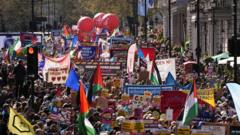
He stands with his brothers and neighbors. They chant, their voices rising in a rhythmic, guttural wave of "Labbayka ya Husayn." It is a cry of defiance, yes, but it is also a mask for agony. In this part of the world, grief is public. It is a shared burden. To weep alone is a luxury no one can afford when the threat of the next strike looms over the funeral procession itself.
The men carry the casket high on their shoulders. They jostle and sway. The white shroud is occasionally visible through the gaps in the crowd. It is so small. That is the detail that haunts the periphery of the vision—the sheer lack of scale. A human life, a decade of growth, of learning to ride a bike and arguing about dinner, reduced to a bundle that four men can carry without breaking a sweat.
The Invisible Stakes of Precision
Military spokespeople often talk about "limiting civilian harm." They point to the sophistication of their sensors and the intelligence gathered by their satellites. They speak of the logic of deterrence.
But logic fails when it meets the reality of a grieving village. When a child dies, the "strategic objectives" of the strike don't just vanish—they backfire. Every grain of soil thrown onto Hassan’s grave is a seed of something else. Anger isn't a strategy, but it is a fuel.
We often think of war as a series of moves on a chessboard. We focus on the pieces. We forget that the board itself is made of families, schools, and olive groves. When you blow a hole in the board, the game doesn't just continue; the pieces fall into the void.
The "invisible stakes" here aren't about who holds which hill or which village. The stakes are the fundamental trust in the possibility of a future. How do you tell a child in Aadchit to study for a career ten years away when they saw their neighbor’s house turn into a crater in ten seconds?
The Language of the Shroud
There is a specific way the shroud is tied. It is meticulous. It is the final act of care a parent can provide. In the absence of being able to protect a child from a missile, the community protects them from the coldness of the earth.
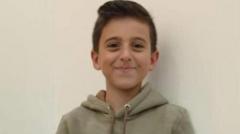
The women stay back, huddled in doorways or gathered in the courtyard of the house. Their grief is a different frequency—sharper, more jagged. They hold photographs of the boy. In the photos, Hassan is smiling. He has that gap-toothed, mischievous look of a kid who hasn't yet learned that the world can be cruel.
The contrast between the boy in the glossy print and the boy in the white cloth is too much for the mind to bridge. It creates a cognitive dissonance that can only be resolved through screaming or through a stony, terrifying silence.
Beyond the Border
The world watches this through a screen. We see 15-second clips on social media. We read headlines that use passive voice: "Child killed in strike." As if the strike were a natural disaster, like a lightning bolt or an earthquake.
It is not. It is a choice.
Behind every "exchange of fire" is a series of human decisions. Someone programmed coordinates. Someone gave the order. Someone pulled the trigger. And on the other side, someone stood in a kitchen and felt the floor vanish beneath them.
The tragedy of Hassan isn't just that he died. It’s that his death has already been categorized, filed away, and used as a talking point before he was even buried. He has been turned into a symbol before he was allowed to be a man.
The funeral ends as the sun begins to dip behind the hills. The crowd thins. The red clay is shoveled back into the hole, thudding against the wood. It is a hollow sound. It is the sound of a door closing.
One by one, the men wipe their hands on their trousers. They look at the sky. They listen for the hum. They wonder if the next strike is already in the air, or if they have another night of uneasy sleep ahead of them.
The father stays a moment longer. He touches the fresh earth. He doesn't look like a man who has been deterred. He looks like a man who has had his heart removed and is now wondering how to keep breathing without it.
The hills of South Lebanon are beautiful in the twilight. The shadows stretch long and blue across the valleys. But under the beauty, the rust-colored soil is heavy. It holds too many children. It holds too much silence. And the silence is growing.
Would you like me to research the current humanitarian aid efforts for displaced families in Southern Lebanon?