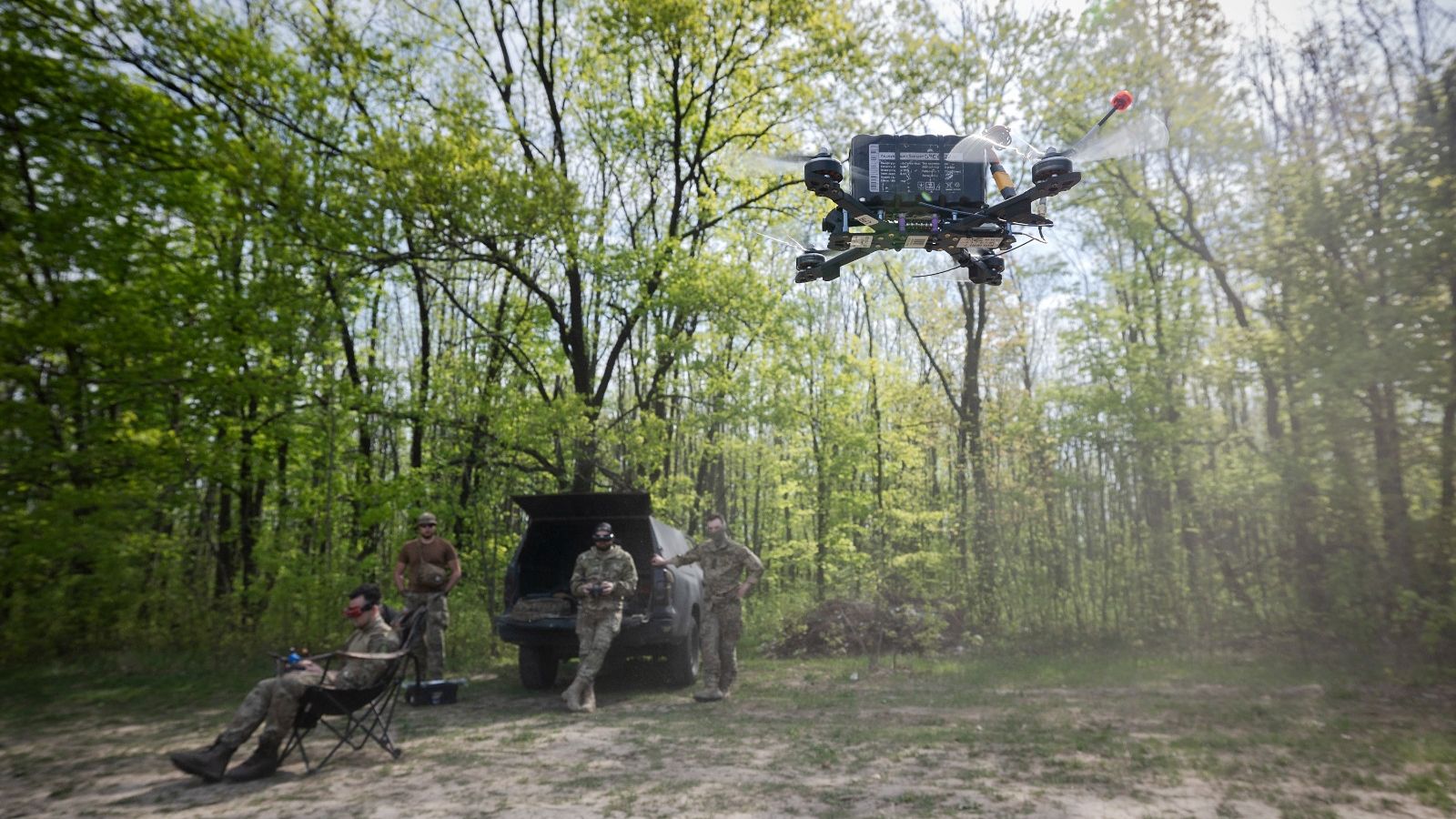
The sound isn’t a roar. It’s a lawnmower. It is a persistent, mechanical buzzing that feels out of place against the backdrop of a predawn sky, a domestic sound repurposed for the end of the world. In Kyiv, they call them "mopeds." But these mopeds carry forty kilograms of explosives, and they don’t care about military targets. They care about the power grid, the apartment block on the corner, and the collective psyche of a city trying to sleep.
For decades, the United States built a military designed to swatter flies with sledgehammers. We perfected the art of the billion-dollar stealth fighter and the multi-million-dollar interceptor missile. We prepared for a war of titans. Then, the Iranian-made Shahed-136 arrived on the Ukrainian front, and the math of modern warfare broke overnight.
The Math of Absolute Asymmetry
Consider the economics of a single engagement. An Iranian delta-wing drone costs about $20,000 to manufacture. It is made of carbon fiber, powered by a basic four-cylinder engine you might find in a hobbyist’s remote-controlled plane, and guided by consumer-grade GPS. To shoot it out of the sky, Western forces traditionally used a Patriot missile. A single Patriot interceptor costs roughly $4 million.
You don’t need a degree in high finance to see the cliff we were walking toward. If the enemy sends one hundred drones and you fire one hundred missiles, you haven’t won. You have bankrupted your future to save your present. The drones aren't just weapons of destruction; they are weapons of exhaustion. They are designed to bleed the defender dry, one million-dollar explosion at a time.
This is why a quiet, frantic bridge has been built between Washington and Kyiv. It isn't just about sending pallets of ammunition or tanks anymore. It is a transfer of "hard-earned knowledge"—a polite term for the lessons learned by people who had to figure out how to survive when the sledgehammers ran out.
The Garage Inventors of the Front Line
In a nondescript warehouse in central Ukraine, a former software engineer named Serhiy—not his real name, but his story is repeated a thousand times over—hunches over a laptop. He isn't looking at radar feeds. He’s looking at acoustic data.
When the Shaheds first started falling, the high-tech sensors didn't always see them. They fly low. They are small. They have a minimal metal signature. So, the Ukrainians went back to basics. They realized that while the drones were hard to see, they were impossible not to hear.
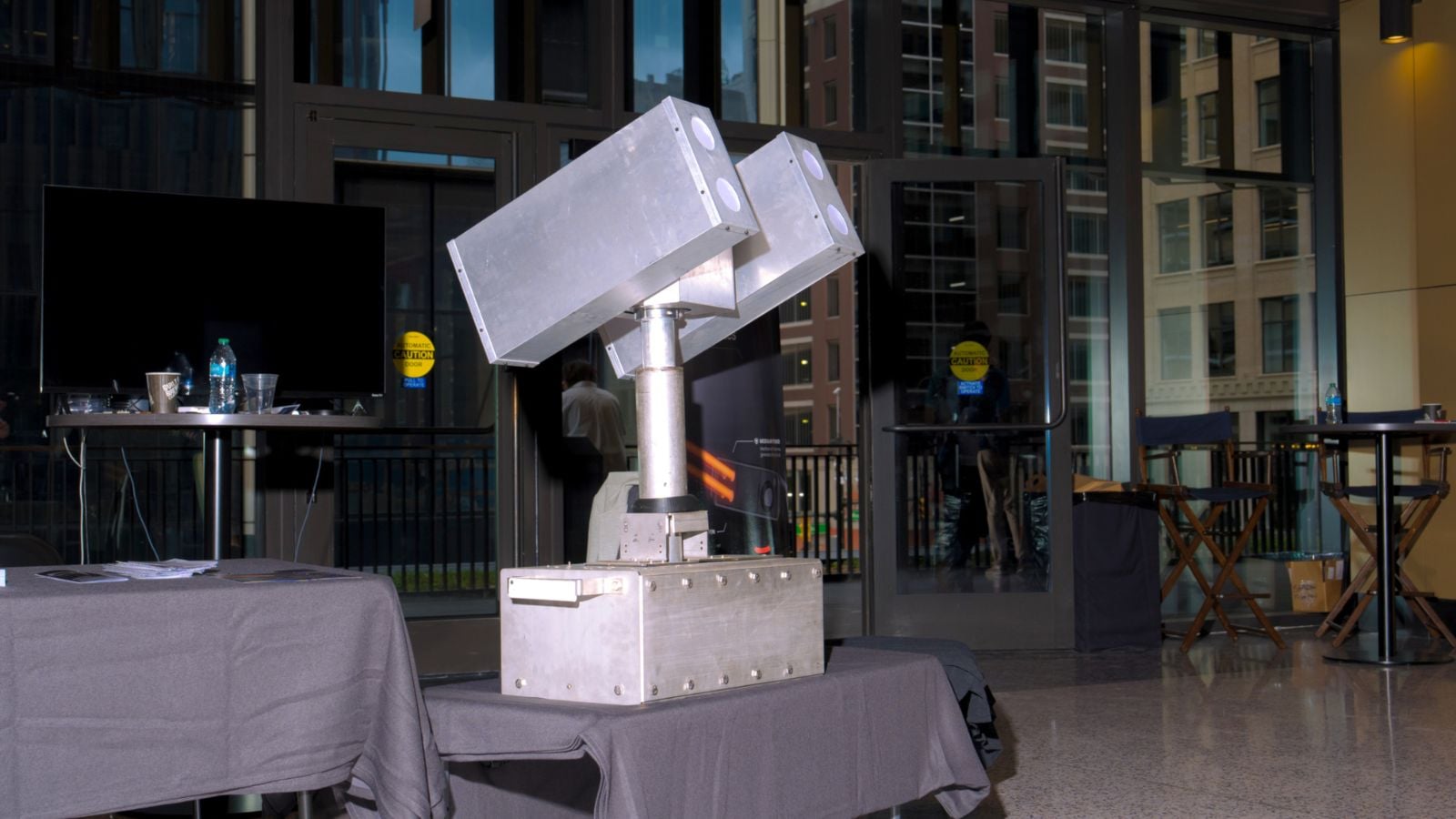
Serhiy and his team began mounting thousands of networked microphones on tall poles across the countryside. These aren't government-contracted sensors. Often, they are simple Android smartphones equipped with external mics, powered by car batteries, and linked via basic cell signals. When a drone enters the airspace, the microphones pick up that distinct "moped" hum. An AI algorithm—trained not in a Silicon Valley lab, but in the heat of a blitz—triangulates the position, speed, and heading.
The U.S. military is now obsessed with this "acoustic mesh." We are watching how a nation under fire turned a budget-friendly network of cell phones into a more effective early-warning system than some of our most sophisticated radar arrays. It is a humbling shift. The teacher has become the student.
The Pickup Truck Revolution
The most visible sign of this knowledge transfer is the rise of the "Mobile Fire Group." In the American doctrine of the 20th century, air defense was a massive, stationary affair involving heavy trailers and specialized crews. In Ukraine, it looks like a Toyota Hilux with a heavy machine gun bolted to the back.
These teams race across dirt roads, guided by the acoustic data on their tablets. They intercept the drone’s flight path, wait for the buzz to get loud enough to vibrate their chest cavities, and open fire with tracer rounds. It is visceral. It is terrifying. And it costs about $50 in ammunition.
Pentagon officials are now realizing that the future of U.S. base defense might look a lot more like a kitted-out pickup truck and a lot less like a missile battery. We are learning how to "kill the cost curve." If the drone costs twenty grand, the solution must cost five. Anything else is a slow-motion defeat.
Electronic Shadows and Ghost Signals
Beyond the physical bullets, there is a silent war happening in the radio spectrum. This is where the "invisible stakes" truly reside. The Shahed drones rely on satellite navigation to find their targets. If you can't shoot the drone, you have to lie to it.
Ukraine has become the world’s most intense laboratory for "spoofing." This isn't just jamming a signal—which is like shouting so loud the drone can't hear its instructions. Spoofing is more subtle. It’s like whispering the wrong directions in the drone's ear. You convince the drone it is three miles to the left of where it actually is. The drone adjusts, flies into an empty field, and detonates harmlessly.
But the Iranians are adapting. They are adding "anti-jamming" modules to their drones. Every week, the code changes. Every week, a new frequency is used. The U.S. is now embedding observers and technical teams to harvest this data in real-time. We are seeing how Iranian technology—and by extension, the technology of their partners—evolves when it hits a wall. This is intelligence that no simulation or war game could ever produce. It is the raw, bleeding edge of electronic warfare.
The Human Cost of the Learning Curve
We often talk about these developments in terms of "capabilities" and "tactical advantages." We forget that every "lesson learned" is paid for in blood. When a drone gets through because the spoofing failed or the machine gun jammed, a heating plant is destroyed. A grandmother freezes in her apartment. A child learns to associate the sound of a lawnmower with the sound of death.
The U.S. is tapping into this knowledge because we know that the "drone swarm" isn't a localized problem. It is the new global standard. Whether it’s in the Red Sea, the South China Sea, or a border we haven't even considered yet, the cheap, autonomous killer is here to stay.
We are learning how to fight back not just with better tech, but with better intuition. We are learning that the most sophisticated weapon in the world is still a human being who refuses to give up, armed with a smartphone and a heavy machine gun.
The Shift in the American Mindset
For the first time in a generation, the American defense establishment is embracing the "good enough." For years, the gold standard was 100% reliability at any cost. Ukraine has shown that 80% reliability at a 1% cost is how you actually win a long war.
We are seeing the birth of "Replicator," a U.S. initiative to field thousands of cheap, expendable drones of our own. The goal is to flip the script. We want to be the ones sending the "mopeds" that the enemy can't afford to shoot down. We are moving away from the era of the "exquisite" platform toward the era of the "attritable" mass.
It is a messy, uncomfortable transition. It requires admitting that our massive carriers and stealth bombers are vulnerable to a drone that costs less than a used Honda Civic. It requires a level of humility that doesn't always come easily to a superpower.
But the data is undeniable. The reports coming back from the front lines in Ukraine are clear. The sky is no longer the sole domain of the elite and the expensive. It is a crowded, noisy place where the cheap and the clever hold the high ground.
As the sun sets over the Potomac and rises over the Dnieper, the link between the two remains vital. We send the steel; they send the wisdom. It is a grim trade, but in a world where the buzz of a drone can rewrite the borders of a nation, it is the only one that matters.
The sound of the future isn't a sonic boom. It's a low, steady hum that never stops, and we are finally learning how to silence it.
Would you like me to analyze the specific electronic warfare signatures mentioned in these recent defense reports?