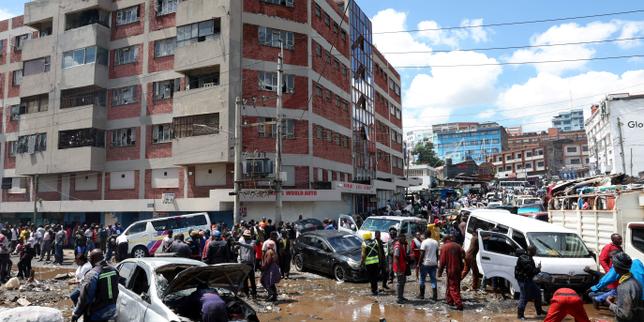
The rain in Nairobi doesn't just fall. It claims.
When the clouds bruise to a heavy, swollen purple over the Rift Valley, there is a specific kind of silence that precedes the chaos. It is the silence of a breath held too long. Then, the sky breaks. In April 2024, that break didn't stop for weeks. It turned the red dust of Kenya into a slick, lethal sludge that moved with the deliberate hunger of a predator. Meanwhile, you can explore related events here: The Calculated Silence Behind the June Strikes on Iran.
More than 60 souls were gone before the nation could even find its collective voice to scream. But the tragedy wasn't just in the water. It was in the warnings that went unheard and the infrastructure that buckled like wet cardboard under the weight of a changing world.
The Sound of the Gully
Imagine a woman named Amina. She is a composite of the many mothers in the Mathare slum, but her fear is entirely real. She spent years building a life out of corrugated iron and hope, perched on the edge of a drainage system that the city forgot. To Amina, the rain used to be a blessing for her brother’s maize farm upcountry. Now, it is a ticking clock. To see the bigger picture, check out the recent report by Al Jazeera.
When the deluge hit, the "standard" reports spoke of "localized flooding" and "displacement figures." They didn't speak of the vibration in the floorboards. They didn't mention the smell—a thick, metallic stench of sewage and drowned earth that clings to the back of your throat. Amina woke at 3:00 AM to the sound of the gully roaring. It wasn't a splash. It was a grind. Boulders the size of small cars were being tumbled like dice by the brown water.
She grabbed her children. They ran. They survived. Many of her neighbors, pinned by the very walls they built for safety, did not.
The physical mechanics of this disaster are deceptively simple. When a city grows faster than its pipes, the earth loses its ability to swallow. Concrete is a shield that reflects water, forcing it to find the path of least resistance. In Kenya, that path usually leads straight through the living rooms of the most vulnerable.
The Arithmetic of Negligence
Statistics are a cold comfort when you are burying a child. Yet, the numbers tell a story of a systemic failure that is harder to ignore than a storm cloud.
Government data eventually tallied the dead, but the controversy began when the public realized these weren't "acts of God" alone. For months, the meteorological departments had signaled the coming of an El Niño-enhanced rainy season. The warnings were clear. The preparations? They were ghosts.
Consider the math of a flood. If a drainage pipe is designed for a once-in-a-decade storm, and we are now seeing once-in-a-century storms every three years, the system is mathematically guaranteed to fail. It is a debt we have accrued by ignoring the climate’s changing ledger.
The anger that bubbled up in the wake of the 60 deaths wasn't just about the rain. It was about the "Mandazi Budget"—a colloquial jab at officials who seem more interested in tea-time snacks and bureaucratic posturing than in clearing the silt from the city’s arteries. The controversy erupted because, in the digital age, the Kenyan public could see the contrast between the luxury SUVs of their leaders splashing through the streets and the bodies being pulled from the mud in Mai Mahiu.
The Anatomy of a Mudslide
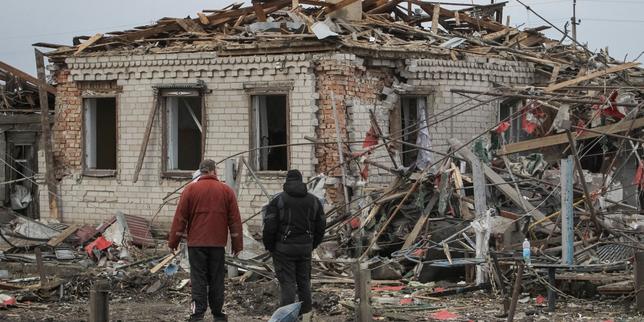
Mai Mahiu became a name synonymous with a particular kind of horror. It wasn't just water there; it was the earth itself turning liquid.
When a dam or a blocked tunnel bursts upstream, the resulting surge is a debris flow. It has a density that defies logic. It carries trees, houses, and memories with a force that can flatten a village in seconds. If you stood in its path, you wouldn't hear a "flow." You would hear a freight train.
Critics pointed out that many of these "natural" dams were actually man-made obstructions—railway embankments or poorly engineered culverts—that acted as accidental pressure cookers. When they popped, the release was catastrophic. This is where the narrative of "weather" shifts into the narrative of "accountability."
We often treat infrastructure as something static, something we build once and forget. But infrastructure is a living dialogue between a society and its environment. In Kenya, that dialogue has become a shouting match.
The Invisible Stakes of the Tourist Path
For the traveler, Kenya is the land of the Great Migration and the white sands of Diani. But the floods revealed the fragility of the threads connecting these paradises.
Highways were severed. The very roads that carry the lifeblood of the economy—tourism and tea—became impassable islands. This is the hidden cost of the climate crisis in the developing world. It isn't just about the immediate loss of life, though that is the greatest tragedy. It is about the "economic long-haul."
When a bridge washes away, a farmer’s crop rots. When a road is submerged, a safari is canceled. Each drop of rain carries a price tag that the average Kenyan family cannot afford to pay. The controversy isn't just about who failed to provide life jackets; it’s about who failed to build the bridge high enough in the first place.
The Psychology of the Aftermath
There is a specific kind of trauma that comes from a disaster that repeats. In the weeks following the deaths, the clouds would gather again every afternoon. You could see it in the eyes of the people at the bus stops. They weren't looking at their phones. They were looking at the sky.
This is "eco-anxiety" stripped of its academic pretension. It is the raw, primal realization that the environment you call home has become hostile.
We talk about "resilience" as if it is a muscle that gets stronger with every hit. But resilience can also be a mask for exhaustion. The people of Kenya are tired of being resilient. They want to be safe. They want the controversy to lead to more than just a trending hashtag on X or a somber press conference.
The Ledger of the Future
The debate currently raging in the halls of power in Nairobi is about "re-location." The government has ordered the demolition of houses built on "riparian land"—the natural edges of rivers.
On paper, it makes sense. Get the people away from the water.
In reality, it is a messy, painful surgery performed without anesthesia. Where do you go when the only land you could afford is the land that wants to kill you? If you move a million people from the slums, where is the "elsewhere"?
The solution isn't just a bulldozer. It is a fundamental reimagining of what a city should be. It is the realization that we cannot "engineer" our way out of a crisis if we continue to ignore the social gravity that pulls the poor toward the floodplains.
The sun eventually came out, as it always does. The mud dried into a fine, choking dust that coated the remains of the houses in Mai Mahiu. People started to rebuild, using the same rusted iron sheets and the same brittle wood.
The tragedy of the 60 lives lost is that they were a warning. A loud, violent, muddy warning.
As the next season approaches, the sky is clear for now. But the clouds are always waiting over the horizon, gathering their strength, waiting to see if we have learned how to listen to the silence before the break. The earth didn't just swallow those people; it held up a mirror to a nation’s soul, and the reflection was underwater.
The water has receded, but the ground remains soft, shifting under the feet of anyone who dares to walk too close to the edge.
Would you like me to look into the specific urban planning initiatives currently being proposed to fix Nairobi's drainage systems?