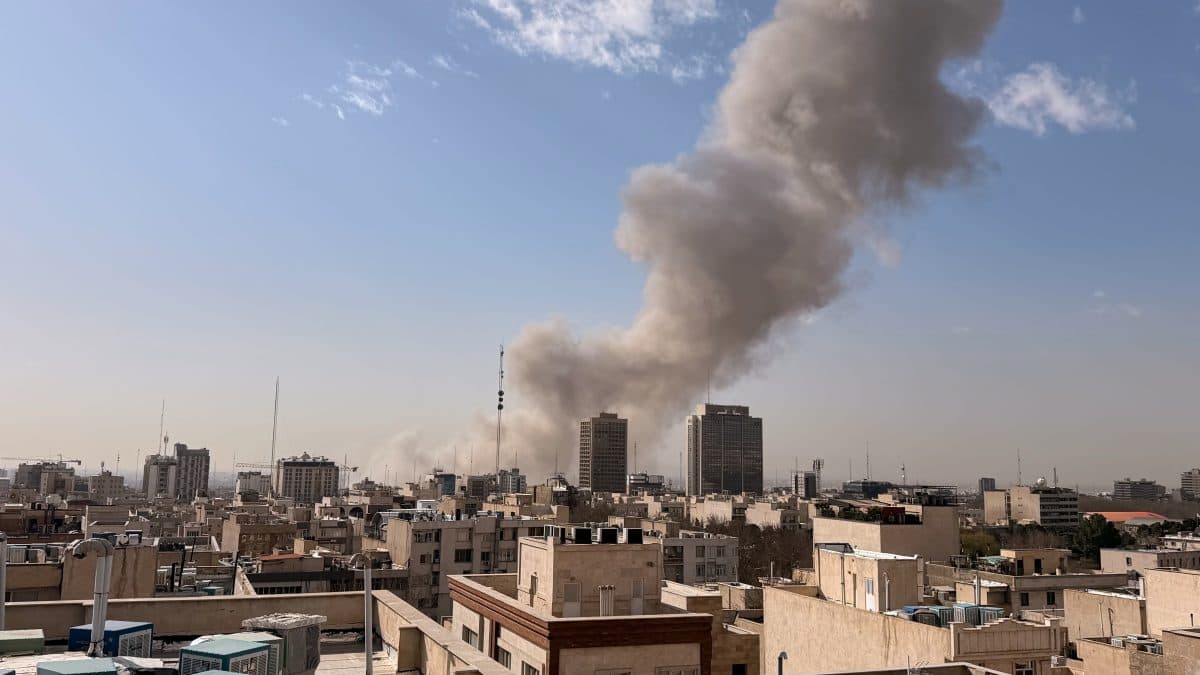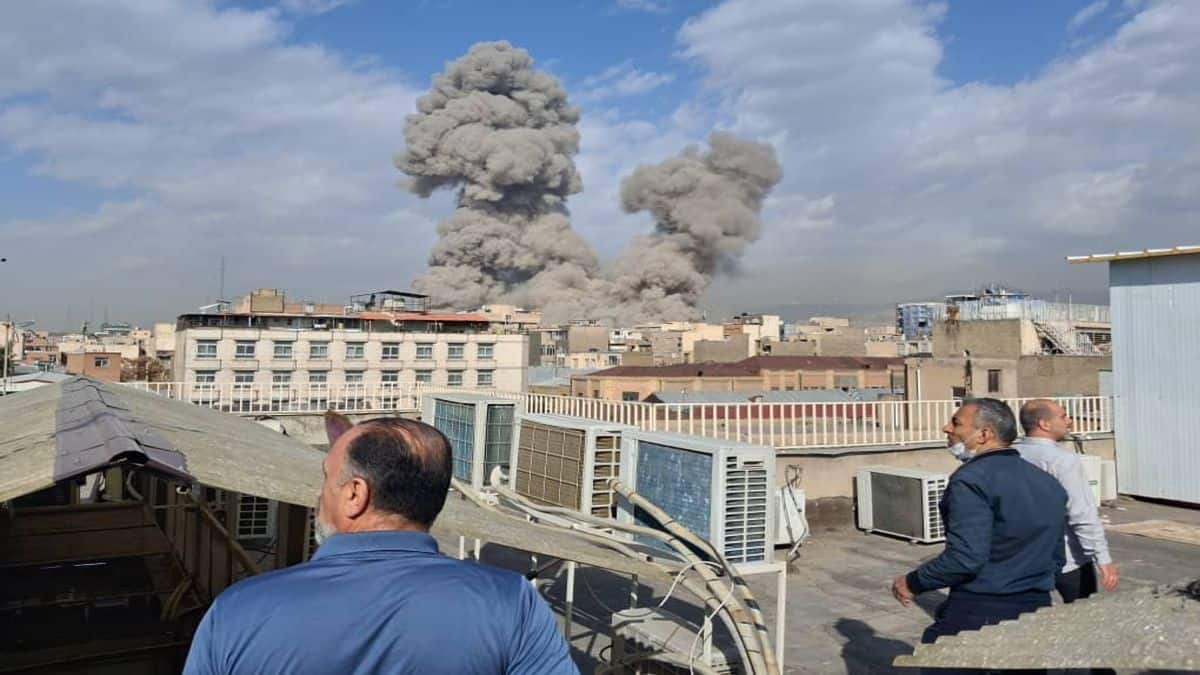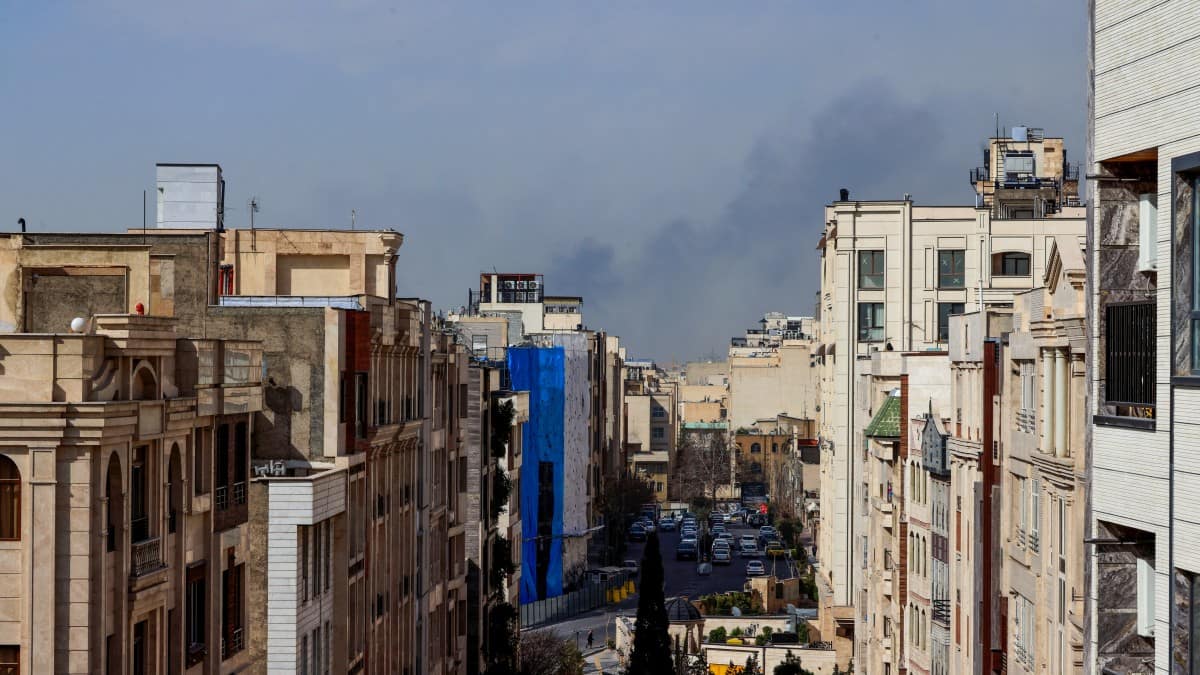
The evening air in Tel Aviv usually carries the scent of salt spray and over-roasted coffee. It is a city that prides itself on never sleeping, a Mediterranean bastion of defiance where the clink of glassware usually drowns out the distant rumblings of a volatile region. But at 7:39 PM, the rhythm broke. The sound wasn't a bang, not yet. It was the rising, mechanical wail of the Tzeva Adom—the "Red Color" alert.
In an instant, the mundane became a memory.
A young father in Givatayim grips his daughter’s hand, her backpack still heavy with schoolbooks, as they sprint toward the reinforced stairwell of their apartment block. In a bomb shelter in Jerusalem, an elderly woman who remembers the wars of 1967 and 1973 adjusts her shawl, her eyes fixed on the ceiling, waiting for the vibration she knows is coming. This is the human reality of a geopolitical flashpoint. When Iran launched nearly 200 ballistic missiles toward Israel, it wasn't just a military maneuver. It was a collective intake of breath for millions of people caught in the crosshairs of a shadow war that finally stepped into the light.
The Anatomy of an Ascent
To understand the weight of that moment, you have to understand the physics of the threat. These weren't slow-moving drones or low-altitude cruise missiles that hug the terrain like ghosts. These were ballistic missiles—monstrous cylinders of steel and propellant that arc into the edge of space before gravity pulls them back down at hypersonic speeds.
When a missile leaves a launchpad in Iran, it has a long way to travel—roughly 1,000 miles. It crosses sovereign borders and high-altitude winds, its signature glowing like a malevolent star on infrared satellite sensors. For the families sitting on the floor of their safe rooms, the math is cruel. They have minutes. In some parts of the country, they have mere seconds.
The Israel Defense Forces (IDF) issued a directive that was as simple as it was chilling: Go to a protected space and remain there until further notice. It is a strange thing to sit in a room designed to withstand a blast while the world outside is lit by the orange glow of interceptions. You hear the muffled thud-thud-thud of the Iron Dome and the Arrow defense systems engaging the incoming fire. These systems are marvels of engineering, using complex algorithms to determine which missiles are headed for empty sand and which are aimed at a high-rise or a hospital. But no shield is perfect. The sheer volume of the barrage was designed to overwhelm, to find the one crack in the armor.
A History of Shadows
The tension between Tehran and Jerusalem didn't materialize out of the ether. It is a decades-long friction that has primarily been fought through proxies, cyberattacks, and whispered threats. However, the direct nature of this assault signaled a fundamental shift in the rules of engagement.
For years, the conflict lived in the "gray zone"—actions that were aggressive enough to hurt but quiet enough to avoid a total regional conflagration. That's over. By launching a direct, large-scale barrage from Iranian soil, the Iranian leadership effectively signaled that the era of the shadow war has been replaced by the era of the direct strike.
Consider the logistical audacity. To coordinate the simultaneous launch of hundreds of high-grade weapons requires a massive military infrastructure. It requires a commitment to a path from which there is no easy U-turn. For the average person living in Tehran or Isfahan, the news of the launch might bring a sense of nationalistic fervor or, more likely, a deep, gnawing dread about what the "morning after" looks like. Because in the Middle East, every action is a prologue.
The Weight of the Response
As the missiles fell—many intercepted, some impacting near military bases or open areas—the conversation shifted immediately from survival to retaliation. This is where the narrative moves from the personal to the global.
The United States, having monitored the launch in real-time, described the attack as "defeated and ineffective," largely thanks to the combined efforts of Israeli and American naval and air defense assets. But "ineffective" is a technical term. It doesn't account for the psychological toll. It doesn't account for the children who will now flinch every time they hear a motorcycle rev its engine or a heavy door slam.
The stakes are invisible until they aren't.
Behind the scenes, the diplomacy is frantic. Phone lines between Washington, Jerusalem, and regional capitals are humming with a singular question: How do you restore deterrence without triggering a world-altering war? If Israel strikes back at the heart of Iran’s energy or nuclear infrastructure, the escalatory ladder becomes a vertical climb. If they don't, they risk appearing vulnerable in a neighborhood where weakness is an invitation.
The Persistence of Normalcy
There is a specific kind of resilience found in people who live under the constant threat of aerial bombardment. Once the "all clear" was given, the residents of Tel Aviv and Jerusalem didn't stay in their shelters for days. They emerged. They swept up the glass from shattered windows. They checked on their neighbors.
By the next morning, the cafes were opening. The espresso machines hissed. The news tickers on the walls continued to scroll with updates of impending retaliation and international condemnations, but the people were back on the streets. It is a defiant normalcy. It is a refusal to let the trajectory of a missile dictate the trajectory of a life.
Yet, the sky feels different now.
The invisible lines that used to govern this conflict have been redrawn in smoke and fire. The "barrage" is a headline for some, but for those who felt the vibration in their marrow, it was a reminder that the distance between peace and chaos is only about twelve minutes of flight time.
The sirens have stopped for today. But in the silence that follows, the question isn't if the rhythm will break again, but how loudly the next beat will fall.
The world watches the map, tracking borders and flight paths, calculating oil prices and carrier strike group positions. But if you want to know the true cost of this night, look at the hand of the father still trembling as he unlocks the door to his apartment, and the way his daughter looks at the stars, wondering which one is a light and which one is a threat.