The siren does not sound like a warning. It sounds like a tear in the fabric of the evening.
In a small apartment in Tel Aviv, the hummus is still warm on the plate. A child’s plastic truck lies upturned on the rug. Then, the low, mechanical wail begins. It starts in the gut before it hits the ears. It is the sound of geography collapsing. Usually, the threats come from the immediate neighborhood—the borders you can see with binoculars. But tonight, the fire is traveling from two thousand kilometers away.
Yemen is a name on a map to most, a place of distant, tragic dust. But tonight, it is a point of origin. A missile, forged with precision and launched with a specific intent, is arcing over the Red Sea. It is a piece of heavy machinery trying to find a home in a living room.
The Calculus of the Intercept
War in the modern era is often described through the cold lens of "escalation" and "regional instability." These are sterile words. They hide the reality of a father shoving his daughter into a reinforced stairwell while his heart hammers against his ribs like a trapped bird.
Israel’s announcement was brief: they intercepted a missile launched from the south. The Arrow defense system met the threat before it could touch the earth. On paper, this is a triumph of physics. In reality, it is a frantic, expensive dance. Think of it as trying to hit a bullet with another bullet while both are traveling at several times the speed of sound.
The Arrow system doesn't just "hit" its target. It calculates. It breathes. It uses a series of sensors to determine the exact millisecond where two streaks of metal must collide in the upper atmosphere to ensure the debris doesn't rain down as a lethal shower of jagged steel.
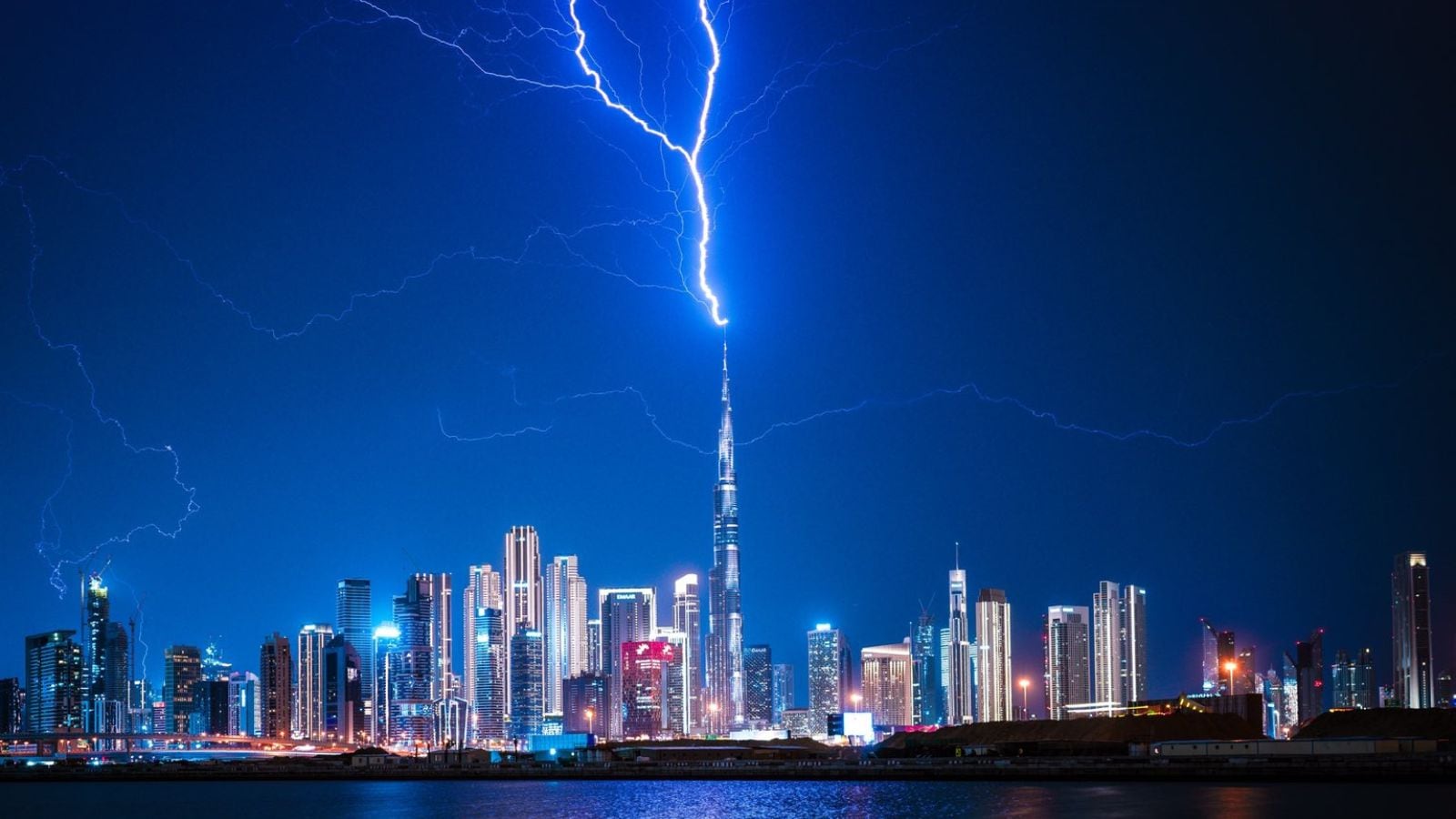
When the intercept happens, there is a flash. A second sun briefly flickers in the night sky. For the people below, that flash is the only reason they will wake up to drink coffee tomorrow.
The Long Reach of the Houthis
The geography of this conflict has shifted. We used to talk about the "Near East" as a series of adjacent rooms. Now, the walls are gone. By launching from Yemen, the Houthi rebels have signaled that the theater of war has no back row. Everyone is on stage.
Why Yemen? Why now?
The logic is a grim sort of branding. By intervening in the intensifying friction between Israel and Iran, the Houthis are positioning themselves as more than just a local faction. They are claiming a seat at the table of global consequence. They are forcing the world to look at a corner of the Arabian Peninsula that is often forgotten until it starts throwing fire.
The missile intercepted this week wasn't just a weapon; it was a message written in propellant. It said: We can reach you. It said: The distance you rely on for safety is an illusion.
The Invisible Stakes of a Hotter West Asia
As the war in West Asia intensifies, we focus on the explosions. We track the flight paths. But the real cost is the slow, corrosive erosion of the "normal."
Consider a woman in a seaside town who no longer looks at the horizon to see the sunset, but to check for plumes of smoke. Consider the shipping lanes in the Red Sea, where gargantuan tankers carrying everything from grain to microchips now move with a stutter. When a missile is launched from Yemen, insurance premiums in London spike. The price of a loaf of bread in a village in Egypt ticks upward.
The world is a nervous system. When you prick the finger in the Red Sea, the brain in Jerusalem and the stomach in New York both feel the jolt.
The "intensification" the news reports isn't just about more bombs. It’s about the narrowing of options. Every time an interceptor rises to meet a threat, the space for diplomacy shrinks. We are watching a cycle where technology is outpacing talk. It is much easier to program a flight path than it is to de-escalate a century of grievance.
The Metal Rain
The debris of an intercepted missile has to go somewhere. It doesn't just vanish into the ether. It breaks. It scatters.
After the "success" of an interception, there is the cleanup. Twisted shards of carbon fiber and scorched titanium are found in parks and on rooftops. These are the artifacts of a war that is being fought in the stratosphere but felt on the pavement.
To live under this sky is to live in a state of permanent "almost." You almost lost your home. The missile almost hit the hospital. The war almost became a total regional conflagration.
We find ourselves cheering for the technology, praising the "Iron Dome" or the "Arrow" as if they are deities. We forget that these systems are symptoms of a profound failure. They are the high-tech bandages on a wound that refuses to close. If you need a billion-dollar shield to eat dinner in peace, the "peace" is already broken.
The child in Tel Aviv eventually goes back to the rug. The truck is flipped back onto its wheels. The siren fades, leaving a ringing silence that is somehow louder than the noise. Two thousand kilometers away, another technician adjusts a coordinate. The sky is clear for now, but it is no longer empty. It is heavy with the weight of everything that hasn't fallen yet.
A single streak of light remains in the atmosphere, a fading scar from the intercept. It is a reminder that in this part of the world, the stars are often moved by men, and the horizon is never as far away as it looks.