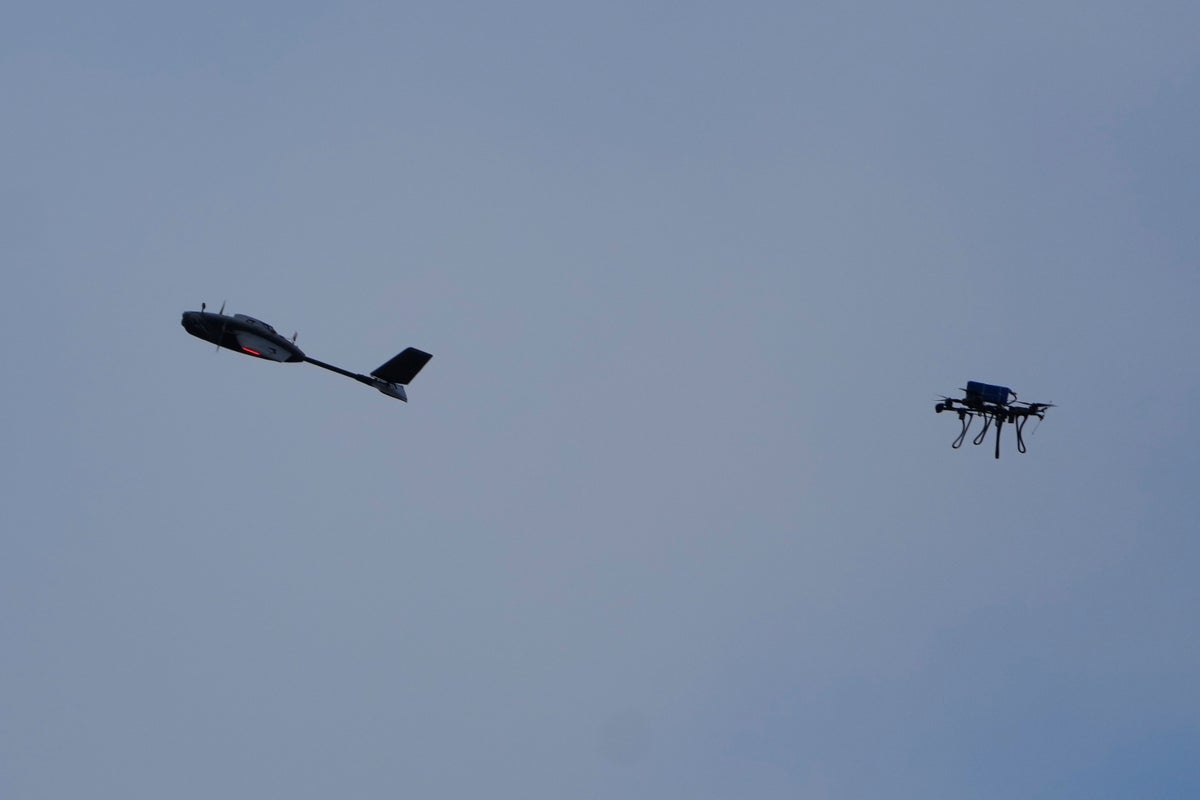
The sound of a drone is not a roar. It is a persistent, mechanical whine, like a lawnmower suspended in the clouds or a giant, angry hornet trapped in a jar. In the border towns of Moldova and the quiet reaches of Romania, this sound has become the new soundtrack to a midnight that used to be silent. It is the sound of a war that refuses to stay within its lines.
Imagine a kitchen in a small Moldovan village. A grandmother is stirring tea. She is miles away from the front lines of the Donbas. She is not a combatant. She has no stake in the territorial disputes of empires. Yet, the windows rattle. A shadow crosses the moon. Somewhere, a thousand miles away, a technician in a dark room pressed a button, and now a hunk of metal and high explosives is screaming through her airspace.
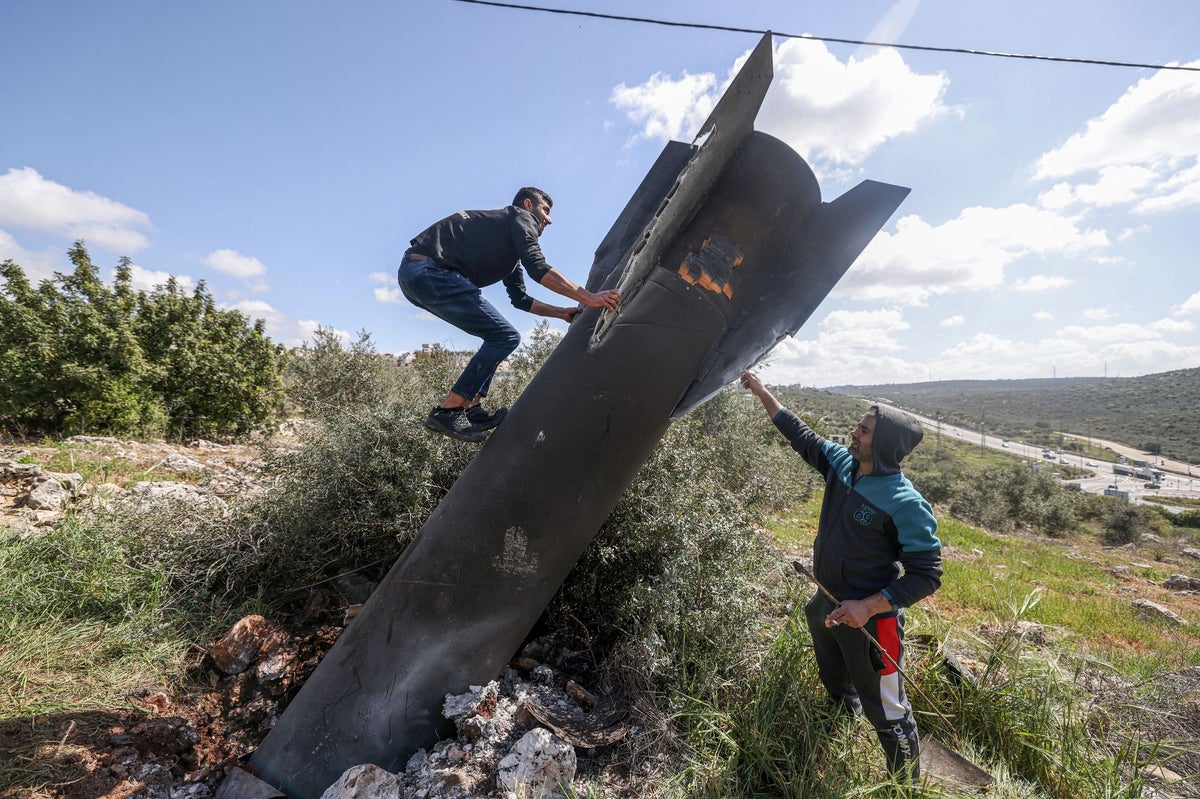
It didn't hit a military base. It hit a field. It left a blackened crater where sunflowers should be.
The Geography of Error
Modern warfare is sold to us as a triumph of precision. We are told that "smart" munitions can pick a specific window out of a skyscraper. But the reality on the ground in Eastern Europe tells a different story. When Russia and Ukraine exchange hundreds of aerial blows, the "smart" tech often proves to be devastatingly clumsy.
Electronic warfare (EW) is the invisible hand that pushes these drones off course. Imagine a blindfolded runner trying to find a finish line while a dozen people scream different directions at them. That is a drone under the influence of signal jamming. GPS coordinates are spoofed. Frequencies are flooded with noise. The drone, confused and directionless, continues to fly until its fuel runs dry or it strikes the first thing in its path.
Recently, this mechanical confusion resulted in debris falling into NATO territory and neutral ground alike. Romania, a NATO member, found fragments of a Russian Shahed drone near its border. Moldova, tucked between Ukraine and the European Union, discovered a "stray" on its soil.
These are not intentional invasions. They are something arguably more terrifying: they are accidents born of volume. When you saturate the sky with "suicide" drones, the law of averages dictates that some will wander. Sovereignty is being violated by GPS errors and dead batteries.
The Invisible Stakes of a Shrapnel Rain
When a drone falls in a Romanian forest or a Moldovan farm, the immediate damage is often minimal. A few broken trees. A hole in the dirt. But the political tremors are seismic. Each incident forces a terrifying question into the minds of European leaders: At what point does a mistake become an act of war?
If a stray drone hits an empty shed, it is a diplomatic "incident." If it hits a school or a hospital in a neighboring country, the machinery of international alliances begins to grind. Article 5—the "all for one" clause of NATO—hovers over every stray piece of wing or motor found in a Romanian field.
The people living in these border zones don't think about Article 5. They think about the cellar. They think about the fact that their children can no longer play outside after dusk because the sky has become unpredictable. This is the psychological tax of a "contained" war. It spills over not in soldiers, but in anxiety. It is a slow-motion haunting of the European periphery.
The Anatomy of a Wanderer
The drones causing this chaos—largely the Iranian-designed Shahed models used by Russia—are low-cost, high-impact tools. They are essentially flying lawnmowers packed with forty kilograms of explosives. They don't have the sophisticated sensors of a multi-million dollar Global Hawk. They are meant to be used in swarms, overwhelming air defenses through sheer numbers.
- Cost: Roughly $20,000 per unit.
- Range: Up to 2,500 kilometers.
- Guidance: Basic GPS and inertial navigation.
Because they are cheap, they are expendable. If five percent of them lose their way and crash in a neighboring country, the aggressor views it as an acceptable margin of error. But for the farmer in Moldova, there is no such thing as an "acceptable margin" when fire falls from the heavens.
Consider the mechanics of the "drift." A drone is launched from Crimea, heading for an infrastructure target in Odesa. Ukrainian electronic warfare units engage. They blast the area with high-powered radio waves that mimic GPS signals. The drone's internal brain thinks it is ten miles to the West. It adjusts. It corrects for a ghost. It flies straight into the sovereign airspace of a country that hasn't fired a shot in eighty years.
The Silence of the Diplomats
The response to these incursions is usually a flurry of "grave concern" and "strongly worded protests." Ambassadors are summoned. Radars are scrutinized. But there is a hollow feeling to the diplomacy. Everyone knows that as long as the sky over Ukraine is a laboratory for aerial slaughter, the borders of Europe will remain porous to fire.
The residents of these border towns have learned to recognize the different sounds. They know the rhythmic thud of an interceptor missile. They know the high-pitched buzz of the scout drone. They have become accidental experts in a field of study they never wanted to enroll in.
There is a specific kind of exhaustion that comes from living under a sky that is no longer yours. It is a loss of agency. You can lock your doors. You can fortify your borders. You can station tanks at the crossings. But you cannot stop a piece of burning titanium from falling through your roof at three in the morning because a satellite signal 12,000 miles away flickered for a microsecond.
The Ghost in the Machine
We often talk about war as a series of deliberate moves on a chessboard. This narrative is comforting because it implies control. If the drones are hitting Romania and Moldova, we want to believe it's a message, a threat, or a strategic gambit.
The truth is much messier. It is a story of failure. It is the story of weapons that outpace their own guidance systems. It is the story of a war that has grown too large for its own geography.
We are entering an era where the "stray" is the new normal. As autonomous weapons become cheaper and more ubiquitous, the concept of a "front line" dissolves. The front line is wherever the wind blows a failing engine. The front line is the backyard of a person who just wanted to grow tomatoes in peace.
The most dangerous part of this development isn't the explosion itself. It is the erosion of the boundary between war and peace. When a country can be hit by the weapons of a conflict it isn't part of, the very idea of neutrality begins to evaporate. You are involved whether you like it or not, simply because you occupy a certain coordinate on a map that a confused computer decided was a target.
The tea in the Moldovan kitchen is cold now. The grandmother watches the news, but the news doesn't mention her village. It talks about "territorial integrity" and "geopolitical shifts." It doesn't talk about the way the vibration of the drone felt in her teeth.
The sky used to be a place of weather and birds. Now, for those living on the edge of the fire, it is a lottery. Every mechanical whine in the distance is a prompt to hold your breath and wait to see where the error lands.
The metal is cold, the software is buggy, and the stakes are human lives that don't appear on anyone's tactical map. The machine doesn't care about borders. It only cares about the signal, and right now, the signal is screaming.
Would you like me to analyze the specific air defense systems Romania and Moldova are currently deploying to counter these stray drone incursions?