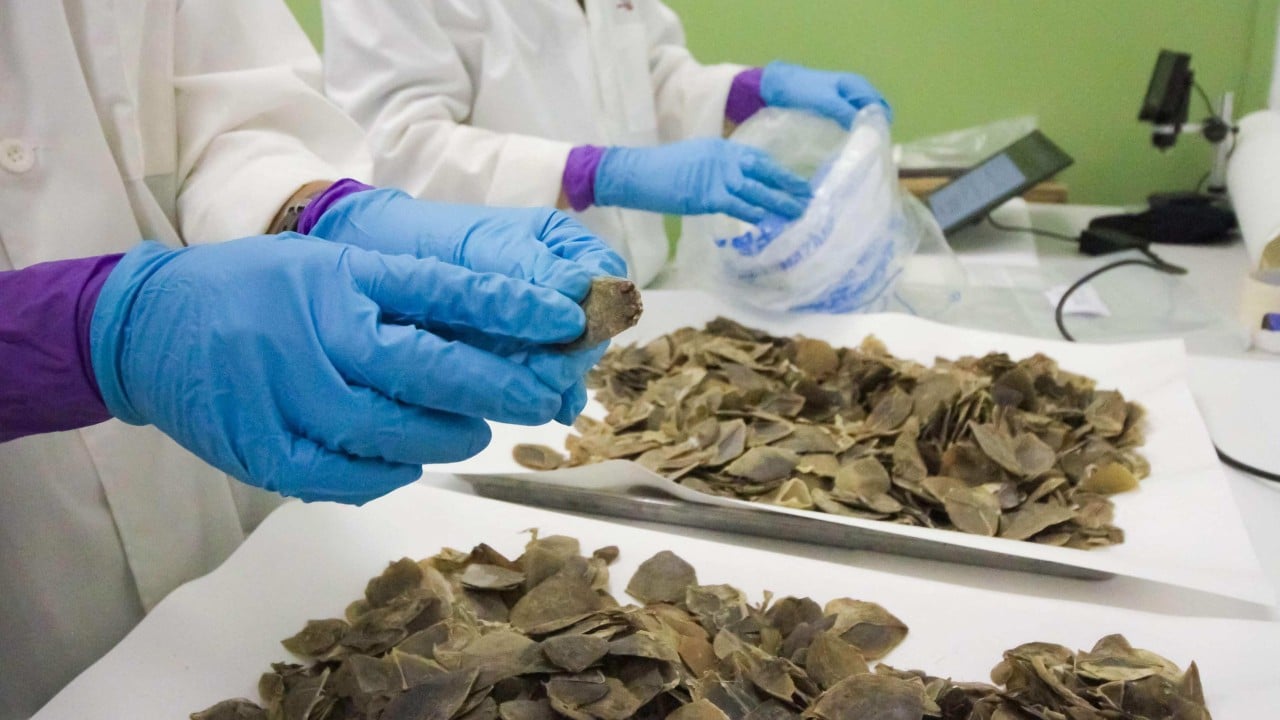
Singapore just intercepted 12.9 tonnes of pangolin scales. Let that number sink in. If you can’t visualize it, picture an entire shipping container packed to the brim with the protective armor of nearly 38,000 individual animals. They were headed for Vietnam, tucked away behind 474 bags of "dried fish seeds," a common but lazy ruse used by smuggling syndicates. This isn't just a "record seizure" for the history books. It’s a loud, bloody signal that the global appetite for the world’s most trafficked mammal isn't slowing down, no matter how many international bans we put in place.
The shipment came from Nigeria. It’s a well-worn path. Authorities from the National Parks Board, Singapore Customs, and the Immigration & Checkpoints Authority (ICA) flagged the container at the Pasir Panjang Export Inspection Station. They found the scales packed in 230 separate bags. Valuation? Roughly $38.7 million. But focusing on the dollar amount misses the point entirely. The real cost is the erasure of a species that has existed for 80 million years.
The scale of the slaughter is hard to fathom
Pangolins are the only mammals with true scales. They’re shy, nocturnal, and have zero natural defenses against humans other than rolling into a ball. That one defense mechanism makes them tragically easy to pick up and toss into a sack.
When we talk about 12.9 tonnes of scales, we’re talking about an ecological catastrophe. It takes roughly three to four pangolins to produce a single kilogram of scales. Do the math. This one shipment represents the death of tens of thousands of creatures. Most of these were likely the Giant Ground Pangolin or the White-bellied Pangolin, both of which are being wiped out across Central and West Africa to feed a demand located thousands of miles away in Asia.
The smugglers used "dried fish seeds" as a cover. It's a classic tactic. They rely on the sheer volume of global trade to hide their contraband. Millions of containers move through Singapore every year. The fact that this one was caught is a testament to high-level intelligence and risk profiling, but it also makes you wonder how many containers slipped through the cracks while officers were busy with this one.
Why the demand for pangolin scales refuses to die
You’d think in 2026, we would’ve moved past using ground-up fingernails as medicine. Because that’s all pangolin scales are. They're made of keratin, the exact same protein in your hair and nails. They have no proven medicinal value. None. Yet, in Traditional Chinese Medicine (TCM), they’re still highly sought after to "promote blood circulation" or "dispel skin diseases."
It’s a stubborn myth. Even though the Chinese government removed pangolin scales from the official TCM pharmacopoeia a few years ago, the black market remains rampant. When something is banned, the price goes up. When the price goes up, the syndicates get more creative. It becomes a Veblen good—a luxury item where high prices actually increase demand among the elite who want to show off their wealth.
I’ve seen this pattern before with rhino horn and ivory. The more "precious" and "rare" an item becomes due to its endangered status, the more status it confers on the buyer. It's a sick cycle. We’re literally killing them because they’re dying out.
Singapore is the ultimate double edged sword
Singapore is one of the world's busiest transshipment hubs. That’s its greatest economic strength and its biggest liability in the fight against wildlife crime. The same efficiency that allows a business to ship electronics across the globe in record time is the same efficiency traffickers want to exploit.
The authorities here don't mess around. Under the Endangered Species (Import and Export) Act, the penalties are stiff. Individuals found guilty of illegally importing or exporting CITES-listed species can face up to two years in prison and fines of $50,000 per species, capped at an aggregate of $500,000.
But honestly? For a shipment worth nearly $40 million, a $500,000 fine is just the cost of doing business. It’s a line item in a ledger. Until the international community treats wildlife trafficking with the same severity as drug smuggling or human trafficking, these "record seizures" will just keep happening. The risk-to-reward ratio for the kingpins in Nigeria and Vietnam is still skewed heavily in favor of the reward.
Moving beyond the headlines
Catching a container is great. It’s a win for the ICA and NParks. But it’s a reactive win. We’re playing a game of Whac-A-Mole where the moles have billion-dollar budgets and high-tech logistics.
If we want to actually stop the flow of scales, we have to look at the source and the destination simultaneously.
- At the source: African nations need more support for boots-on-the-ground park rangers who are often outgunned by poaching syndicates.
- At the destination: We need aggressive, culturally sensitive education campaigns in Vietnam and China that don't just say "it's illegal," but prove "it doesn't work."
- In the middle: Transshipment hubs like Singapore need to continue investing in AI-driven scanning technology that can "see" through cargo disguises better than any human eye.
Don't just read this and move on. If you want to help, support organizations like the Pangolin Specialist Group or the Wildlife Conservation Society. They do the gritty work of tracking these trade routes. More importantly, check your own consumption. If you're buying "traditional" remedies, ask for the ingredient list. Knowledge is the only thing that actually kills a black market.
The scales from this 12.9-tonne seizure will likely be incinerated. It's a grim end for 38,000 animals. They didn't die to cure a disease; they died because of a lie and a shipping label that said "dried fish skin." We have to do better than this.
Check the labels on any imported traditional supplements you own and verify they are CITES-compliant through the official NParks database or your local wildlife authority.