The ocean is not a place of silence. It is a world of pressure, a crushing weight that translates every mechanical hum and metallic clink into a scream that travels for miles. In the belly of a Virginia-class fast-attack submarine, men and women live in a pressurized tube where the sun is a memory and time is measured in the glow of sonar screens. They are the apex predators of a liquid desert, and recently, they proved exactly why the world’s navies fear what they cannot see.
Deep in the Indian Ocean, a torpedo left its tube. It didn't make a cinematic roar. There was a shudder, a hiss of high-pressure air, and then the mechanical intelligence of a Mark 48 ADCAP took over. Minutes later, a 1,500-ton Iranian frigate, the IRIS Sahand, ceased to be a ship and became a memory.
The Physics of an Invisible Execution
To understand what happened in those turquoise waters, you have to discard the Hollywood imagery of fiery explosions on the hull. A modern heavyweight torpedo doesn't actually want to hit the ship. It wants to miss—by just a few feet.
As the torpedo closes in on its target, its onboard sensors calculate the precise moment it is directly beneath the enemy's keel. Then, it detonates. This creates a massive, rapidly expanding gas bubble under the ship. For a split second, the water that was supporting the weight of the vessel simply vanishes. The ship’s back breaks under its own gravity. Then, as the bubble collapses, a high-pressure jet of water shoots upward with the force of a thousand sledgehammers, punching through the weakened steel.
The Sahand didn't just sink. It folded. In the grainy footage released of the exercise, you see the ship lifted almost entirely out of the water before it is dragged down by the vacuum of the sea. There is no struggle. There is only the sudden, violent realization that the ocean has decided to reclaim what was lent to it.
The Weight of a Message
While this was a controlled exercise—a SINKEX, in military parlance—the context is anything but academic. The Indian Ocean has become a chessboard where the squares are shifting. For the crew of the American submarine, this wasn't just target practice. It was a demonstration of a terrifying reality: in the age of satellite surveillance and high-altitude drones, the only place left to hide is down.
Imagine the hypothetical commander of a surface vessel in a contested strait. You have the best radar money can buy. You have anti-aircraft missiles and point-defense guns that can shred a swarm of drones in seconds. You feel invincible. But beneath you, a mile away and three hundred feet down, a group of twenty-somethings in dark blue coveralls are drinking bad coffee and watching a green line on a screen. They know your engine's acoustic signature. They know your speed. They know exactly where your keel is weakest.
And you have no idea they are there.
The sinking of the Sahand serves as a grim reminder that surface ships are essentially floating targets if they cannot control the subsurface domain. It is a psychological game as much as a kinetic one. The "invisible stakes" here aren't about who has the bigger boat; they are about who has the more disciplined silence.
Engineering the End of a Warship
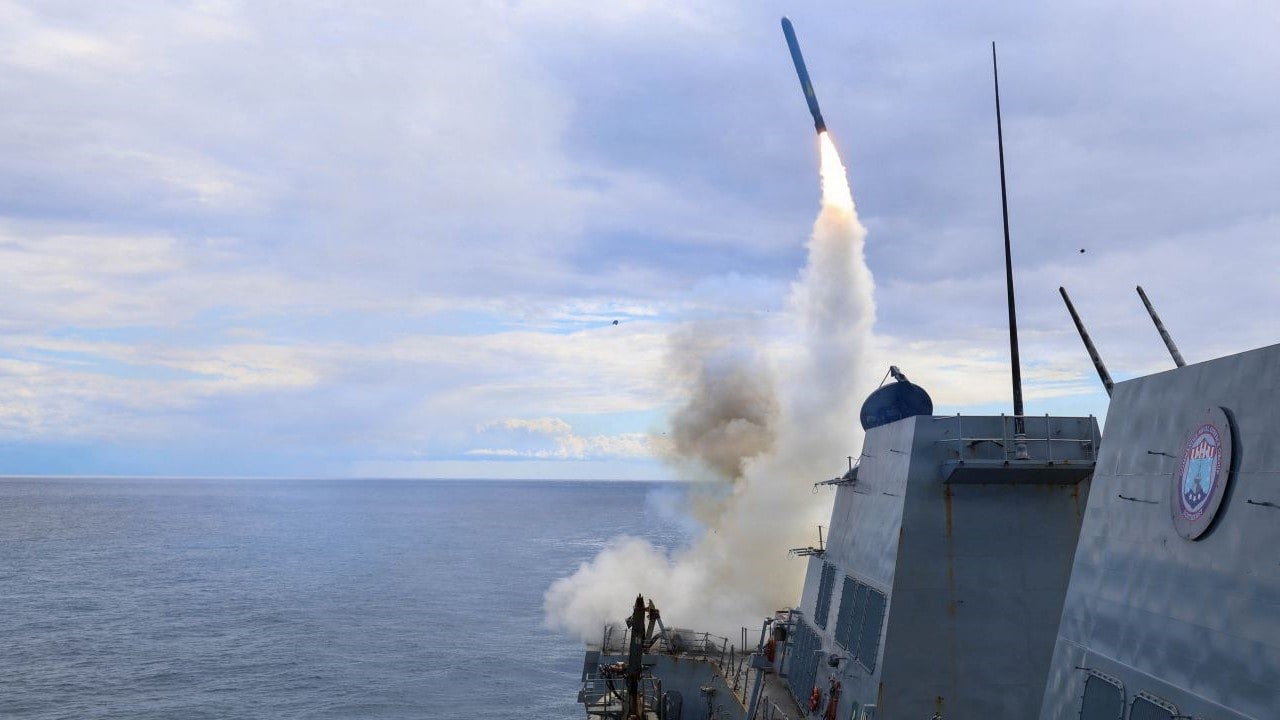
The Mark 48 torpedo is a masterpiece of lethal engineering. Unlike the "dumb" torpedoes of World War II that ran on straight lines and prayer, the ADCAP (Advanced Capability) variant is a digital bloodhound. It is wire-guided, meaning the submarine can talk to it until the very last second, adjusting its course as the target tries to flee. If the wire snaps, the torpedo’s own active and passive sonar kick in. It starts "pinging," looking for the hollow ring of a steel hull against the backdrop of the deep.
During the exercise, the precision was surgical. The U.S. Navy frequently uses retired or captured vessels for these tests to validate that their weapons systems still work against modern naval architecture. The Sahand, an Iranian-built frigate that had previously capsized in port and been "resurrected," was a perfect proxy for the kind of threats currently patrolling the Persian Gulf and the Gulf of Aden.
But the technology is only half the story. The other half is the human endurance required to deliver it. Submarine crews spend months in a state of hyper-vigilance. They live in a world where a dropped wrench can give away their position to a sensitive enemy hydrophone. When that torpedo finally leaves the tube, it is the culmination of thousands of hours of silent, grueling discipline.
The Ripple Effect
When a ship goes down in the Indian Ocean, the ripples reach far beyond the splash zone. They reach the halls of power in Tehran, where naval planners have to reckon with the fact that their most prized surface assets are vulnerable to an enemy they cannot track. They reach the boardrooms of global shipping companies, who rely on the perceived stability of these waters to move the world’s fuel and goods.
The Indian Ocean is the throat of global commerce. If that throat is squeezed, the lights go out in cities thousands of miles away. The presence of a U.S. submarine capable of deleting a warship from the map with a single shot is a silent guarantee—or a silent threat, depending on which side of the periscope you’re standing on.
We often talk about "power projection" as if it’s something you can see, like a carrier strike group on the horizon or a flight of stealth fighters overhead. But the most effective power projection is the kind that exists in the imagination of the enemy. It’s the fear of the "ghost" in the water.
The Sahand is now a reef. It sits in total darkness, its sensors crushed, its guns silenced by the weight of the Indian Ocean. It stands as a testament to a hard truth of modern conflict: the most dangerous weapon in the world isn't the one you see coming. It’s the one you never even suspected was there until the floor vanished beneath your feet.
The ocean has returned to its natural state. It is quiet again. But somewhere in that vast, blue expanse, the hunters are still moving, listening to the heartbeat of the world through a wall of cold steel.