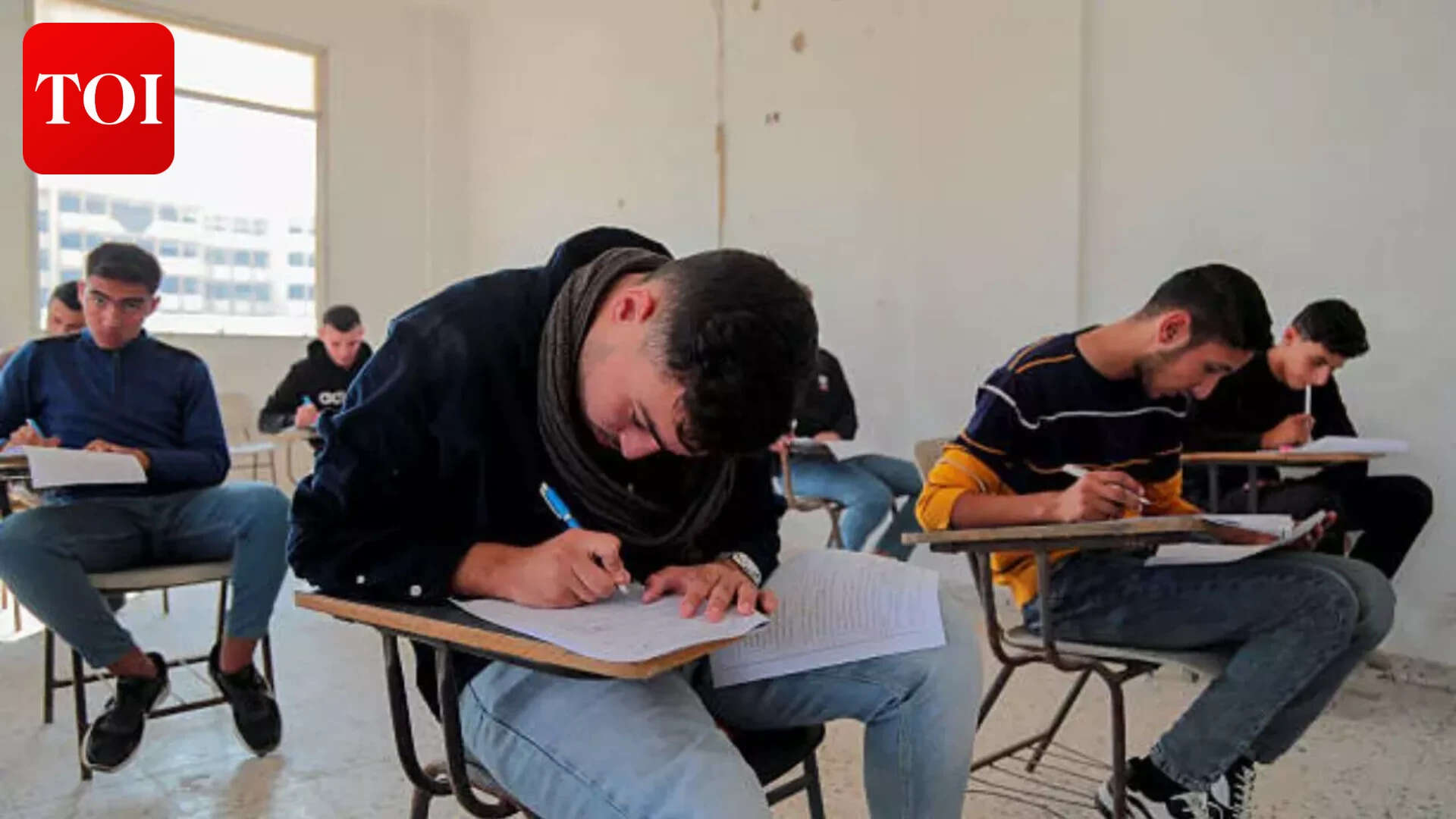
The ink was already dry on the practice papers. Across the sprawling suburbs of Dubai, the vertical towers of Abu Dhabi, and the quiet coastal stretches of Oman and Kuwait, thousands of wooden desks sat in readiness. They were arranged in those familiar, hauntingly straight rows that define the life of a high school senior. In the world of the Central Board of Secondary Education (CBSE), the month of March isn't just a time on a calendar. It is a crucible.
For a Grade XII student, these examinations are the culmination of a twelve-year marathon. They are the gatekeepers to university placements, the weight behind every late-night caffeine-fueled study session, and the source of a very specific kind of communal anxiety that binds the South Asian diaspora together.
Then, the world outside the classroom intervened.
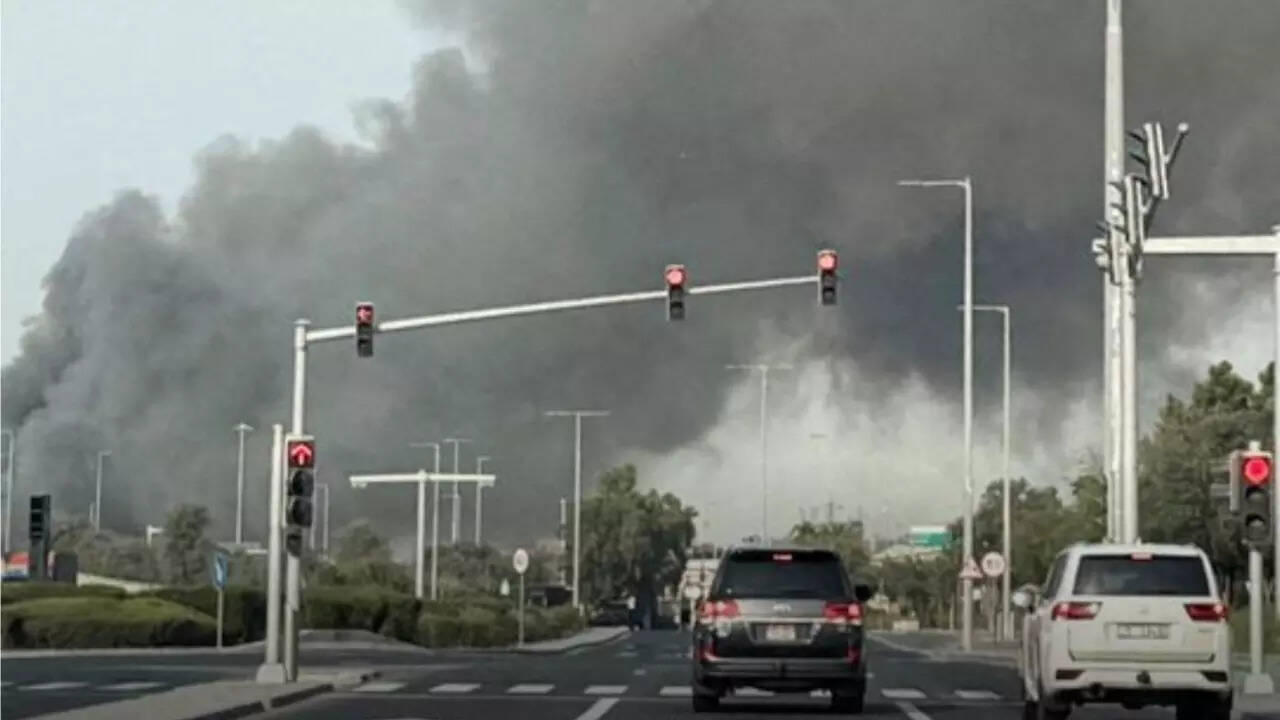
Geopolitical tensions do not usually respect the sanctity of a hall ticket. When the announcement rippled through the Gulf Cooperation Council (GCC) countries—the UAE, Saudi Arabia, Qatar, Kuwait, Oman, and Bahrain—it didn't arrive with a bang. It arrived as a notification on a smartphone, a sudden break in the rhythm of frantic revision. From March 16 to April 10, the exams were gone. Postponed. Suspended in a vacuum of uncertainty.
The Anatomy of a Wait
Consider the perspective of a student we might call Arjun. For months, Arjun’s life has been measured in chapters of physics and the intricate mechanisms of macroeconomics. His bedroom wall is a mosaic of sticky notes and "To-Do" lists that prioritize organic chemistry over sleep. He has been pacing his mental energy to peak exactly on the morning of his toughest paper.
When an exam is cancelled due to regional instability, the biological clock of a student doesn't simply stop. It crashes. The adrenaline that was supposed to carry them through the final stretch has nowhere to go. It turns inward, becoming a restless, grinding form of stress.
The CBSE’s decision to halt exams in seven GCC countries was a logistical necessity, a response to the shadow of conflict that made the safe movement of papers and pupils an impossibility. But for the families living in these high-rise apartments and villa compounds, the "logistics" felt deeply personal. It felt like the finish line had been moved while their feet were already mid-stride.
The Invisible Stakes
We often talk about education in terms of grades and percentages. We rarely talk about the emotional economy of an international student. In the Gulf, many of these students are preparing to leave the only homes they have ever known to attend universities in India, the UK, or North America. The Class XII boards are their final act of childhood.
When the schedule breaks, the dominoes begin to fall.
University application deadlines don't always pause for regional crises. Visas depend on results. Results depend on the timely completion of papers. By shifting the window from mid-March to mid-April, the board created a secondary crisis: a race against time. The anxiety isn't just about "when will I take the test?" It’s about "will my future wait for me?"
Parents, too, find themselves in a state of suspended animation. In the UAE, the "Board Exam Season" is a family affair. Social calendars are cleared. Voices are lowered in hallways. The household revolves around the silence of the study room. To extend that period by nearly a month is to ask a family to hold its breath until its lungs burn.
Behind the Official Statement
The official word from the board was clinical. It spoke of "prevailing conditions" and "precautionary measures." It was the language of a giant institution moving to protect its interests and its people. But walk through the corridors of a closed testing center in Sharjah or Riyadh, and the clinical reality vanishes.
You see the empty chairs. You see the proctors who had been briefed on security protocols now standing idle. The papers themselves—shipped across borders, guarded like currency—become relics of a plan that failed to account for the volatility of the map.
The decision-making process at this level is a brutal calculation. If you proceed, you risk the safety of thousands of teenagers. If you stop, you disrupt the life trajectories of an entire generation of expatriates. There is no "good" choice. There is only the least-harmful one. The board chose silence over the risk of chaos.
The Psychology of the Gap
There is a specific phenomenon that happens when a high-stakes event is delayed. It is called "fret-fatigue."
During the first week of the postponement, there is a flurry of activity. Students try to maintain their "peak" form. They re-read the same chapters for the tenth time. But by the second week, the mind begins to rebel. The human brain is not designed to stay at a competitive redline for sixty consecutive days.
Teachers across the GCC found themselves playing a new role: part-time educators, full-time therapists. They weren't teaching calculus anymore; they were teaching endurance. They were sending WhatsApp messages to discouraged teenagers, telling them to stay sharp, to keep the fire lit, even when the hearth felt cold.
The Weight of the Map
Why does this matter to someone who isn't a student in Dubai or a parent in Doha? Because it reveals how fragile our global systems truly are. We live in an era where we believe talent and hard work are the only variables in the equation of success. We want to believe that if Arjun studies hard enough, he wins.
But the cancellation of the March 16 exams reminds us that we are all subject to the geography of our birth and the politics of our borders. A student in Delhi continued their exam as scheduled. A student in London moved forward. But the student in the Gulf—caught in the friction of regional tensions—was told to wait.
This is the hidden inequality of global education. It isn't just about the quality of the books or the prestige of the school. It’s about the stability of the ground beneath the desk.
Resilience in the Silence
By the time April 10 approached, the atmosphere had shifted. The initial shock had been replaced by a grim, quiet determination. The students had learned a lesson that wasn't in the CBSE curriculum: the art of the pivot.
They learned that the world does not owe you a smooth path. They learned that sometimes, through no fault of your own, the gates close, and you have to sit on your suitcase and wait for them to creak open again.
When the exams finally resumed, the energy was different. The desperation had been replaced by a tired, hardened resolve. The students walked into those halls not just as examinees, but as survivors of a month-long psychological siege.
The desks were no longer just pieces of furniture. They were anchors. They represented a return to a world where logic, or at least the logic of a standardized test, still applied. For three hours at a time, the regional tensions faded. The only thing that mattered was the flow of the pen and the ticking of the clock.
The papers were eventually collected. The halls were eventually emptied. The students went home to sleep a sleep that had been deferred for weeks. But the memory of those empty weeks in March remains. It serves as a reminder that the most important thing we teach the next generation isn't how to solve for $x$, but how to keep their composure when the equation itself is torn apart.
The ink eventually dried on the final papers, but the students who walked out of those rooms were not the same ones who had prepared to enter them on March 16. They were older. They were warier. They had seen the curtain pulled back to reveal that even the most important milestones of their lives could be paused by the stroke of a distant pen.