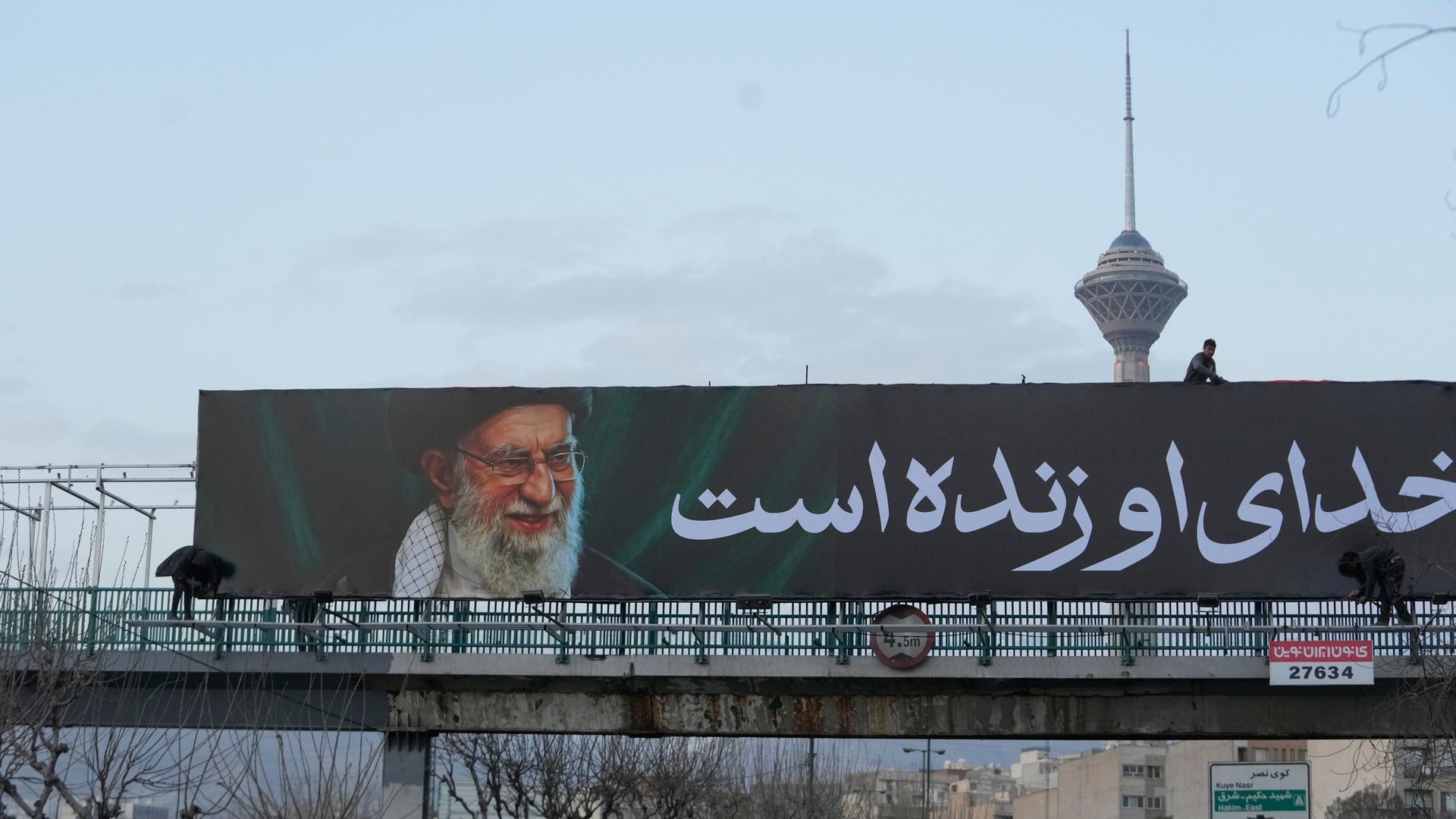
The hum of the server room is the sound of modern conflict. It is a low, persistent vibration that rattles the teeth if you stand there long enough. In a nondescript building tucked away in a quiet neighborhood of Tehran, a man I will call Reza sits at a workstation. He does not wear a uniform. He wears a plain, slightly worn sweater. He is not a general who commands legions of tanks. He is a mathematician of instability.
Reza does not watch maps of frontlines. He watches streams of data. He watches the fluctuating price of grain in a port city thousands of miles away. He watches the flicker of a social media network in a capital city neighboring his own. He is looking for the point of maximum fragility. He is looking for the moment when a society stops trusting its neighbor and starts fearing its shadow.
We often talk about war as if it were a physical collision. We imagine steel meeting steel. We visualize the arc of missiles and the thunder of artillery. But that is the old way. That is the way of the twentieth century, and it is a method that has become prohibitively expensive for a state operating under heavy economic pressure.
Consider a hypothetical scenario: A power grid in a rival nation fails. It happens on a Tuesday, at the height of the summer heat. Traffic lights die. Refrigeration fails. Hospitals switch to generators, and the generators hum with the uncertainty of a fuel supply chain under strain. No one fired a shot. No one crossed a border. No one declared war. But for six hours, that nation was paralyzed. The fear—the suspicion that this was not an accident—is the true weapon.
This is the alternative tactic. It is not about spreading conflict through physical expansion. It is about turning the internal friction of an adversary into a fire that consumes them from the inside.
For decades, the standard analysis has been that Iran seeks to expand its reach by physically moving its proxies into new territories. This is true, to an extent. The network of influence they have built is real, and it is formidable. But it is also a blunt instrument. It requires money, logistics, and the constant risk of direct military confrontation. There is a sharper blade hidden in the drawer, and it is being polished every single day.
When we examine the history of this region, we see a shift in behavioral patterns. After the devastating war with Iraq in the 1980s, the strategic planners in Tehran realized something fundamental: they could not win an industrial war of attrition. They lacked the sheer volume of metal and fire. They had to change the game.
They adopted the strategy of the porcupine. A porcupine does not hunt wolves. It does not chase them down. It simply makes itself impossible to swallow without enduring terrible, agonizing pain.
Think about the psychological toll of this strategy. It is not just about the physical damage an adversary might suffer. It is about the loss of agency. When you live in a state where the lights might go out, where your bank accounts might freeze, where your news feed might be suddenly flooded with disinformation designed to turn neighbor against neighbor, you stop living your life and start managing your survival. You become reactive. You become timid.
This is the "fearsome and intimidating" tactic. It is the art of strategic paralysis.
Consider the role of the shadow war. It occurs in the dark. It is fought with code, with money, with the selective leaking of private information, and with the manipulation of political narratives. It relies on the fact that modern, interconnected societies are incredibly fragile. We are so used to the constant, uninterrupted flow of electricity, information, and goods that we have forgotten how quickly that flow can be interrupted.
I have spent years observing the movement of these shadows. I have seen how a single, well-placed cyber intrusion can cause more long-term damage to a nation’s economy than a dozen targeted airstrikes. The airstrike makes people angry; it creates a martyr; it strengthens the resolve of the victim. The cyber intrusion creates doubt. It makes the leadership look incompetent. It makes the public wonder if their government is still in control. It breeds cynicism.
Cynicism is the ultimate corrosive agent.
There is a terrifying efficiency to this. It bypasses the military. It bypasses the international laws of war, because it is hard to define what a "cyber-kinetic act of war" actually is. Is it a crime? Is it a strategic nudge? Is it a prelude to something worse? Because the answer is always blurred, the victim is always hesitant to respond. And in that hesitation, the architect of the chaos gains the upper hand.
Let us look closer at how this functions. When a nation feels the pressure of these tactics, it reacts by tightening security. It diverts resources from healthcare, education, and infrastructure toward surveillance and defense. It becomes a closed loop. The society becomes colder. The public square becomes a place of suspicion rather than discourse. The economy slows down because every transaction is vetted, every piece of technology is inspected, every partnership is questioned.
This is the invisible cost. You do not see it on the news. You do not see soldiers on the street. You only see the steady decline of opportunity. You see the businesses closing because the cost of doing business in a high-threat environment is too high. You see the young people leaving because they want to live in a place where they don't have to worry about the power grid failing.
Reza, sitting in his room in Tehran, knows this. He is not trying to trigger a massive, conventional war. He is trying to trigger a decay. He is betting that if he can keep the pressure high enough, if he can keep the threat level just below the threshold of total war, the adversary will eventually exhaust themselves. They will burn out their own resources trying to defend against ghosts.
It is a terrifying thought. It suggests that the most effective way to win a conflict is not to destroy your opponent, but to make them destroy themselves.
Many experts will tell you that the goal of this strategy is to force a grand bargain. They suggest that the intimidation is a lever, meant to bring the other side to the table under duress. Perhaps that is true. But there is another, darker possibility. Perhaps the goal is not to negotiate. Perhaps the goal is simply to ensure that the rival is never again strong enough to challenge the regional status quo.
If you are a government official in a nation targeted by this strategy, what do you do? You are trapped between two bad options. You can escalate, which risks the very war you are trying to avoid. Or you can sit, wait, and endure the erosion of your stability.
Most choose the latter. They try to patch the holes. They try to bolster the firewall. They try to ignore the fact that the architecture of their society is being slowly, systematically undermined.
This brings us to a crucial question. How do we survive this?
We have to recognize that the primary weapon being used against us is not the missile. It is the fear of the missile. It is the anxiety generated by the uncertainty of the next moment. We have to build our societies in a way that is less susceptible to these shocks. We need to focus on decentralized infrastructure, on redundant systems, and most importantly, on the psychological resilience of our people.
We must stop treating every incident as an existential threat. If we panic every time a server goes down or a propaganda campaign hits the airwaves, we are giving the architects of this chaos exactly what they want. We are handing them the keys to our reaction.
I remember watching a city recover from a massive power failure. The initial reaction was pure, unadulterated fear. People rushed to the stores. They cleared the shelves. They hoarded water and batteries. They looked at each other with suspicion. But then, as the hours dragged on and the realization set in that this was just a technical issue, the atmosphere changed. A group of neighbors gathered on the street. They shared food. They looked after the elderly. They started to joke about the darkness.
The fear dissipated. The architect of the chaos had failed.
That is the only way to win this game. By refusing to play by their rules. By recognizing the strategy for what it is—a desperate, fragile, and ultimately hollow attempt to control the future through the manipulation of the present.
The man in the sweater, sitting in the room in Tehran, is counting on us to be afraid. He is counting on our inability to see the difference between a real, mortal threat and a strategic, psychological nudge. He is counting on us to lash out, to overreact, to become the very thing he wants us to be: a society that has lost its balance.
We must be the ones who do not blink. We must be the ones who recognize that the strength of a nation is not found in its ability to avoid all threats, but in its ability to remain calm, focused, and integrated in the face of them.
The shadows are long, and they are moving. We are entering an era where the lines between peace and war have completely vanished. The battlefield is no longer a strip of land in the desert or a body of water in the gulf. The battlefield is the screen in front of you. The battlefield is the trust you have in your neighbors. The battlefield is your own state of mind.
If we let that internal architecture crumble, the external threats won't even need to land a blow. They will simply walk into the vacuum we left behind.
The real danger is not that the conflict will spread. The real danger is that we will stop believing that we are capable of resisting it. We will accept the decline as inevitable. We will start to see the erosion of our values as the new normal.
Do not accept that premise. The architect in the room is watching, waiting for the flicker of doubt, waiting for the crack in the facade. Do not give it to him.
The silence after the storm is not empty. It is heavy with the potential for what comes next. It is the moment where we decide who we are and what we are willing to endure to keep our way of life intact. It is a moment of profound, terrifying clarity.
Stay steady. The light is still on.


