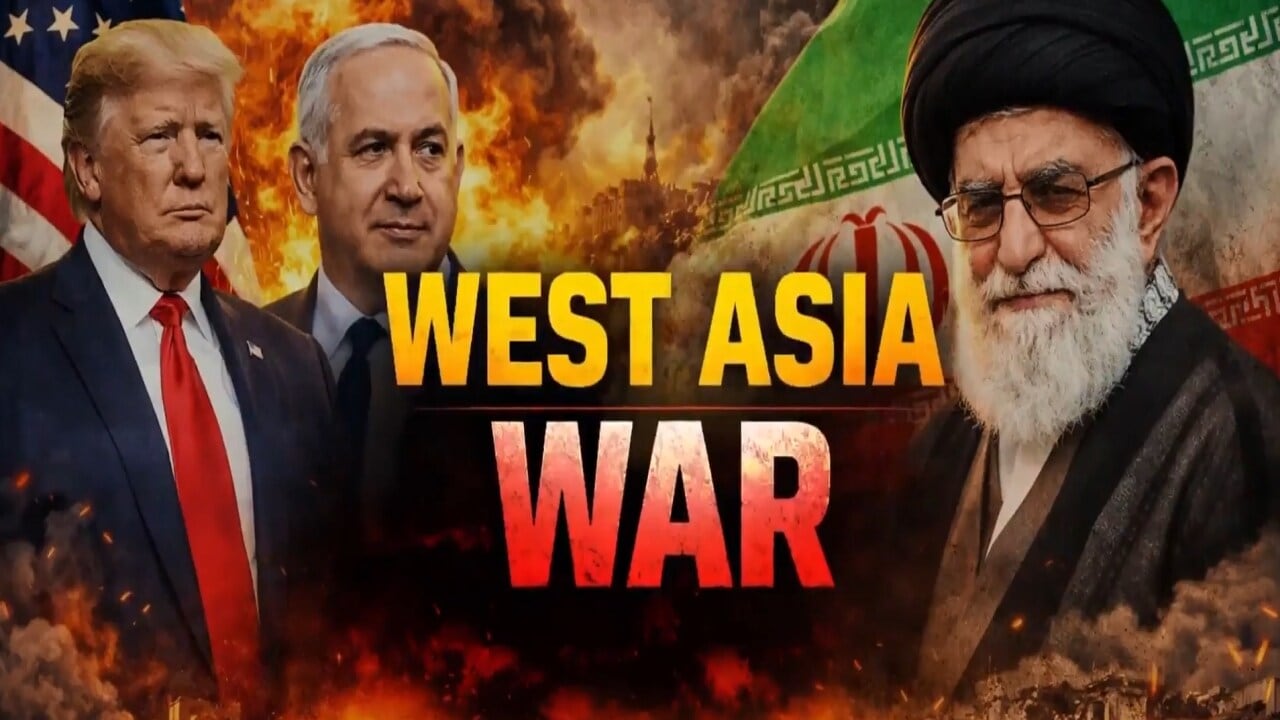
The air in Tehran does not smell like diplomacy. It smells of exhaust, saffron, and the low-frequency hum of a city waiting for a sound it hopes never to hear. When the headlines flicker across digital screens—Iran’s military dismisses Trump’s claim of talks—the words feel distant, like stones dropped into a well so deep you never hear the splash. But for the people walking the Valiasr Street, those words are the difference between a restless sleep and no sleep at all.
Geography is a cruel master. It dictates that two nations, separated by a thousand miles of desert and a jagged history, can hold the entire world’s breath in a single, clenched fist. On one side, a returning American president claims the phone is ringing. On the other, a military establishment in Iran stares at the receiver and refuses to pick up.
It is a stalemate of ghosts.
The Architecture of a Denial
To understand why a simple dismissal from a military spokesperson carries the weight of a mountain, you have to look past the podiums. General Abbas Nilforoushan’s successors and the voices within the Islamic Revolutionary Guard Corps (IRGC) aren't just playing politics. They are guarding a narrative that has been written in ink and blood for forty years.
When Donald Trump suggests that "talks" are happening or imminent, he is speaking to a global market. He is speaking to a base that wants to see the "Art of the Deal" applied to the most volatile fracture line on the planet. But in the halls of power in Tehran, "talks" is a word that tastes like ash. They remember the 2018 withdrawal from the nuclear soul-searching of the JCPOA. They remember the drone strike at Baghdad Airport that took Qasem Soleimani.
Trust is not a renewable resource. Once it is mined to exhaustion, the ground collapses.
The Iranian military's rejection of these claims isn't just a "no." It is a structural necessity. For the IRGC, acknowledging back-channel negotiations with an administration that defined itself through "Maximum Pressure" would be a surrender of identity. They aren't just dismissing a claim; they are barricading the door against a ghost they’ve already fought.
The Human Cost of a Headline
Consider a woman named Leyla. She is a fictional composite, but her reality is lived by millions in the shade of the Alborz Mountains. She owns a small bookstore. Every time a "Live Update" notification pings on her phone regarding the Iran-Israel escalation, the value of the rial in her cash drawer seems to evaporate.
To Leyla, the "military dismissal" of talks isn't a geopolitical chess move. It’s the price of milk. It’s the possibility that the drones she sees in the news will one day be reflected in her own windows.
When the military says there are no talks, Leyla knows the tension will remain taut. A string pulled too tight for too long eventually snaps. The "Israel-Iran War" isn't a future event for people like her; it’s a low-grade fever they’ve lived with for years. It’s the shadow of Israeli F-35s and the retaliatory arc of Iranian ballistic missiles.
The world watches the maps. They watch the red dots and the interceptor arcs of the Iron Dome. They see the technical prowess of the Arrow system. But they don't see the way a father in Isfahan grips his steering wheel a little tighter when he passes a facility he knows is a target.
The Myth of the Open Phone
There is a specific kind of theater in modern statecraft. The American side often uses the media as a pre-negotiation tactic—throwing out the idea of "talks" to see who flinches. It creates a vacuum. If Iran says nothing, they look weak. If they say "no," they look stubborn.
But the "no" coming from Tehran right now is loud for a reason.
The Iranian military is currently navigating a transition. They are staring down an Israeli government that has shown it is willing to dismantle Hezbollah’s leadership and strike deep into Iranian sovereign territory. For the Iranian generals, talking now—under the shadow of Trump’s return—looks like talking at gunpoint.
They prefer the silence.
The silence is where they move their assets. It’s where they reinforce the "Axis of Resistance." It’s where they calculate exactly how much enriched uranium is enough to ensure they never have to say "yes" to a deal they didn't write.
The Invisible Stakes
What happens when the dismissal is real?
If there are truly no talks, the path to de-escalation narrows until it is a tightrope. Israel views Iran’s nuclear ambitions as an existential clock. Iran views Israel’s regional dominance as a colonial footprint that must be erased. Between these two certainties lies the rest of us.
The stakes aren't just about oil prices, though the Strait of Hormuz remains a jugular vein for the global economy. The stakes are about the fundamental breakdown of communication. When the military of a nation explicitly labels a superpower’s claims as "propaganda" or "baseless," they are removing the safety net.
We are living in an era where the "hotline" is cold.
During the Cold War, even at the height of the Cuban Missile Crisis, there was a shared language of survival. Today, that language is being replaced by tweets, Telegram posts, and state-media broadcasts. We are losing the ability to interpret the silence.
The Mirror of History
This isn't the first time a "claim of talks" has been met with a slammed door. History is littered with the wreckage of secret meetings that were disavowed the moment they went public. But this feels different. The rhetoric is no longer about "reform" or "opening." It is about "resistance."
The Iranian military’s stance is a reflection of a domestic shift. The pragmatists who once sought a bridge to the West have been sidelined. The voices now speaking are those who believe that any handshake with Washington is a toxin.
They aren't just dismissing Trump. They are dismissing the very idea that the 21st century will be dictated by Western terms.
The Echo in the Street
Back on Valiasr Street, the sun sets, casting long, orange shadows across the pavement. The news cycle moves on to the next "breaking" update. But the dismissal remains. It hangs in the air like the humidity before a storm.
The tragedy of the "Iran-Israel War Live Update" is that it becomes background noise. We get used to the "dismissals." We get used to the "claims." We forget that behind every military spokesperson is a command center, and behind every command center is a city full of people who just want to know if they should buy groceries for a week or a month.
The military says there are no talks. Trump says there could be. Israel prepares for the eventuality that neither is telling the whole truth.
In this landscape of mirrors, the only thing we can be sure of is the weight of the silence. It is a heavy, suffocating thing. It tells us that the bridge hasn't been built, the phone isn't ringing, and the players are still convinced that the only way to win is to make sure the other side loses everything.
The headlines will tell you about the missiles. They will tell you about the rhetoric. But they won't tell you about the way the heart beats faster when the evening news mentions a "dismissal." They won't tell you that in the absence of talk, the only thing left is the sound of boots on the ground and the low, rhythmic hum of drones in a cloudless sky.
The world waits for a dial tone that never comes. Instead, we get the static. Cold, unyielding, and louder than any explosion.