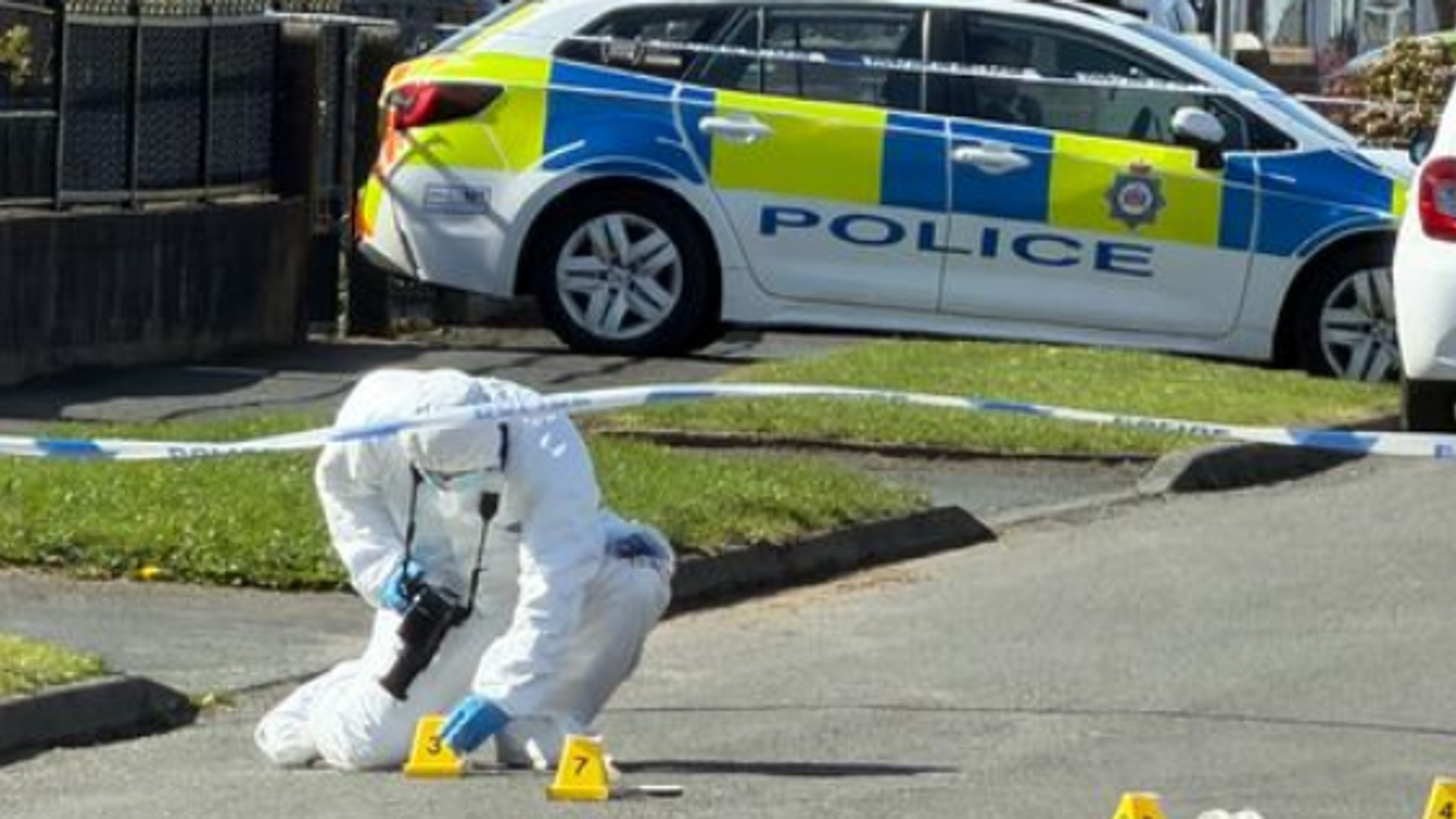
The air in Leeds has a specific weight when the seasons shift. In late March, the wind usually carries the sharp scent of damp pavement and the faint, hopeful smell of blooming gorse from the nearby Woodhouse Ridge. But yesterday, on a nondescript street in the heart of the student-heavy suburb of Headingley, the air turned static. It became the kind of heavy, artificial quiet that only descends when the blue lights of an emergency cordon cut through the gray afternoon.
A young woman is dead.
That is the clinical fact. The police call it a murder investigation. The headlines call it a "tragedy in the community." But for those who live behind the red-brick facades of Victorian terraces, for the people who walked past that specific door every morning to catch the bus or grab a coffee, it is an unraveling of the safety we all take for granted. We treat our neighborhoods like static backdrops to our busy lives. Then, a single event transforms a familiar corner into a crime scene, and suddenly, the backdrop is all we can see.
The Anatomy of a Cordon
West Yorkshire Police arrived at the property following a call of concern. It is a phrase used so often in official briefings that it has lost its jagged edges. A "call of concern" is a neighbor noticing a door left ajar. It is a friend whose texts have gone unanswered for twenty-four hours. It is the sudden, chilling realization that the rhythm of a person’s life has stopped.
When officers entered the house, they found her. She was young, her life presumably a collection of unfinished conversations, half-read books, and plans for a weekend that will now never happen.
The investigation is in its infancy. A man has been arrested. Forensic teams in white suits—ghosts of the modern era—move methodically through the rooms, bagging the mundane artifacts of a life cut short. They look for the "how" and the "who," while the community is left grappling with the "why."
In places like Headingley, where the population is a transient mix of students, young professionals, and long-term residents, we are a neighborhood of strangers who think we know each other. We nod at the local shop. We hold the door for a neighbor at the post office. We assume the safety of the group. But when a murder investigation is launched, the illusion of safety is the first thing that breaks.
The Invisible Stakes of a City
Consider the ripple effect of a single death. It is not just the immediate loss, though that is the most profound. It is the shifting of a city’s conscience.
When a young woman is killed, a different kind of fear takes root in the hearts of those who remain. It is a fear that has existed for centuries, a fear that has been articulated in countless ways, yet remains as raw as an open wound. The streets of Leeds are familiar, but they are different now. They feel narrower. The shadows under the trees in Hyde Park or on the walk home from the Headingley train station seem longer, more menacing.
For many women in this city, this isn't just news. It's a confirmation of an old, internalized warning. It’s the sound of a key being clutched between knuckles. It’s the check of a reflection in a dark window. It’s a collective mourning that is as much about a shared vulnerability as it is about the individual loss.
The police have issued their statements. They have asked for information. They have promised a thorough investigation. They have done their jobs with the precision that the law requires. But the law cannot mend the fabric of a neighborhood.
The Cost of a Cordon
A cordon is more than a physical barrier. It is a psychological one. It separates the world into the before and the after. On one side, there is the life we lived yesterday, where a young woman walked down this street with the same hopes and fears as anyone else. On the other side, there is the clinical reality of a forensic investigation.
The man who was arrested is being questioned. The legal process will grind forward. It will have its hearings and its trials. It will seek justice.
Justice, however, is not a synonym for peace. Justice can punish a crime, but it cannot restore the quiet of a street that has been forever changed. It cannot bring back the young woman who, only a few days ago, was a part of the vibrant, messy, beautiful life of Leeds.
We are left to wonder about the things we didn’t see. We are left to question the silences we ignored. In the coming days, more details will emerge. There will be flowers left at the scene. There will be tributes to a "bright, promising" life. There will be the inevitable media cycle, where the tragedy is analyzed and then, eventually, replaced by the next one.
But for the people on that street, for the friends who are waiting for a text that will never come, the silence is permanent. It is a silence that speaks louder than any police siren or headline. It is the silence of a life that was supposed to have decades more of sound.
The rain will eventually wash away the chalk marks on the pavement. The cordon will be taken down. The forensic teams will leave. Life will, as it must, continue. People will walk their dogs, students will head to their lectures, and the red-brick terraces will stand as they always have.
But as the sun sets over the Headingley skyline, the air will still feel different. There is a hole in the world that wasn't there before. And no amount of justice, no matter how swift or how sure, can ever truly fill it.
The city of Leeds moves on, but it moves on with a scar.