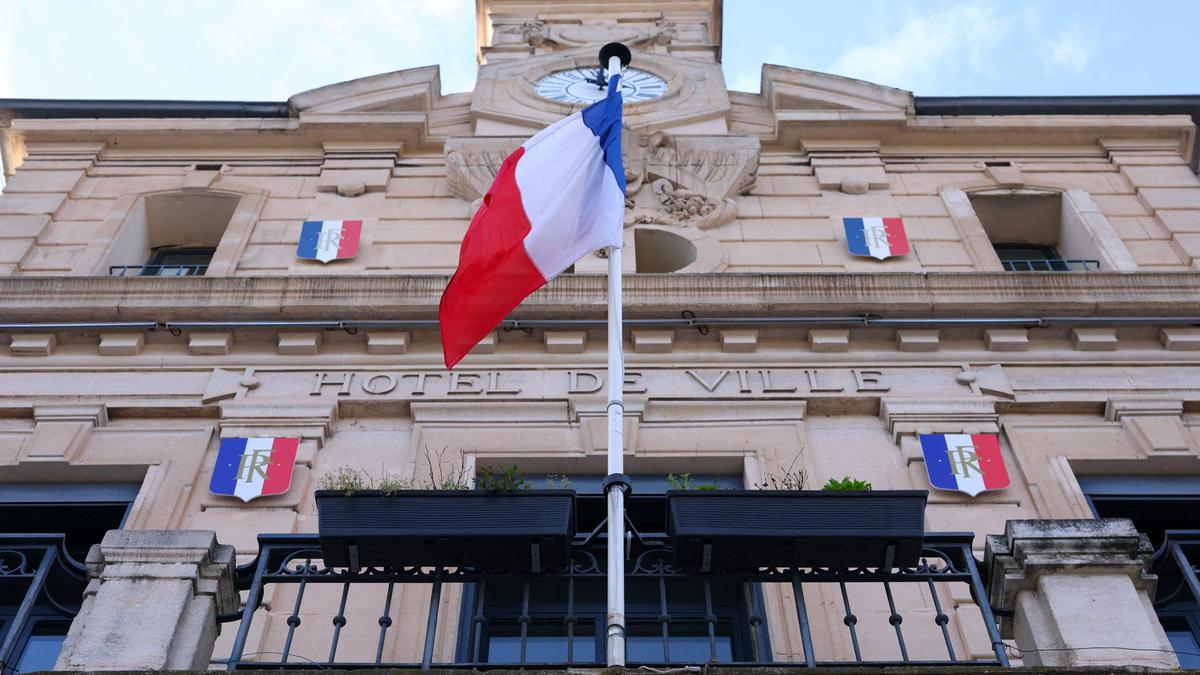
The myth of the "Republican Front"—that storied barrier where French voters of all stripes unite to block the far right—is currently dissolving in the gutters of Marseille and the affluent markets of the Riviera. As France heads to the polls for the 2026 municipal elections, the stakes have shifted from local garbage collection and bike lanes to a raw struggle for the soul of the Fifth Republic. For decades, the National Rally (RN) was a pariah at the local level, a party of national protest that couldn't run a village, let alone a metropolis. Today, that narrative is dead.
The RN is no longer content with its traditional strongholds in the post-industrial north or the small towns of the south. They are now hunting big game. By fielding a record 650 candidate lists, Jordan Bardella and Marine Le Pen are executing a pincer movement designed to prove they can govern the un-governable before the 2027 presidential ballot. If the RN takes Marseille, France’s second-largest city, the psychological ceiling of French politics will shatter.
The Billionaire Funded Training Ground
Behind this sudden professionalization lies a quiet, well-funded machinery that the mainstream media has largely ignored until now. This isn't just a grassroots surge; it is a manufactured takeover. A private network, fueled by a €150 million fund from billionaire Pierre-Édouard Stérin, has been systematically "training" 1,000 potential mayors in what they call "Christian anthropology" and "electoral combat."
This is the "why" that the polls don't capture. The RN has historically failed at the local level because their candidates were often eccentric amateurs or radicals with no grasp of municipal budgets. Stérin’s Périclès fund has changed that. Through organizations like Politicae, they have provided free legal guides and governance coaching to ensure that when an RN candidate walks into a town hall, they don't just know how to talk about immigration—they know how to slash a cultural subsidy and balance a ledger.
The Laboratory of the South
To understand what an RN-led future looks like, one must look at Perpignan. Since 2020, Louis Aliot has used the city as a living laboratory for "normalcy." His strategy is simple: flood the streets with municipal police and aggressively market a sense of order. Perpignan now boasts one of the highest ratios of municipal police per inhabitant in France.
While critics point to a "corruptive system" of awarding contracts to friendly construction firms and a staggering 18% increase in operating expenses since 2019, the voters who matter—those terrified by drug-related violence—see only the uniforms. In Marseille, the RN candidate Franck Allisio is running on this exact blueprint. He is promising to turn the city's hardscrabble northern districts, currently plagued by narco-gang wars, into a version of Aliot’s Perpignan.
The traditional right, represented by Les Républicains (LR), is caught in a fatal identity crisis. In cities like Nice, the "cordon sanitaire" is so frayed it is virtually nonexistent. Former LR leader Éric Ciotti has openly allied with the RN, signaling to conservative voters that the "far-right" label is an obsolete relic of the 20th century. For the average conservative voter, the choice is no longer between the "Republic" and the "Extremes." It is between a crumbling centrist status quo and a disciplined, law-and-order alternative.
The Paris Anomaly
Paris remains the final fortress of the left and the center, but even here, the walls are cracking. With the departure of Anne Hidalgo, the capital has become a chaotic free-for-all. The introduction of the 2025 "PLM" law reform, which changed how Paris, Lyon, and Marseille elect their mayors, was supposed to make the process more democratic. Instead, it has lowered the threshold for the RN to gain a foothold in the Council of Paris.
Thierry Mariani, the RN's man in Paris, isn't expected to win the mayoralty. He doesn't need to. His goal is to secure enough seats to paralyze the council and prove that the RN is a "normal" part of the Parisian political landscape. Meanwhile, the left-wing coalition is cannibalizing itself. Sophia Chikirou of La France Insoumise (LFI) has spent more energy attacking the Socialist successor, Emmanuel Grégoire, than challenging the far right.
This fragmentation is the RN’s greatest asset. In the French two-round system, the "Republican Front" relied on the loser of the first round stepping down to support a mainstream rival against the RN. But in 2026, the hatred between Macron’s centrists and the radical left is so intense that neither side is willing to blink. In a three-way "triangulaire" runoff, the RN can win with 35% of the vote.
Beyond the Ballot Box
The municipal elections are often dismissed as a "midterm" distraction, but that is a dangerous miscalculation. Mayors are the most trusted elected officials in France. They are the ones who control the primary schools, the local police, and the social housing lists. By capturing these levers, the RN is building a "counter-elite."
If the RN secures even 50 significant towns, they will have a bench of hundreds of seasoned administrators ready to staff a national government in 2027. They are moving from a party of "no" to a party of "how." The "earthquake" that Socialist Mayor Benoît Payan warned about in Marseille isn't just about one city; it’s about the legitimization of a movement that has spent forty years in the wilderness.
The reality is that the "Republican Front" cannot be conjured out of thin air by terrified politicians in Paris. It requires a shared sense of what the Republic is. On the streets of Toulon, Nîmes, and Marseille, that shared sense has been replaced by a singular, desperate demand for security at any cost.
Would you like me to analyze the specific polling data for the Marseille second-round runoffs?