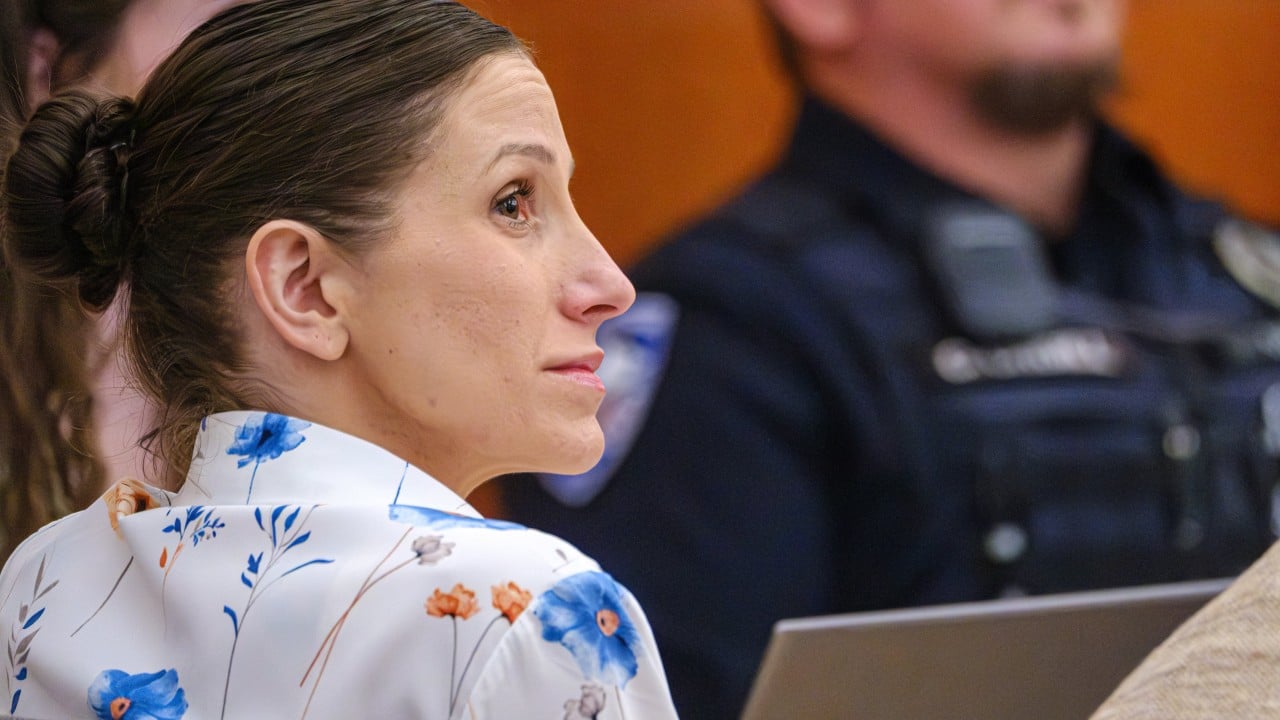
Kouri Richins didn't just write a book about grief. She allegedly lived a lie that ended in a courtroom with a guilty verdict. A jury in Utah finally decided that the "grief author" who appeared on television to talk about healing was actually a cold-blooded killer. It's a story that feels like it belongs in a cheap thriller novel, but for Eric Richins, the ending was tragically real.
The case against Kouri Richins wasn't just about a single moment of violence. It was a calculated, months-long trajectory of financial desperation and pharmaceutical precision. She was convicted of murdering her husband by spiking his celebratory Moscow Mule with a massive dose of fentanyl. Five times the lethal limit. That isn't an accident. That’s an execution.
Money and Motive in the Richins Household
People often ask why a mother of three would risk everything. The answer is almost always the same. Money. Prosecutors laid out a paper trail that would make any forensic accountant’s head spin. Kouri was drowning in debt from her real estate business. She was flipping houses, but the math wasn't working. She reportedly owed millions.
Eric Richins was a successful businessman, but he wasn't a fool. He had already started to suspect his wife was trying to kill him. He changed his will. He took her off his life insurance policy. He even told his family that if anything happened to him, Kouri was the one who did it. Think about that for a second. Imagine living in a house where you truly believe your spouse is a mortal threat.
Kouri’s desperation peaked when she realized she couldn't access Eric’s estate the way she planned. She needed him gone to settle her debts, but she didn't realize he had already walled off the prize. This wasn't a crime of passion. It was a botched business strategy.
The Fentanyl Trail and the Secret Deliveries
You don't just stumble upon enough fentanyl to kill five grown men. The evidence presented during the trial showed Kouri reached out to a known drug dealer, referred to in court documents as "C.L." She didn't ask for pain meds for a back injury. She asked for "the Michael Jackson stuff."
- First request: Hydrocodone pills.
- Second request: Fentanyl.
- The timing: Days before Eric’s death.
The defense tried to argue that Eric had a secret drug problem. They wanted the jury to believe he accidentally overdosed. It didn't stick. There was no evidence Eric used illicit drugs. He was a fit, outdoorsy guy who stayed away from that scene. The only thing that changed in his environment was the drink his wife handed him.
Writing a Book as the Ultimate Cover
Perhaps the most twisted part of this whole saga is the book, Are You with Me? After Eric died, Kouri wrote a children’s book to help their sons "cope" with the loss of their father. She went on local news sets. She smiled for the cameras. She talked about "angel dads."
It’s the kind of audacity that makes your skin crawl. Using your victims as a marketing tool for a book about the grief you caused is a level of narcissism most people can't wrap their heads around. The book wasn't a tribute. It was a smokescreen. She was trying to build a persona as the grieving, saintly widow so no one would look at the toxicology report.
The Trial That Stripped Away the Mask
During the trial, the "grief author" persona crumbled. Witnesses described a woman who was more concerned about her house flips than her husband’s health. The court heard about a previous incident on Valentine’s Day where Eric became violently ill after a meal Kouri prepared. He survived that time. He wasn't so lucky the second time.
The jury saw through the "accidental overdose" defense. They saw the texts. They saw the bank records. They saw the testimony from the dealer who delivered the pills to her driveway. In the end, the evidence was a mountain she couldn't climb.
Lessons for the True Crime Era
We live in a world where everyone thinks they can outsmart the system. We watch the shows and think we know how to hide the tracks. Kouri Richins learned the hard way that digital footprints and chemical signatures don't just disappear.
If you're following this case, don't just look at the headlines. Look at the patterns. Abusive or homicidal behavior in a marriage rarely starts with a lethal dose of fentanyl. It starts with financial secrets, gaslighting, and small-scale "tests" of what the other person will tolerate.
Pay attention to the red flags. Eric Richins did, and while he couldn't save his own life, his foresight in changing his legal documents ensured that his killer didn't get the payday she killed for. If you're in a situation where you feel unsafe or suspect financial elder or spousal abuse, document everything outside of the home. Use a safe deposit box or a trusted friend. Don't leave your evidence where the predator can find it.
The Kouri Richins story is a grim reminder that the most dangerous person in the room is sometimes the one holding the book on how to heal. Trust your gut, protect your assets, and never ignore a "near miss" with your health.