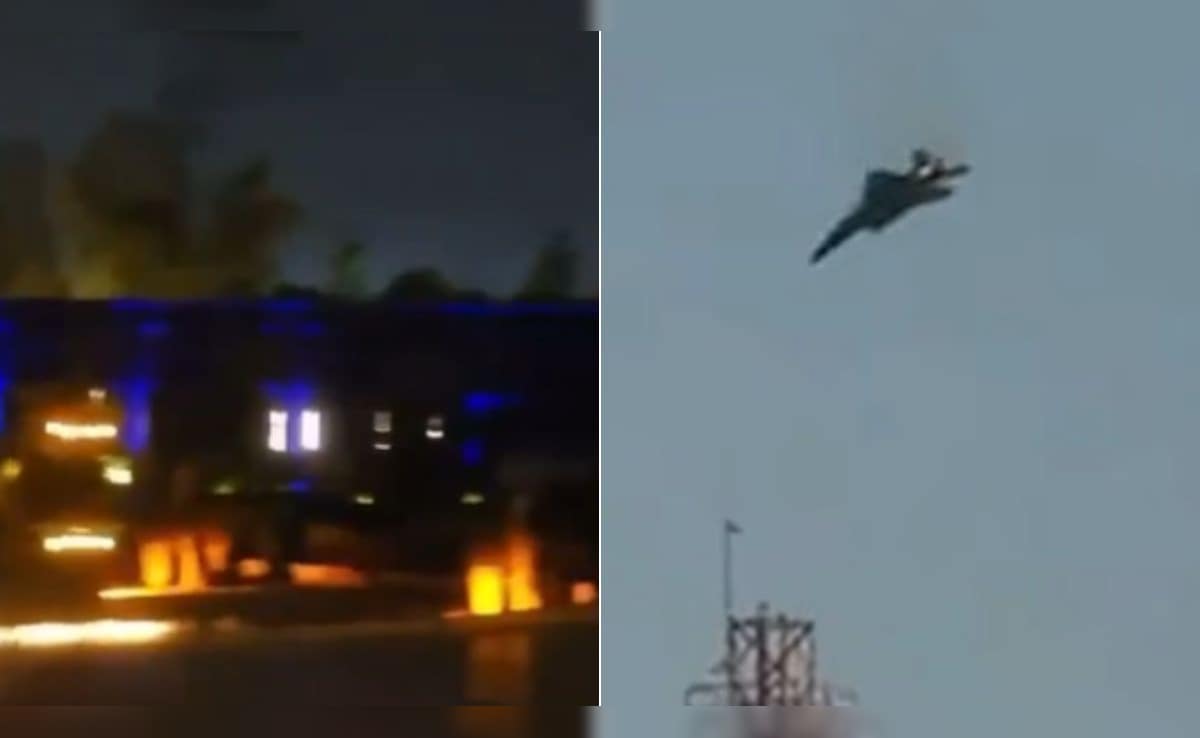
Media outlets love a good explosion. They thrive on the "shocking" imagery of a burning embassy or a plummeting drone because it drives clicks through fear. But if you treat the US-Iran conflict like a series of random, high-octane disasters, you are missing the most sophisticated chess match in modern geopolitics.
The "shocking" moments usually cited—the 2019 drone shoot-down, the 2020 embassy breach, the missile barrages—aren't evidence of a world spiraling out of control. They are the language of a highly calibrated, kinetic dialogue. These events aren't accidents. They are precisely measured signals designed to test boundaries without triggering a total war that neither side can afford.
The Myth of the Unpredictable Proxy
The lazy consensus suggests that Iran’s "proxies" are wild cards, or that US responses are mere knee-jerk reactions. This is a fundamental misunderstanding of regional leverage.
When an embassy is "attacked," the mainstream treats it as a breakdown of order. In reality, it is a controlled demonstration of access. If Iran or its affiliates wanted to level a facility, they wouldn't send protesters with spray paint and molotovs; they would send the $15,000 Shahed drones that have recently redefined the cost of air defense in Eastern Europe.
I have spent years analyzing the intersection of military tech and regional posturing. The reality is that both Washington and Tehran are experts at "managed escalation." They operate within a defined threshold. Crossing that threshold means total economic collapse for one and a multi-trillion dollar quagmire for the other. They are both too smart for that.
Stop Romanticizing the Kinetic
Most analysts focus on the hardware—the F-35s versus the S-300 batteries. They want to talk about the "shock" of a fighter jet crashing or a Reaper drone being plucked from the sky.
You're looking at the wrong map.
The real conflict is happening in the electromagnetic spectrum and the global banking ledger. When the US "retaliates" for a physical strike, the most devastating move isn't the Hellfire missile; it's the digital isolation of a specific port or the blacklisting of a shell company in Dubai.
- The Drone Fallacy: People were "shocked" when Iran downed a $200 million Global Hawk in 2019. It wasn't a shock. It was a demonstration of domestic radar integration.
- The Missile Theater: The 2020 ballistic missile attack on Al-Asad airbase was touted as a terrifying escalation. Look closer at the data. Iran gave advance warning through Iraqi channels. They hit empty hangars. It was a masterclass in saving face while avoiding a body count that would necessitate a full-scale US invasion.
This isn't "conflict" in the traditional sense. It’s performance art with live ammunition.
The Asymmetric Advantage Is Not What You Think
The standard narrative says the US has the "might" and Iran has the "instability." This is backwards.
Iran has the stability of a singular, decades-long strategic vision. The US has the instability of four-year election cycles. Every time a new administration takes the stage in DC, the "rules" of the US-Iran conflict are rewritten. This creates a massive intelligence gap that Tehran exploits.
They don't need to win a dogfight. They just need to make the cost of staying in the neighborhood higher than the American taxpayer’s patience.
The Calculus of the Strait of Hormuz
We hear constant warnings about Iran "closing" the Strait of Hormuz. Pundits call it a "doomsday scenario."
It’s a bluff that works because people don't understand the physics of maritime logistics. Closing the Strait would starve Iran faster than it would starve the world. Their entire economy relies on the very shipping lanes they threaten. The "shock" isn't that they might close it; the shock is that the West continues to believe they would commit economic suicide.
Instead of watching for a blockade, watch the "shadow fleet." The real conflict is the game of cat-and-mouse between Iranian tankers and international maritime law. While the news shows you a fighter jet crash, three million barrels of crude are moving through "dark" ship-to-ship transfers that fund the very drones you're worried about.
Your Fear is Their Currency
The "shocking" moments are curated for public consumption. They serve specific domestic purposes:
- For Tehran: These moments prove to a restless population that the "Great Satan" can be poked without immediate annihilation.
- For Washington: These moments justify the massive naval presence and the continued funding of regional defense umbrellas like the "Middle East Air Defense" (MEAD) alliance.
If you are waiting for a "final showdown," you'll be waiting forever. The status quo is too profitable and too stable for both sides to truly dismantle.
Why the Status Quo is the Goal
The US-Iran conflict is a "forever friction." It is a controlled burn.
- Weapon Sales: Threatening Iran is the best marketing tool for US defense contractors selling to the Gulf states.
- Internal Control: Having an external "boogeyman" allows the Iranian leadership to crack down on internal dissent under the guise of national security.
The "shocking" headlines are just the exhaust from this engine. They aren't the destination. They aren't the turning point. They are the heartbeat of a system that functions exactly as intended.
The Tech Gap is Closing (And it Doesn't Matter)
The obsession with "high-tech" versus "low-tech" is a relic of the 1990s.
We see a "shocking" video of a drone hitting a target and assume Iran has caught up to the US. They haven't. But they’ve discovered the Inversion of Cost.
Imagine a scenario where a $2 million Patriot interceptor is used to shoot down a $20,000 drone made of lawnmower parts and plywood. Who is winning that exchange? It’s not the side with the better tech. It’s the side that can afford to lose 1,000 units while the other side can only afford to fire 10.
This is the "nuance" the headlines miss. We are witnessing the democratization of precision strike capabilities. It makes for "shocking" footage, but it’s actually a predictable shift in the math of modern attrition.
The Brutal Truth
You are being sold a narrative of chaos because it’s easier to digest than a narrative of cynical, calculated equilibrium.
The US-Iran conflict isn't a series of unfortunate events. It is a long-term, high-stakes negotiation where the currency is blood and oil, and the "shocking" moments are just the punctuation marks.
Stop looking at the explosions. Look at the contracts. Look at the sanctions waivers. Look at the back-channel letters.
The next time you see a "shocking" headline about a drone strike or a naval standoff, ask yourself: Who benefits from this specific level of noise?
The answer is almost always "both sides."
The theater of conflict will continue as long as it serves the interests of the people running the show. The "shock" is a product. Don't buy it.
Build your own leverage. Understand the mechanics. Stop reacting to the pyrotechnics.