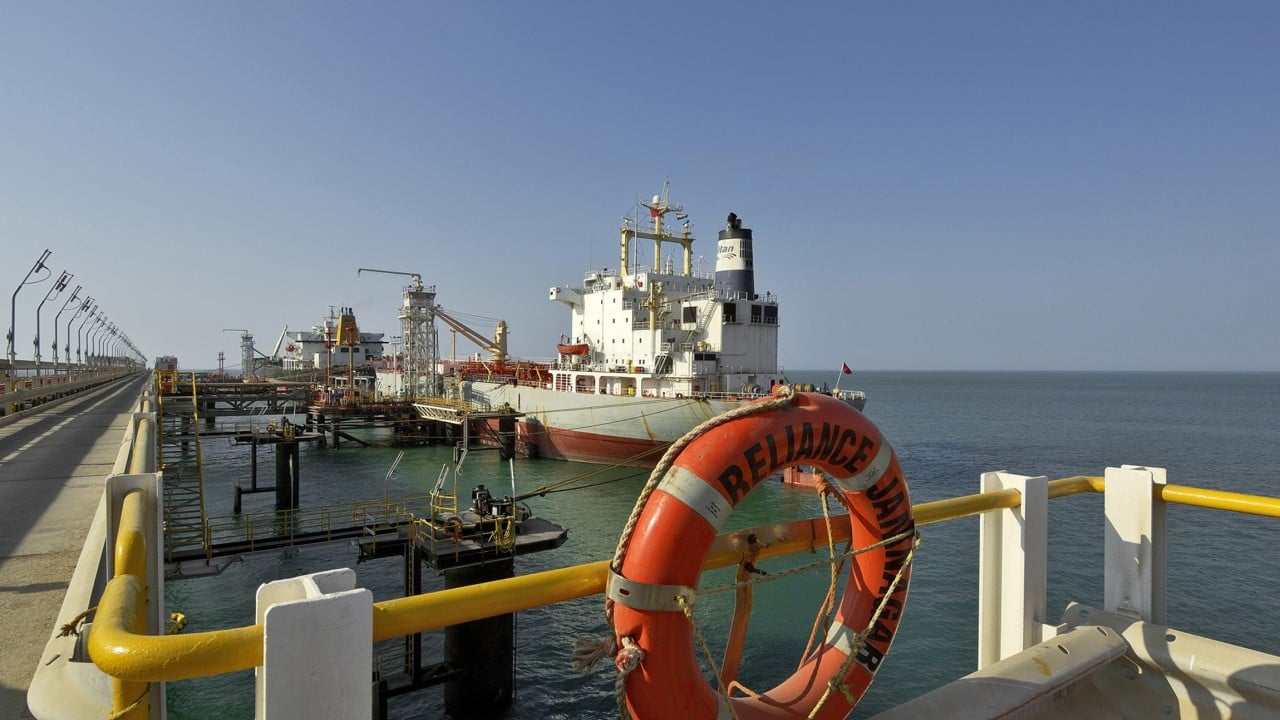
The headlines are screaming about a "supply pivot" or "ditching Europe." They want you to believe that Reliance Industries diverting two tankers of alkylate and gasoline components to Singapore and Southeast Asia is a sign of geopolitical desperation or a sudden collapse in Western demand.
They are wrong.
The mainstream narrative is stuck in a 20th-century mindset where oil flows are dictated by long-term loyalty and rigid geographic dependencies. In reality, what we are witnessing isn't a "ditch." It is a cold, calculated, and brilliant execution of global arbitrage. Reliance isn’t running away from Europe; they are chasing the highest margin wherever it exists in the millisecond.
If you think this is about "energy security" or "shifting alliances," you’ve already lost the trade. This is about the brutal efficiency of the waterborne spot market.
The Myth of the "Ditched" European Market
The lazy consensus suggests that because Europe is grappling with high inventories or a sluggish economy, Indian refiners are being "forced" to find new homes for their product. This paints a picture of weakness.
The truth? Europe is currently a low-yield environment for high-spec blending components. Alkylate—the liquid gold of the refining world used to boost octane without adding nasties like sulfur or aromatics—is expensive to make and even more expensive to move. If the spread between the Northwest Europe (NWE) price and the Singapore (MOPS) benchmark widens by even a few cents per barrel, the logic for a 30-day voyage to Rotterdam evaporates.
Reliance operates the Jamnagar complex, the world’s largest refining hub. They don't think in terms of "countries." They think in terms of netbacks.
A netback is the gross price of the product minus the cost of shipping, insurance, and port fees. If the netback for a cargo of alkylate is $2.00 higher in Singapore than in New York Harbor or Antwerp, the ship turns around. Period. To call this "ditching" is like saying a day trader "ditched" Apple because they saw a better entry point in Nvidia. It’s not an emotional breakup; it’s a math problem.
The Red Sea Tax and the Death of Predictability
One factor the "status quo" analysts mention but fail to quantify is the sheer insanity of current freight economics.
Since the disruptions in the Red Sea, the Cape of Good Hope route has become the standard for East-to-West flows. This adds roughly 10 to 14 days to a journey. In the world of refined products, time is a physical cost. You aren't just paying for more low-sulfur fuel oil (VLSFO) for the engines; you are paying for the "time value" of the cargo.
While a tanker is slowly rounding the tip of Africa, the price of gasoline in Europe could crash. You are exposed to two extra weeks of market volatility. By diverting to Singapore, Reliance cuts that transit time by 70%. They realize their profit faster. They recycle their capital faster.
In a high-interest-rate environment, "Time to Cash" is the only metric that matters. Shipping to Europe right now is a gamble on a month-long lag. Shipping to Singapore is a high-probability win on a 10-day sprint.
Southeast Asia is the New Blending Hub
While everyone looks at Singapore as a mere "destination," they miss its role as a massive, liquid laboratory.
Southeast Asia is currently hungry for blending stocks to meet rising regional fuel standards. Indonesia, Vietnam, and Malaysia are in the middle of a massive structural shift in vehicle ownership. They don't just need "oil"; they need the specific components that Reliance produces at Jamnagar to upgrade their lower-quality local fuels.
The "People Also Ask" crowd wants to know: "Will this cause a fuel shortage in Europe?"
The honest, brutal answer: Europe doesn't matter as much as it used to. The Continent is legislating itself out of the internal combustion engine market. Why would a refiner in Gujarat prioritize a shrinking, over-regulated, and low-margin market in London over a booming, deregulated, and high-margin market in Jakarta?
Reliance is simply front-running the inevitable. They are building the muscle memory to serve the Asian Tiger economies while the West is busy debating carbon taxes on the very fuel they are trying to import.
The Arbitrage Trap: Why Most Analysts Get This Wrong
The biggest mistake I see "insiders" make is looking at shipping data in a vacuum. They see a ship change direction and assume something is wrong with the destination.
They rarely look at the crack spreads.
The gasoline crack—the difference between the price of crude and the price of the finished product—has been behaving like a heart monitor on caffeine. In early 2026, we’ve seen Asian cracks outperform European ones due to unexpected refinery outages in North Asia and a spike in regional travel.
When Reliance diverts, they aren't just looking at the price of gasoline. They are looking at the value of the specific molecules. Alkylate is a premium component. If Singapore’s blending demand for "Super 98" octane fuel is peaking, that alkylate is worth more as a component there than as a finished fuel in a saturated European market.
The Operational Scar Tissue
I’ve spent years watching how these desks operate. I’ve seen traders lose $5 million in a single afternoon because they stayed "loyal" to a delivery contract in a falling market. The guys at Reliance are some of the sharpest in the business. They don't have "loyalty" to the Atlantic Basin.
They have "Battle Scars" from the 2020 collapse and the 2022 price spikes. They learned that the only way to survive is to be geographically agnostic.
The move we are seeing—diverting tankers mid-voyage—is an aggressive flex. It requires a sophisticated logistics chain that can handle "orders in transit." Most state-owned oil companies can't do this. They are too bogged down in bureaucracy. Reliance can do it because they operate like a hedge fund that happens to own a massive refinery.
The Risk Nobody Talks About
Is there a downside? Of course.
The risk isn't that Europe goes hungry; it's that Asia becomes oversupplied. If every Indian and Middle Eastern refiner pivots to Singapore at once, the "Singapore Premium" will vanish in a week. This is a game of musical chairs played with 100,000-ton vessels.
But for now, the data is clear. The "Lazy Consensus" is worried about Europe’s energy security. The "Smart Money" is wondering why it took so long for these cargoes to find a more profitable home.
Stop looking for a geopolitical conspiracy in every shipping manifest. Stop assuming that every diversion is a sign of a "crisis."
The diversion of these tankers is the global market working exactly as intended. It is the efficient allocation of resources to the highest bidder. If Europe wants the fuel, they have to pay more than Singapore. They didn't. They lost.
Move on.