The Weight of a Handshake
Walk through the corridors of a semiconductor plant in Arizona or a bustling IT hub in Hyderabad, and you will hear the same underlying hum. It isn't just the sound of machinery or the click of keyboards. It is the sound of a gamble. For decades, the relationship between the United States and India was treated like a formal dinner party: polite, predictable, and slightly stiff. But something has shifted. The air has changed.
When U.S. Ambassador Eric Garcetti speaks about Donald Trump’s connection to India, he isn't just talking about diplomatic cables or protocol. He is describing a gravity. There is a specific kind of intensity that happens when two of the world's most boisterous democracies decide they are no longer just "partners," but are instead essential to one another's survival.
Donald Trump’s approach to New Delhi was never about the traditional, slow-moving gears of the State Department. It was personal. It was loud. It was deeply rooted in a belief that the future of the West is inextricably linked to the success of the East. This wasn't a policy paper come to life; it was a realization that in a world of shifting borders and rising threats, you don't just need allies. You need anchors.
The Human Geometry of Trade
Consider a hypothetical engineer named Arjun. Arjun lives in Bengaluru but works for a firm headquartered in Texas. His daily life is a bridge. When trade policies shift in Washington, Arjun feels it in his mortgage. When security pacts are signed in New Delhi, his company gains the confidence to hire ten more people just like him.
Arjun is the invisible stakeholder. He represents the millions of families whose dinner table conversations are dictated by the rapport between a President and a Prime Minister. For Trump, the "America First" doctrine was often framed as isolationist, yet when it came to India, the math changed. The logic was simple: a strong, prosperous India acts as a massive stabilizer.
The bond wasn't built on charity. It was built on respect for the hustle. Trump saw in India a reflection of the American spirit—a chaotic, vibrant, competitive energy that refuses to be ignored. This wasn't about "helping" India; it was about acknowledging that the U.S. cannot afford to see India fail. The stakes are too high. The supply chains are too deep. The shared democratic DNA is too rare in an increasingly authoritarian neighborhood.
Beyond the Stadium Lights
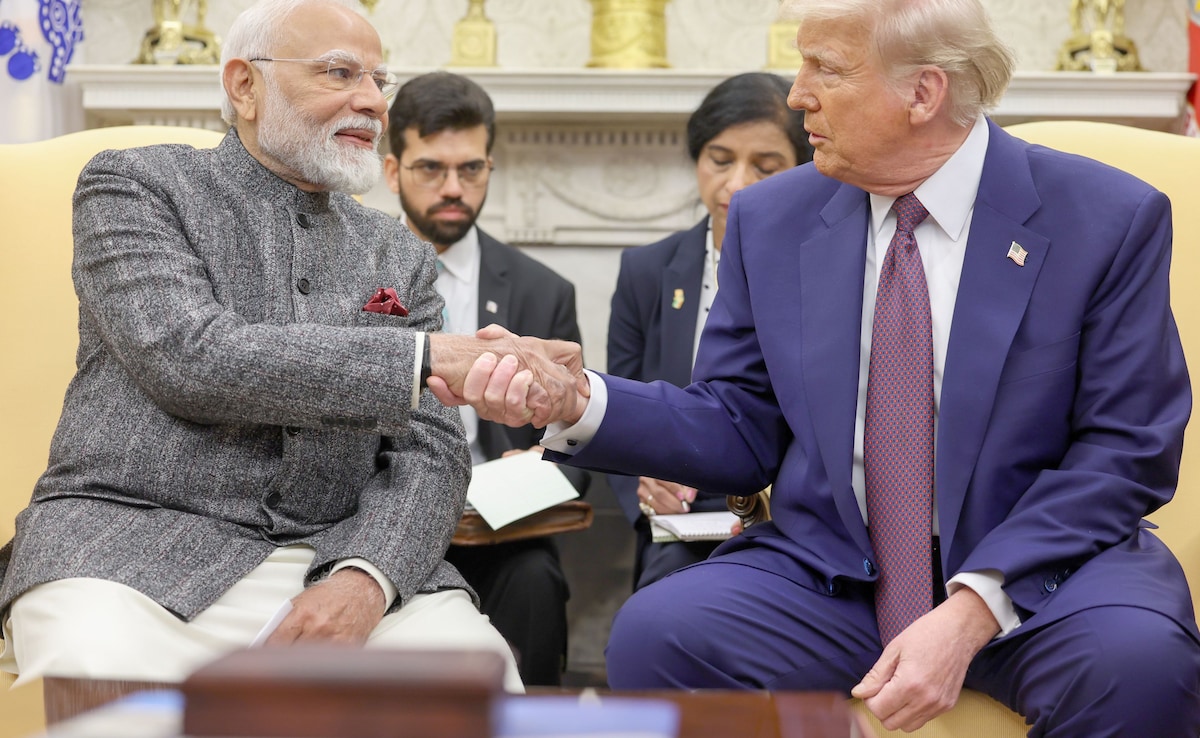
We all remember the optics. The "Howdy Modi" rally in Houston and the "Namaste Trump" event in Ahmedabad were spectacles of a scale rarely seen in international relations. Tens of thousands of people screaming, a sea of flags, two leaders walking hand-in-hand. To the cynical observer, this was mere theater. But theater serves a purpose. It signals to the world—and to the massive Indian diaspora in America—that the old barriers are gone.
Underneath the roar of those crowds lay the steel. During the Trump administration, the U.S. and India moved past the hesitant "will they, won't they" phase of defense cooperation. They began sharing high-end technology. They started talking about the Indo-Pacific not as a vague geographic concept, but as a shared backyard that needed protection.
Ambassador Garcetti’s recent reflections confirm what many felt at the time: Trump’s affinity for India wasn't a campaign tactic. It was a core conviction. He viewed India as a bulwark against instability. He saw a nation that didn't want a handout, but a seat at the head of the table. And he was more than happy to pull out the chair.
The Friction of Growth
Nothing this large is ever easy. To suggest the relationship is perfect would be a lie. There are thorns. There are disputes over tariffs, arguments about visas, and the constant, grinding friction of two massive bureaucracies trying to sync their watches.
But the friction itself is proof of the intimacy. You don't argue with someone you don't care about. You don't negotiate over the price of Harley-Davidsons or the export of Alphonso mangoes if you aren't deeply invested in the outcome. These aren't signs of a breaking bond; they are the growing pains of a marriage that has moved past the honeymoon and into the messy, necessary work of building a life together.
Think of the pharmaceutical industry. When the world ground to a halt during the pandemic, the lines between Washington and New Delhi became a literal lifeline. The movement of raw materials and finished vaccines wasn't just a business transaction. It was a heartbeat. It was the moment the "strategic partnership" stopped being a phrase in a press release and started being a pulse.
The Quiet Room
Behind the rallies and the loud proclamations, the real work happened in quiet rooms. It happened when diplomats realized that for the first time in history, the United States was willing to treat India as a major defense partner on par with its closest NATO allies. This wasn't a minor adjustment. It was a tectonic shift.
This shift was driven by a shared suspicion of those who would disrupt the global order. It was driven by a mutual understanding that the 21st century would be defined by who controls the digital space, the maritime routes, and the intellectual property of the future.
Trump’s "deep care" for the relationship, as Garcetti puts it, was fueled by a businessman's intuition for value. He looked at India and saw a growth engine. He saw a talent pool. He saw a nation that, despite its challenges, shared a fundamental vision of the world: one where hard work is rewarded and sovereignty is sacred.
The Unseen Thread
Imagine the silhouette of a cargo ship leaving the Port of Mundra, destined for Newark. It carries more than just goods. It carries the labor of thousands, the investments of millions, and the political will of two governments that have decided to bet on each other.
The relationship has survived changes in leadership and shifts in the global wind. It persists because it is no longer dependent on the whims of a single individual, even if that individual—like Trump—provided the initial spark that cleared the brush. The roots have grown too deep. They are tangled in the soil of Silicon Valley, the labs of Hyderabad, and the halls of Congress.
We often talk about geopolitics as if it is a game of chess played by giants. But it is more like a vast, interconnected web of human ambitions. It is the student from Delhi dreaming of a PhD at MIT. It is the American startup founder looking for a partner in Chennai. It is the soldier standing guard in the Himalayas, knowing that his equipment and his intel are backed by a friend on the other side of the globe.
The world is getting smaller, and the spaces where we can stand alone are disappearing. The story of the U.S. and India isn't just a story of two countries. It is the story of a realization. We have reached a point where the success of one is the security of the other.
There is a certain comfort in that realization, but also a profound responsibility. The bond forged in those high-energy years wasn't just about making headlines. It was about making sure that when the history of this century is written, the chapters on freedom and prosperity are written in both English and Hindi. The handshake hasn't ended; the grip has only tightened.