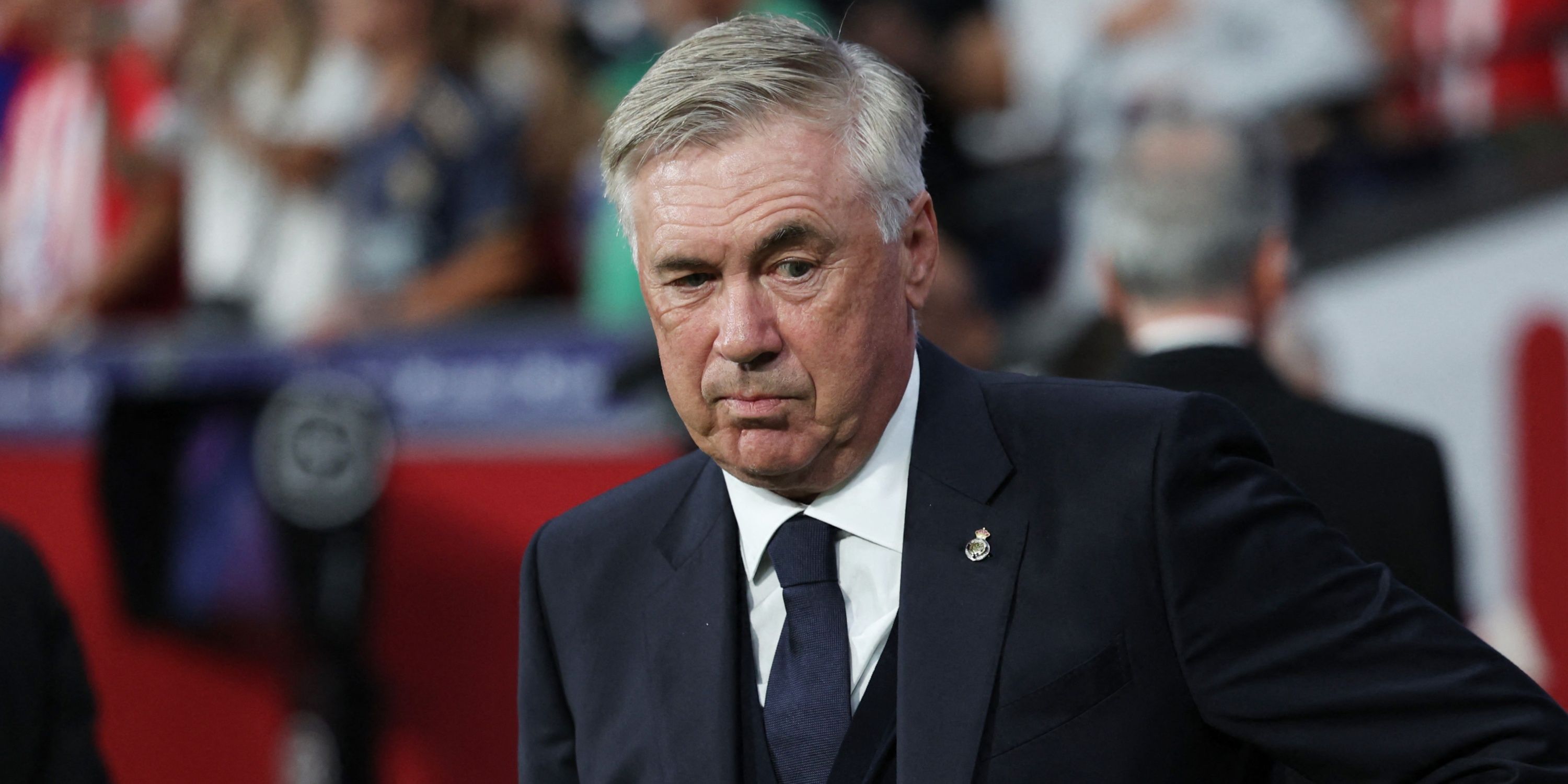
The rain in Bruges doesn't fall; it hangs. It is a damp, grey curtain that clings to the shoulders of the Jan Breydel Stadium, making the grass slick and the air heavy with the scent of wet earth and ambition. In the middle of it all stands a boy who looks like he should be worrying about a math exam, not the tactical rigors of the Belgian Pro League.
Chemsidine Talbi is seventeen. At an age where most teenagers are navigating the awkward friction of social hierarchies, he is navigating the far more unforgiving space between a defender’s shoulder and the touchline. He moves with a liquid grace that suggests he hasn't yet learned that gravity and pressure are supposed to slow a person down. When he touches the ball, there is a collective intake of breath—not just from the Club Brugge faithful, but from scouts sitting three rows back, shivering in their puffer jackets and scribbling notes that could change the trajectory of a city three hundred miles to the northwest.
Newcastle United is watching.
They aren't just looking for a winger. They are looking for a spark to ignite a project that has shifted from the frantic spending of a nouveau riche takeover to the calculated, almost surgical acquisition of tomorrow’s icons. To understand why a teenager with a handful of senior appearances is the subject of high-level meetings at St James' Park, you have to look past the spreadsheets and the scouting reports. You have to look at the soul of a club trying to find its way back to the light.
The Geography of Hope
Imagine the North East of England on a Saturday morning. The wind whips off the North Sea, carrying the salt and the cold straight up Gallowgate. For decades, the fans here have subsisted on a diet of "what ifs" and "almosts." They don't just want a winning team; they want a team that reflects their own restless energy. They want players who play like they have something to prove to the world.
Talbi fits this visceral need. Born in Sambreville, Belgium, and representing Morocco at the youth level, he carries a dual heritage of footballing DNA. He has the technical discipline of the Belgian academy system—a factory that has produced some of the most intelligent players of the last decade—blended with the flair and audacity that defined Morocco’s historic run in the recent World Cup.
He is a right-footed player who lives on the left wing, a configuration that makes modern defenders sweat. It is a role built on deception. He invites you in, shows you the ball, and then, with a shimmy that seems to defy the laws of skeletal structure, he is gone. Inside. Toward the goal. Toward the future.
The Invisible Stakes of the Transfer Market
When we talk about transfer rumors, we often treat players like trading cards. We argue about market value, contract lengths, and release clauses. But for a seventeen-year-old, a move to the Premier League isn't a transaction. It’s a seismic shift in reality.
Newcastle’s interest isn't a whim. It is a response to the tightening vice of Profit and Sustainability Rules (PSR). The days of buying ready-made superstars for £100 million are becoming a relic of a less regulated past. Now, the victory belongs to the club that can identify the star before the rest of the world sees the shine.
The scouts are looking for "high-ceiling" traits. They see how Talbi handles the physical abuse of senior football. They watch his reaction when he loses the ball—does he hang his head, or does he hunt it back with the ferocity of a pack animal? In Talbi, they see a player who doesn't just participate in a game; he attempts to colonize it.
A Gamble Wrapped in a Certainty
There is an inherent risk in bringing a teenager to the most physically demanding league on the planet. The history of the Premier League is littered with "wonderkids" who arrived with a trunk full of dreams and left with a career’s worth of "what happened?"
But Newcastle is different now. Under the current regime, there is a scaffolding of support that didn't exist five years ago. They aren't looking for Talbi to save the club on a Tuesday night in November against a bruising Burnley defense. They are looking for him to grow into the shirt.
Consider the hypothetical weight of that transition. One day, you are playing in the quiet suburbs of Bruges; the next, you are walking out of the tunnel at St James' Park, and 52,000 people are screaming your name with a fervor that borders on the religious. The grass is greener, the lights are brighter, and the tackles come in like freight trains.
The club's recruitment team, led by minds who prize data as much as intuition, see a statistical profile that screams efficiency. Talbi’s successful dribble percentage and his progressive carries—the distance he moves the ball toward the opponent's goal—are elite for his age group. He isn't just running; he is advancing the front line.
The Moroccan Connection
There is a specific kind of magic associated with Moroccan wingers. They play with a street-footballer’s soul, a refusal to be intimidated by the reputation of the man marking them. We saw it in Qatar. We see it in the way Talbi carries himself.
He represents a bridge between cultures and styles. Newcastle fans have always had a soft spot for the mercurial talent, the player who can do something impossible in the 89th minute. Think of Hatem Ben Arfa. Think of Laurent Robert. Talbi carries a spark of that same unpredictability, though perhaps with a more modern, tactical grounding.
The negotiations for such a talent are never simple. Club Brugge knows what they have. They are a club built on the savvy sale of young assets, and they won't let their crown jewel go for a pittance. There are whispers of competition from across Europe—Dortmund, Ajax, the usual vultures who circle whenever a special talent emerges.
But Newcastle has something those clubs don't. They have a vacuum. There is a specific spot on that left flank, a longing for a player who can provide the width and the guile that the current squad sometimes lacks during those grinding, scoreless draws.
The Boy in the Rain
Back in Bruges, the rain continues to fall. Talbi receives the ball on the touchline. A defender, five years his senior and twenty pounds heavier, closes in. The crowd leans forward.
Talbi doesn't panic. He doesn't even look at the man's feet. He looks at the space behind him. With a flick of his ankle, the ball is sent on a trajectory that seems impossible, and the boy follows it, a blur of blue and black against the grey sky.
He is playing for his club, but he is also playing for his life. He is playing for the chance to move from the periphery of European football to its absolute center. Every touch is a word in a long, persuasive essay he is writing to the decision-makers in Tyneside.
Newcastle United is a club in a hurry, but they are learning the value of patience. They are waiting for the right moment to strike, to bring this Belgian-born Moroccan spark to the banks of the Tyne. It is a move that makes sense on paper, but football isn't played on paper. It’s played in the mud, in the cold, and in the hearts of people who believe that a seventeen-year-old can carry the hopes of a city.
The lights of the stadium reflect in the puddles on the pitch. As the whistle blows, Talbi walks off, his jersey soaked, his chest heaving. He doesn't know for sure if he'll be wearing black and white stripes by the end of the next window. He only knows that when the ball comes to him, the world goes quiet, and the only thing that matters is the next ten yards of grass.
On the other side of the water, a city waits for a new hero. They don't mind if he's young. They don't mind if he's unproven. They just want someone who can make them stand up and forget the rain.