In the windowless cells of El Helicoide and the overcrowded wards of Tocorón, information has become the most valuable currency in Venezuela. While the Maduro administration maintains a narrative of total control and "humanized" incarceration, the reality is a porous, chaotic underground economy where laundry bags and candy wrappers serve as the primary infrastructure for political dissent. Prisoners are not just surviving; they are operating a sophisticated, low-tech intelligence network that bypasses some of the most advanced signal-jamming technology in South America.
The mechanism of this survival is simple. It relies on the one thing a prison cannot function without: the physical movement of waste and hygiene. When a family member hands over a fresh bundle of clothes or a specific brand of chocolate during a brief, monitored visit, they aren't just providing comfort. They are participating in a relay race of data. Messages are stitched into the hems of trousers, written in microscopic script on the inside of food packaging, or encoded through the specific arrangement of items in a laundry bag. This is not a desperate cry for help. It is a calculated methodology for documenting human rights abuses and coordinating legal defense from behind bars.
The Infrastructure of the Laundry Line
Control in a Venezuelan prison is often an illusion maintained by the pranes—prison gang leaders—and corrupt guards. To move a message out, a prisoner must navigate two distinct layers of security. The first is the official state apparatus, which uses metal detectors and body searches. The second is the internal hierarchy of the prison itself.
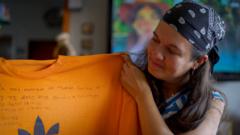
Laundry serves as the perfect vehicle because it is bulky, mundane, and frequent. Guards who are trained to look for shivs or cell phones rarely spend an hour unpicking the internal lining of a jacket. Human rights organizations have documented instances where entire testimonies regarding torture sessions were transcribed onto the fabric of white T-shirts using "ink" made from crushed charcoal and water. Once these shirts are sent home for washing, the families stretch the fabric over light sources to photograph the text, digitizing the dissent before the evidence is literally washed away.
This system works because it exploits the guard's greatest weakness: boredom. In a facility like Ramo Verde, where high-profile political prisoners are held, the tension is constant. However, the sheer volume of physical goods moving in and out creates "noise." Within that noise, a single chocolate bar wrapper can carry the GPS coordinates of an undisclosed holding cell or the names of officers involved in an interrogation.
The Chocolate Bar Ledger
Chocolate in Venezuela is more than a snack; it is one of the few stable commodities in a hyperinflationary nightmare. In the context of the prison system, it is also a medium for data. High-sugar, high-calorie foods are permitted in most facilities because they reduce the state's burden to provide adequate nutrition.
Investigative look-backs at the "message in a wrapper" technique reveal a grim creativity. By using a fine point—often a sharpened plastic utensil or a stray wire—prisoners emboss messages onto the silver foil lining of candy bars. To the naked eye, it looks like crinkled trash. To a lawyer waiting on the outside, it is a map. This technique is particularly effective because foil doesn't absorb liquids, making it durable against the damp, subterranean conditions of Venezuelan lockups.
The Failure of Digital Silencing
The Venezuelan government has invested millions in Chinese and Russian surveillance technology to create "black zones" around its most notorious prisons. Signal jammers are supposed to make cell phones useless. In theory, this should isolate the prisoner completely.
But the state’s reliance on digital warfare has left a massive flank open to analog tactics. By focusing on the electromagnetic spectrum, they ignored the physical reality of the supply chain. Every time a guard accepts a bribe to let a specific bag pass through without a thorough search, the digital blackout is rendered moot. The corruption inherent in the Venezuelan penal system is not just a bug; it is the very feature that allows the truth to escape.
We see a pattern where the more the state tightens digital controls, the more sophisticated the analog methods become. Prisoners have developed shorthand codes based on popular culture or local slang that change weekly. A request for "more blue soap" might actually be a signal that a specific witness is ready to talk to an international commission.
The Cost of the Leak
The stakes for this "laundry mail" are life and death. If a message is intercepted, the retaliation is rarely legal; it is physical. Solitary confinement in "La Tumba"—the tomb—is the standard punishment for those caught attempting to communicate with the outside world. Yet the flow of information hasn't stopped.
This persistence suggests that the prison walls are not the barrier the government thinks they are. Instead, they are a filter. Only the most vital, most verified information is worth the risk of the laundry run. This has created a paradoxical situation where the information coming out of Venezuelan prisons is often more reliable than the reports coming from the state-controlled media outlets on the streets of Caracas.
The Proxy War of Information
The struggle for control over these messages is a microcosm of the larger Venezuelan crisis. On one side, you have a state trying to maintain a facade of order. On the other, you have a population that has learned to use every scrap of trash and every thread of cotton as a weapon.
Intelligence agencies often overlook these "trash signals" because they are looking for encrypted apps and satellite pings. They are looking for a high-tech ghost when the real threat is a man with a piece of charcoal and a dirty shirt. The success of these smuggling operations proves that total isolation is an impossibility in a society where the jailers are as hungry and desperate as the jailed.
When the history of this era is written, it won't just be found in digital archives or leaked spreadsheets. Much of it will be pieced together from the scraps of paper and the unraveled threads that managed to survive the trip from a cell floor to a kitchen table.
The next time a bundle of laundry leaves a gate in Caracas, realize it isn't just clothes moving past the guards. It is the record of a regime’s shadow history, hidden in plain sight. If you want to know what is actually happening in the heart of the Venezuelan state, stop looking at the press releases and start looking at the trash.
Contact your local human rights representative to ask how they verify the "analog data" arriving from the Bolivarian Republic's detention centers.