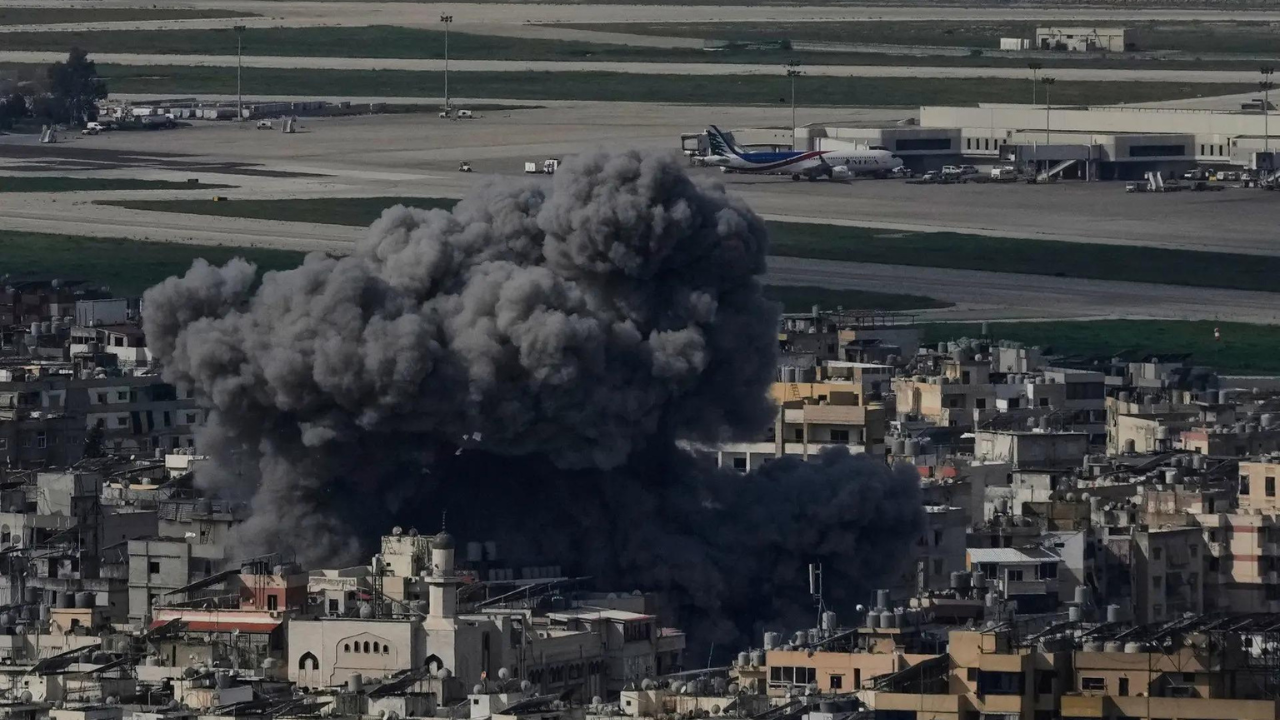
The air in the Situation Room doesn't move. It sits heavy, filtered through high-grade ventilation systems that hum with a clinical, low-frequency buzz, the kind of sound that reminds you that you are underground, insulated from the world by several feet of reinforced concrete and the weight of global expectation. On the screens, grainy thermal feeds flicker. They show the silent, white-hot blooms of precision munitions striking targets thousands of miles away. There is no sound from the explosions. There is only the data.
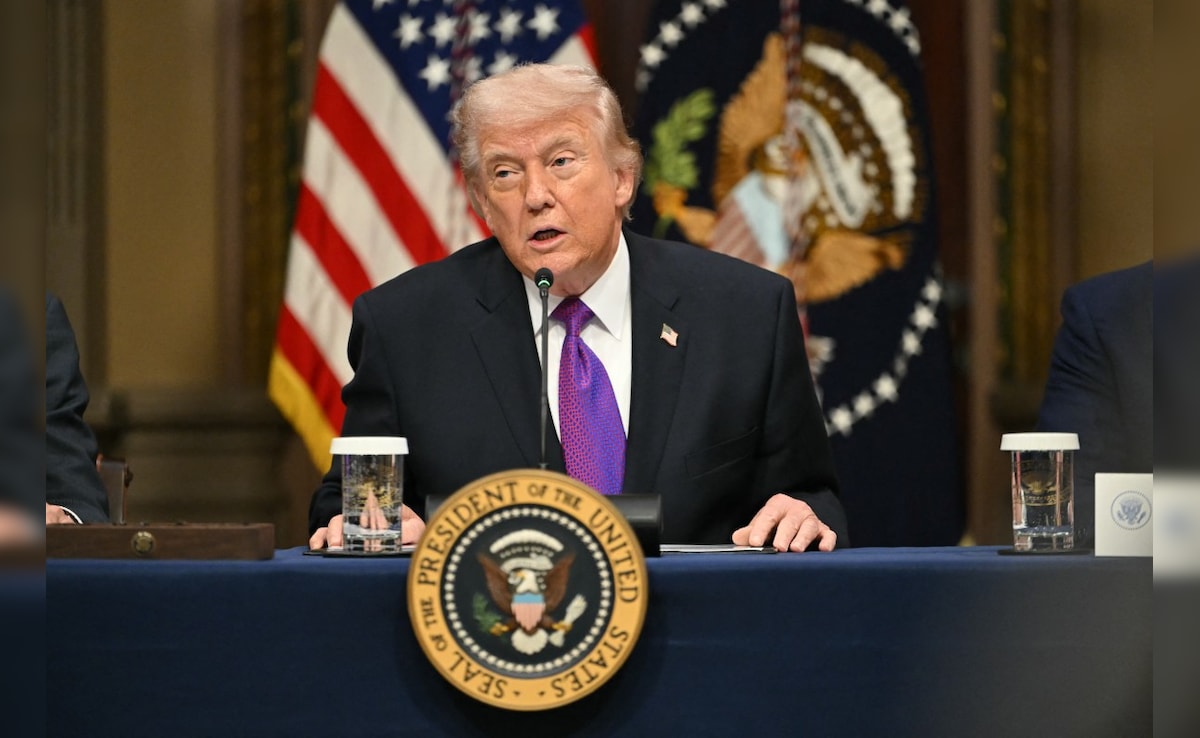
When Donald Trump leaned into the microphones to deliver his verdict on the United States’ military performance against Iran, he didn't reach for the nuanced language of a West Point strategist. He didn't speak of proportional response or the intricacies of the War Powers Act. He reached for a number.
"Fifteen out of ten," he said.
It is a mathematical impossibility. It is also a masterclass in the theater of power. To understand why a president would break the scale of reality to describe a military engagement, we have to look past the podium and into the dusty, flickering reality of what that "score" actually represents on the ground.
The Calculus of the Impossible
Numbers provide a sanctuary for the mind. When we talk about geopolitical conflict, the sheer scale of the tragedy—the lives disrupted, the centuries of history at risk, the economic tremors—is too vast to hold in the palm of one’s hand. So, we condense it. We turn it into a grade.
A "15 out of 10" isn't just a boast; it is an attempt to redefine the boundaries of success. In the context of the early 2020 tensions, specifically the strike on Qasem Soleimani and the subsequent Iranian missile barrage on Al-Asad Airbase, the score was intended to signal total dominance. It suggested that the American machine had functioned so perfectly that it had outstripped its own design.
But consider the person sitting in a corrugated metal shipping container in Nevada, operating a drone via a satellite link that has a two-second delay. For them, a 15 out of 10 isn't a grade. It is a blurred image of a convoy on a desert road. It is the steady pulse of a heart rate monitor. It is the heavy realization that the "perfect" execution of an order ripples outward for decades, creating ghosts that no scorecard can account for.
The disconnect between the rhetoric of the briefing room and the reality of the theater is where the true story of modern warfare lives.
The Invisible Stakes of a Perfect Grade
To the public, the conflict looked like a series of headlines. To the soldiers on the ground at Al-Asad, it looked like the end of the world. Imagine standing in the dark, knowing that ballistic missiles are screaming through the atmosphere toward your exact coordinates. There is no "15 out of 10" in the moments spent huddled in a bunker, feeling the earth heave like a dying animal.
The physical toll of those strikes—over 100 U.S. service members eventually diagnosed with traumatic brain injuries—shows the cracks in the perfect score. A brain injury is a quiet, invisible wound. It doesn't bleed on a spreadsheet. It manifests months later in a short temper, a forgotten birthday, or a sudden, unexplained wave of vertigo while standing in a grocery store aisle.
When a leader rates a performance as exceeding perfection, these are the variables they are rounding down to zero. The human cost is treated as a rounding error in the pursuit of a narrative of strength. We are told the defense was flawless because no one died in the immediate blast, yet the long-tail consequences of that night continue to vibrate through the lives of those who were there.
The Architecture of Brinkmanship
Why do we accept this language? We accept it because it feels like a shield. In a world where Iran’s regional influence and the U.S.’s global posture are in a constant, grinding friction, the public craves a sense of overwhelming competence. We want to believe that the people at the helm aren't just managing a crisis, but mastering it.
The "15 out of 10" rating serves a specific psychological function. It is designed to end the conversation. If a performance is perfect, there is no need for an autopsy. If the grade is off the charts, there is no room for critique.
However, the reality of military engagement is rarely a straight line. It is a jagged, messy graph of unintended consequences. Every action in the Middle East is a stone thrown into a very old, very deep pond. The ripples don't disappear just because we refuse to track them. By framing the conflict as a superlative success, the administration sought to project a level of control that simply does not exist in the chaos of a shadow war.
Beyond the Scoreboard
Think about a young officer tasked with explaining the geopolitical shift to their unit. They don't use the president's math. They talk about "deterrence." They talk about "readiness." They understand that in the world of high-stakes diplomacy, a "win" is often just the absence of a total catastrophe.
The danger of the "15 out of 10" mindset is that it encourages us to view war as a product rather than a process. It turns the most solemn responsibility of a state—the use of lethal force—into a brand launch. When we treat military actions like a five-star review on a travel site, we lose the gravity of what is being done in our name.
The strategy behind the strike on Soleimani was a gamble of historic proportions. It was a move intended to shatter the status quo. Whether it succeeded depends entirely on which timeline you choose to measure. If you measure the immediate tactical result, the scorecard looks bright. If you measure the long-term stability of the region, the ink starts to smudge.
The true grade of a war performance isn't found in a press conference. It is found in the quiet of a veteran’s home ten years after the fact. It is found in the diplomatic back-channels that either open or slam shut in the wake of a missile strike. It is found in the eyes of the people who live in the shadow of the "targets."
We are drawn to the spectacle of the superlative. We love the idea of being the best, the fastest, the most lethal. But the weight of the world is not measured in points. It is measured in the heavy, silent intervals between the headlines, in the moments where the "perfect" score meets the imperfect reality of being human in a world on fire.
The screens in the Situation Room eventually go dark. The politicians move to the next podium. The numbers are filed away in archives. But the dust from the explosions takes a long, long time to settle, and it doesn't care about the grade we gave it.