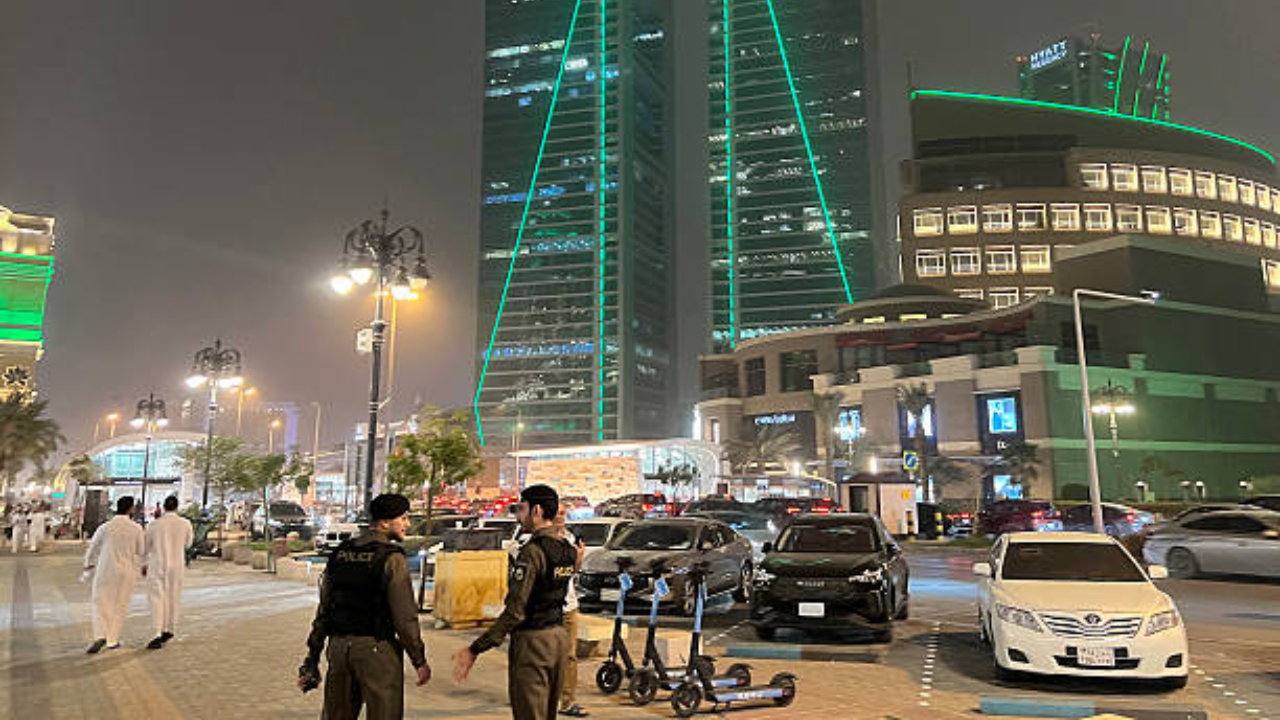
The black market for labor in Saudi Arabia is being dismantled in real-time. In a single week ending April 1, 2026, Saudi security forces arrested 14,242 individuals for breaching residency, labor, and border security regulations. While a surface-level glance suggests a routine police action, the scale and velocity of these sweeps signal a fundamental shift in how the Kingdom intends to manage its borders and its internal economy. This is not a temporary surge. It is the tactical execution of a long-term strategy to force every worker and employer into a digital, regulated, and transparent system.
The Logistics of a Mass Exit
The sheer volume of detainees—nearly 15,000 in seven days—is only half the story. The real indicator of the state's intent lies in what happens after the handcuffs click. Currently, 36,365 expatriates are tangled in various stages of legal processing. The Ministry of Interior is not just warehouse-housing these individuals; it is moving them toward the exit with industrial efficiency.
Within the same one-week window, the government coordinated with diplomatic missions to secure travel documents for 23,815 violators. Another 6,285 were physically deported. This represents a massive administrative lift, requiring seamless cooperation between the Ministry of Interior, the Ministry of Labor, and foreign embassies. The Kingdom is sending a clear message to the international community: the era of the "loose" residency permit is over.
The breakdown of the latest arrests reveals the primary pressure points:
- Residency Law Violators: 7,884 arrests
- Border Security Breaches: 3,948 arrests
- Labor Law Infractions: 2,410 arrests
The Border Calculus
The geography of these arrests highlights a persistent challenge for Riyadh. Of those caught attempting to cross the border illegally into the Kingdom, 71% were Ethiopian nationals and 27% were from Yemen. This migration pattern is driven by economic desperation and conflict in the Horn of Africa and the southern peninsula, but for Saudi Arabia, it represents a direct threat to the Vision 2030 labor reforms.
An unregulated influx of workers creates a shadow economy that undercuts the official minimum wages and provides a "safety valve" for unscrupulous businesses to avoid Saudization quotas. By tightening the border, the government is effectively raising the floor for labor costs, forcing the private sector to either automate or hire within the regulated legal framework.
Targeting the Enablers
Perhaps the most significant aspect of the 2026 crackdown is the pivot toward those who provide the infrastructure for illegal residency. Security forces arrested 25 individuals last week for providing transportation, shelter, or employment to violators.
This is where the state is applying its most painful leverage. The penalties are no longer just a "cost of doing business." If you are caught facilitating an illegal resident, you face:
- Imprisonment: Up to 15 years.
- Financial Ruin: Fines reaching SR1 million.
- Asset Forfeiture: Confiscation of vehicles used for transport and properties used for housing.
This shift from punishing the worker to punishing the provider is a classic "follow the money" strategy. It turns every landlord and foreman into an amateur immigration officer. The risk of losing a multi-million riyal property or a commercial fleet far outweighs the benefit of cheap, undocumented labor.
The Saudization Collision Course
This enforcement drive does not exist in a vacuum. It is colliding with the 2026 wave of Saudization updates. As of April 19, 2026, the Kingdom is enforcing a 60% localization quota for sales and marketing professions. Earlier in the year, roles like housing supervisors and dental assistants saw similar spikes in local hiring requirements.
When the government removes 14,000 irregular workers from the streets in a week, it creates immediate vacancies. In the old economy, these would have been filled by other irregular workers. In the new economy, these gaps are being used to force compliance with Nitaqat—the system that ranks companies based on their percentage of Saudi employees.
A Systemic Overhaul
Critics often argue that these crackdowns are heavy-handed, but for the Saudi leadership, they are a necessary correction to decades of "Tasattur"—the practice of foreigners running businesses in the name of a Saudi national. This shadow system has drained billions in remittances from the country and stifled local entrepreneurship.
The goal is a transparent labor market. By integrating the Iqama (residency permit) with digital banking and the national identity system, the government has made it nearly impossible to live a "normal" life in the shadows. You cannot rent a flat, open a bank account, or pay a utility bill without a valid, linked residency status. These physical arrests are merely the final cleanup of those who have tried to bypass the digital net.
The Kingdom has established a massive surveillance and reporting apparatus to support this. In regions like Makkah and Riyadh, the 911 emergency line has been repurposed as a clearinghouse for tips on illegal residents. The state is effectively crowdsourcing its border security.
The result is a labor market in a state of high-stress transition. While the immediate effect is a series of arrests and deportations, the long-term objective is an economy where every worker is accounted for, every riyal is tracked, and the "informal" sector is a relic of the past. The 14,242 arrests last week are not the peak; they are the new baseline.
Companies and individuals operating in the Kingdom must realize that the "wait and see" approach to compliance has become a gamble with impossible odds. The infrastructure for enforcement is now too large, too digital, and too motivated to be avoided. You are either in the system, or you are on a flight home.