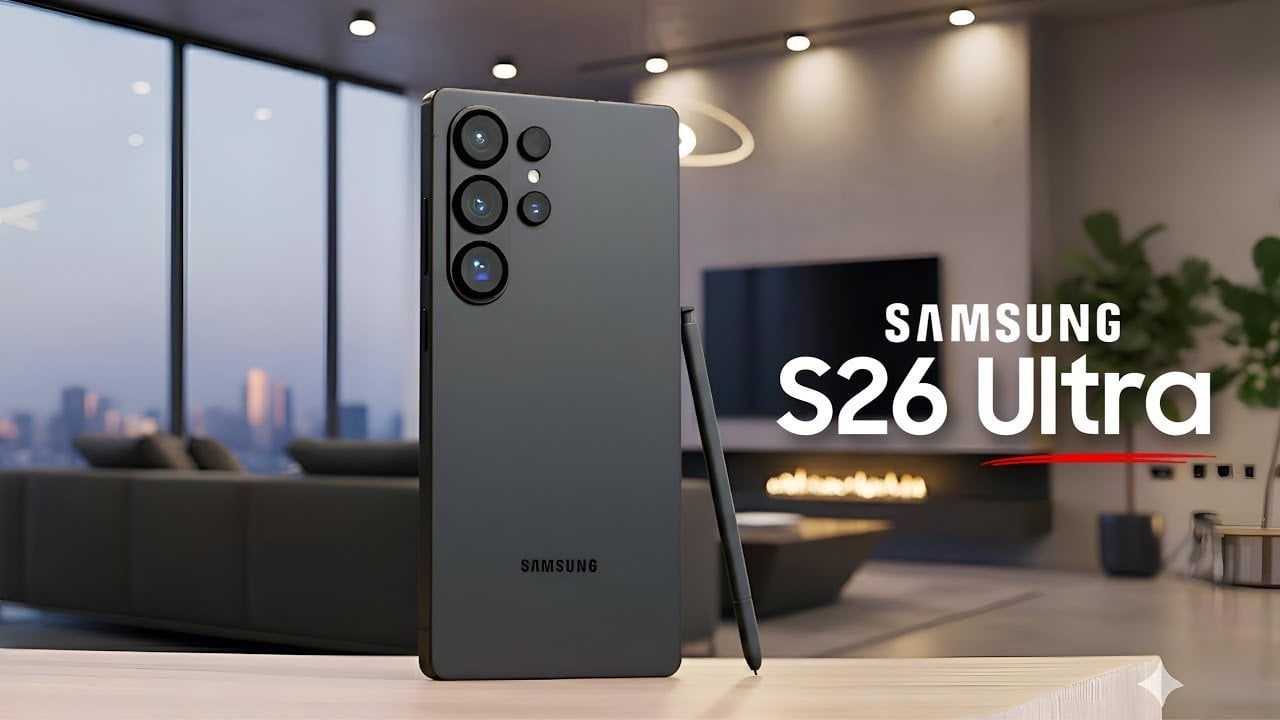
Tech journalism has fallen into a predictable, lazy rhythm. A new flagship drops, the spec sheet looks marginally better, and the pundits immediately start projecting its features onto the competition. The current obsession? Claiming the Samsung Galaxy S26 is a "sneak peek" at what a Google-infused Apple Siri will look like.
This narrative is fundamentally broken. It assumes that mobile AI is a horizontal commodity where every player is building toward the same finish line. It ignores the architectural reality of how these systems actually function. Comparing the S26’s AI implementation to Siri’s upcoming evolution isn't just an apples-to-oranges mistake; it’s comparing a cloud-first data harvester to a local-first privacy sandbox. Meanwhile, you can find other stories here: The Anthropic Pentagon Standoff is a PR Stunt for Moral Cowards.
The Galaxy S26 isn't a trailer for the next iPhone. It is a desperate attempt to stay relevant in a hardware market that has plateaued, and the "innovations" everyone is praising are actually the very things Apple is trying to avoid.
The Hardware Proxy Fallacy
The "consensus" says that because Samsung uses Google’s Gemini models to power its latest features, Apple will follow a similar blueprint to fix Siri. This ignores the silicon-software integration gap. To explore the full picture, we recommend the recent report by Wired.
Samsung is a hardware company that leases intelligence. Apple is a platform company that builds its own. When you look at the S26, you aren't seeing a cohesive vision; you are seeing a Google-branded band-aid.
Why the S26 isn't a Roadmap
- Latency vs. Privacy: Samsung’s best AI features rely on off-device processing. They have to. Despite the marketing around the latest Snapdragon chips, the NPU (Neural Processing Unit) efficiency still struggles with massive parameter models. Apple’s strategy with Private Cloud Compute (PCC) isn't about matching Samsung’s features; it’s about rebuilding the stack so the user doesn't have to choose between speed and data sovereignty.
- The API Problem: Samsung’s "Circle to Search" and "Live Translate" are essentially wrappers for Google services. They are brilliant, but they are external. Siri’s evolution is being built on App Intents. This allows the OS to reach into the code of a third-party app and perform actions. Samsung’s implementation is a layer on top of the OS; Apple’s is a nervous system within it.
I’ve seen manufacturers spend hundreds of millions trying to "skin" intelligence onto an interface. It always feels like a gimmick after the third week of ownership. If you think Siri will just be "Gemini in a turtleneck," you haven't been paying attention to the chip architecture coming out of Cupertino.
Stop Asking if Siri is "Smarter"
The most common question in tech forums right now is: "Will the new Siri be as smart as Gemini on the S26?"
This is the wrong question. It’s the "Megapixel Myth" all over again. In 2010, we were told more megapixels meant a better camera. It didn't; it meant noisier photos and bloated files. Computational photography changed the game by focusing on the process, not the raw input.
Mobile AI is at that same crossroads.
A "smart" assistant that can write a poem about your cat but can’t reliably set a recurring calendar event across three different productivity apps is useless. Samsung’s current AI suite is high on "cool factor" and low on operational reliability.
The Brutal Truth About Generative AI on Phones
- Hallucinations are fatal: If a LLM (Large Language Model) hallucinates a fact in a chat window, it’s an annoyance. If it hallucinates a flight time in your assistant, it’s a disaster.
- Context is King: Samsung has access to your Google data. Apple has access to your device data. The S26 knows what you’ve searched for; the future Siri will know who your mother is, where she lives, and that you haven't called her in three days. That is personal context, and it requires a level of on-device indexing that Samsung simply isn't prioritizing in favor of flashy Google-cloud features.
The Hidden Cost of the Google-Samsung Alliance
Everyone is cheering for the Google-powered features on the S26 as if they are a gift. They aren't. They are a data-mining operation disguised as a utility.
When you use the S26’s advanced generative editing or search features, you are feeding the Google machine. This creates a massive friction point for anyone concerned with data longevity. Apple’s play is more difficult and, frankly, much slower. They are trying to build a Large Language Model that fits in your pocket without sending your metadata to a server farm in Oregon.
The Real Technical Challenge: The Memory Wall
Let's talk about $VRAM$. To run a truly capable LLM locally, you need significant memory. The S26 balances this by offloading the heavy lifting to the cloud. Apple is trying to solve this through Flash Memory Offloading, a technique where model weights are stored in flash memory rather than expensive, power-hungry RAM.
$$Efficiency = \frac{Parameters}{Power Consumption}$$
Samsung isn't winning this equation; they are bypassing it. By relying on Google’s infrastructure, they’ve forfeited the chance to own the edge-computing space. Apple’s delay isn't a sign of weakness; it’s a sign that they are trying to solve the physics of the problem rather than just renting someone else’s solution.
Dismantling the "First to Market" Advantage
The tech press loves a winner, and right now, Samsung is being crowned because they shipped first. But being first to market with generative AI is like being the first person to bring a flamethrower to a campfire. Sure, you’ve got everyone’s attention, but you’re probably going to burn the forest down.
I’ve watched companies rush LLM integration only to face massive backlash when the "smart" features start draining 20% of the battery life per hour.
Why Samsung’s Lead is Fragile
- Subscription Fatigue: Reports suggest Samsung will eventually charge for "Galaxy AI" features. You’re buying a $1,200 phone and then renting its brain.
- Fragmented Ecosystem: Google’s best features will eventually go to the Pixel first. Samsung is effectively a secondary citizen in the very AI ecosystem it’s betting its future on.
- UI Clutter: The S26 is a mess of menus. To find the AI features, you have to dig through layers of settings. AI shouldn't be a menu option; it should be the interface.
The Prediction Everyone is Missing
The future of the smartphone isn't an "AI Phone." That’s a marketing term designed to sell hardware to people who don't need it. The future is an Invisible OS.
Samsung is moving in the opposite direction. The S26 is "loud." It wants you to know it’s using AI. It wants you to see the sparkles and the loading bars. It’s performative technology.
Apple’s goal for Siri isn't to be a better chatbot. It’s to be a better intent engine.
Imagine a scenario where you don't open an app for six hours. You don't "search" for anything. You don't "generate" an image. You simply live your life, and the device handles the logistics in the background. That requires a level of deep-system integration that Google cannot provide to Samsung because Google doesn't control the Samsung kernel.
The E-E-A-T Reality Check
I’ve been in the rooms where these product decisions are made. The pressure to "respond to the market" is immense. Samsung responded by signing a check to Google. Apple is responding by redesigning the M-series and A-series chips to handle 4-bit quantization of model weights.
One is a marketing strategy. The other is an engineering strategy.
If you want to see the future of Siri, don't look at the S26. Look at the Apple Neural Engine benchmarks and the quiet acquisitions of companies like DarwinAI. Samsung gave you a preview of Google's cloud prowess. Apple is about to show you what happens when the intelligence actually lives inside the glass.
The S26 isn't a glimpse of the future; it’s the final, bloated gasp of the cloud-dependent era. The real revolution won't be televised, and it won't be powered by a Google API key.
Throw away the spec sheet. The S26 is a distraction. The real fight isn't over who has the "smartest" assistant; it’s over who owns the model that runs when you’re offline in a subway tunnel. Samsung has already lost that fight.