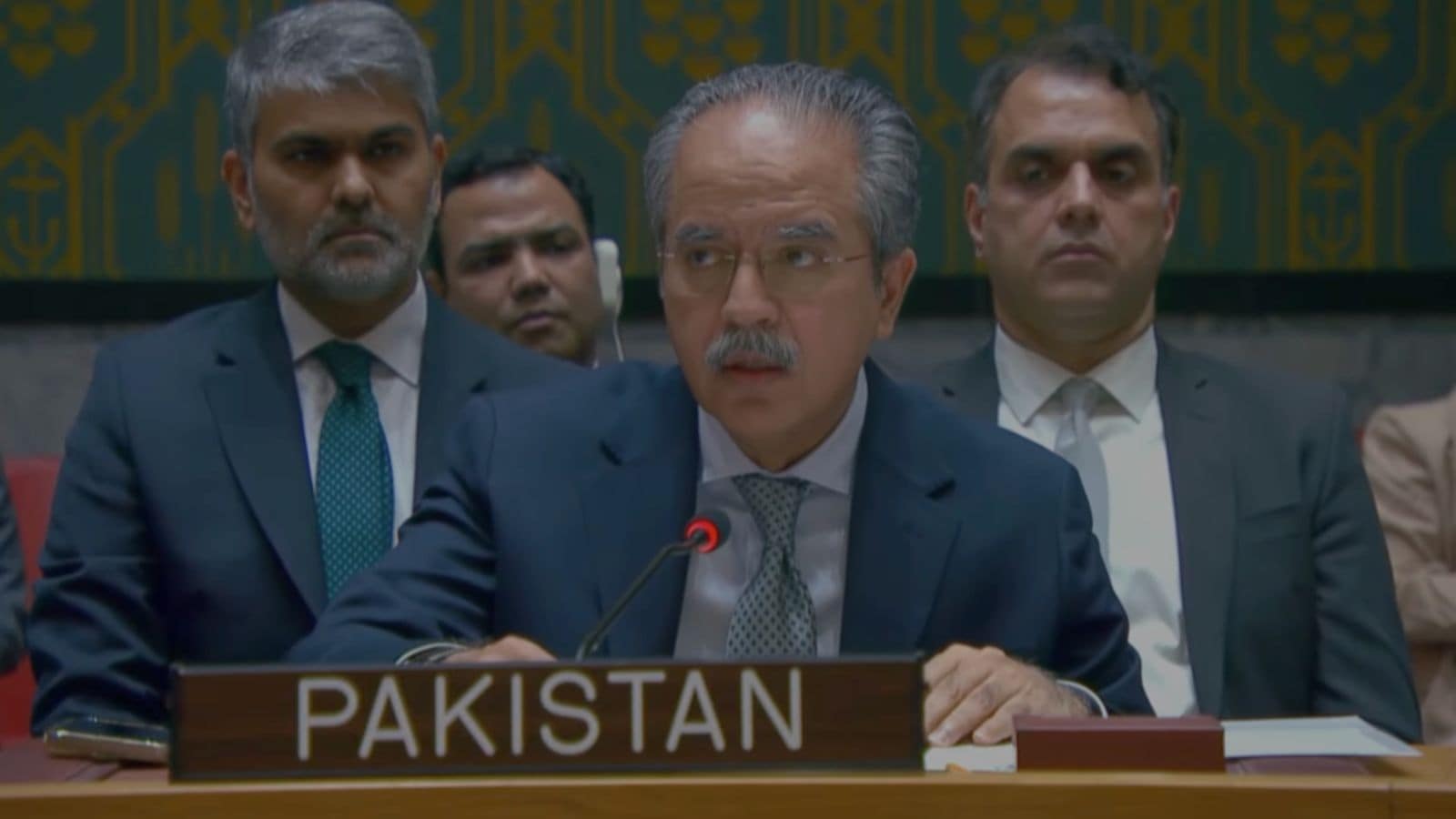
The fragile machinery of international diplomacy just suffered a catastrophic mechanical failure. While Pakistani officials stood before the United Nations to denounce a targeted strike on Iranian interests during active peace negotiations, the real story isn't just about the rhetoric in New York. It is about the deliberate timing of kinetic military action designed to short-circuit a diplomatic breakthrough. When a missile hits a target while negotiators are literally sitting across a table, the message isn't sent to the battlefield. It is sent to the boardroom. Pakistan’s vocal condemnation highlights a growing fracture between Western military objectives and the regional stability required for South Asian and Middle Eastern economic survival.
The core of the crisis lies in the intersection of high-stakes intelligence and the desperate need for a de-escalation corridor. For months, back-channel communications had been trending toward a cooling period. Sources within the diplomatic circles suggest that a framework for maritime security and proxy restraint was nearing a signature phase. Then, the strikes occurred. This wasn't a random skirmish. It was a calculated intervention that forced every moderate voice in Tehran to retreat, giving the hardliners exactly the justification they needed to shutter the doors of the negotiation room. Read more on a connected subject: this related article.
The Geography of Disruption
To understand why Pakistan is the one screaming the loudest at the UN, you have to look at the map. Islamabad isn't acting out of pure ideological solidarity with Iran. It is acting out of a deep-seated fear of a two-front instability. To its west, an emboldened and aggrieved Iran creates a vacuum that extremist elements are quick to fill. To its east, the perpetual tension with India remains. When the United States or its allies engage in kinetic operations that destabilize the Iranian border regions, they are effectively dumping gasoline on Pakistan’s backyard.
The "why" behind the timing of these strikes often points to a disconnect between the State Department and the Pentagon. In many administrations, the left hand is busy drafting treaties while the right hand is fueling the drones. However, veteran analysts see this as something more intentional. There is a school of thought in Washington that believes "peace" under the current Iranian framework is actually a strategic defeat. By hitting targets during the peak of negotiations, the actors involved ensure that no deal can be reached that would leave Iran’s regional influence intact. More reporting by Al Jazeera highlights related views on the subject.
Intelligence vs Diplomacy
The intelligence community often operates on a different timeline than the diplomatic corps. A window of opportunity to eliminate a high-value target or disrupt a shipment of ballistic components might only stay open for six hours. If that window opens while a peace summit is happening in Geneva or Doha, the military apparatus rarely waits. This creates a functional paradox. You cannot build trust with an adversary if you are simultaneously dismantling their infrastructure.
Consider the technical precision required for these strikes. We are no longer talking about carpet bombing or imprecise artillery. The use of low-collateral, high-accuracy munitions—often guided by real-time signals intelligence and satellite telemetry—means that the decision to strike is an surgical one.
The Infrastructure of a Strike
- Signals Intelligence (SIGINT): Intercepting encrypted communications to pin down the exact location of personnel.
- Persistent Surveillance: Using long-endurance unmanned aerial vehicles (UAVs) to establish a "pattern of life" before authorizing a launch.
- Precision Munitions: Utilizing GPS and inertial navigation systems to ensure the kinetic impact is limited to a specific room or vehicle.
When this level of technology is deployed during a diplomatic window, it serves as a massive technical flex. It tells the negotiator on the other side of the table that their "secure" locations are transparent. It turns a peace talk into a surrender demand.
The Economic Shrapnel
Beyond the immediate loss of life and the political fallout, there is the silent killer: economic volatility. Pakistan is currently navigating a brutal recovery path. It needs stable energy prices and open trade routes. Every time a drone strike triggers a spike in Brent Crude or increases insurance premiums for tankers in the Strait of Hormuz, the Pakistani taxpayer feels the squeeze.
The UN floor is one of the few places where a middle-tier power can publicly shame a superpower without immediate military repercussions. By "slamming" the US, Pakistan is trying to signal to the global markets that the instability is an external imposition, not a domestic failure. It is a desperate attempt to protect the Chinese-funded infrastructure projects that rely on a predictable regional security environment. If the Iran-Pakistan gas pipeline or the Gwadar port projects are to ever reach full utility, the shadow war between Washington and Tehran must move from the battlefield back to the shadows.
The Myth of the Surgical Strike
Military spokespeople love the term "surgical." It implies a clean, clinical procedure with no side effects. In the world of geopolitics, there is no such thing as a surgical strike. Every explosion has a political half-life of decades. When the US hits an Iranian-linked facility, the ripples move through the Shia populations in Iraq, the Houthi movements in Yemen, and the political corridors of Islamabad.
The collateral damage isn't just the buildings; it’s the credibility of the international order. If the UN Charter's provisions on sovereignty and peaceful resolution of disputes are ignored by the very nations that drafted them, the document becomes a historical curiosity rather than a functional tool. Pakistan’s grievance is rooted in the fact that it is being asked to follow a set of rules that the major players treat as optional.
Proxy Dynamics and the Escalation Ladder
Iran’s response to these strikes is rarely a direct counter-attack on US assets. Instead, they move down the escalation ladder to where it hurts the most: regional proxies. This is the "grey zone" of warfare. It involves cyber-attacks on infrastructure, harassment of commercial shipping, and the activation of sleeper cells.
For the analyst, the pattern is predictable.
- Strike: A Western asset hits an IRGC-linked target.
- Denial: The West maintains ambiguity or justifies it as "self-defense."
- The Diplomatic Freeze: Iran pulls out of scheduled talks.
- Asymmetric Response: A mysterious "glitch" hits a regional power grid or a tanker is seized.
Pakistan sits right in the middle of this cycle. It doesn't have the luxury of an ocean between it and the conflict. It is the buffer state that absorbs the kinetic energy of these two giants clashing.
The Failure of Modern Statecraft
We are witnessing the death of the "Grand Bargain." The era where a single comprehensive treaty could settle regional disputes is over. Replacing it is a fragmented, tactical reality where diplomacy is just another weapon system. The Pakistani representative at the UN wasn't just complaining about one attack; they were eulogizing the concept of the "peace process" itself.
The hard truth is that as long as military technology makes it easy to kill from a distance with zero risk to one's own troops, the incentive to stay at the negotiating table will remain low. Why compromise when you can delete the problem with a button press? This technical ease has blinded policymakers to the long-term cost of a world without trust.
If you want to see where the next decade of conflict is headed, stop looking at the peace treaties and start looking at the defense procurement budgets of the nations surrounding Iran. They aren't buying tools for peace; they are buying umbrellas for the coming storm.
Would you like me to analyze the specific types of precision munitions used in recent Middle Eastern theaters to see how they've changed the calculus of "deniable" warfare?