The headlines are screaming about a global energy catastrophe because Moscow decided to shut the valves on petrol exports starting April 1. The consensus view—lazy, predictable, and mostly wrong—is that Russia is flailing in response to drone strikes on its refineries or panicked by the geopolitical heat in the Middle East.
They want you to believe this is a sign of weakness. They are wrong.
This isn't a desperate retreat. It’s a calculated, cold-blooded internal stabilization maneuver that most Western economists are too blinded by ideology to see for what it actually is: the prioritization of the "Bread and Butter" over the "Barrel and Billion."
The Myth of the Supply Shock
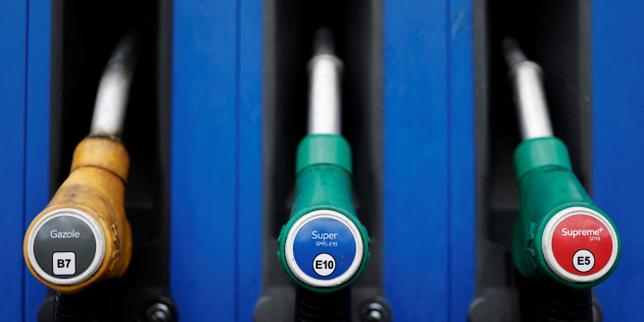
The first thing the "experts" get wrong is the scale of the damage. Most commentators treat Russian petrol exports as a pillar of global energy security. Let’s look at the numbers. Russia produces roughly 43 million tons of motor gasoline annually. How much of that do they actually export? About 10%.
The world isn't going to stop spinning because Moscow kept that 4.3 million tons for itself. The real action is in crude oil and diesel, neither of which are currently facing this same scorched-earth ban. Petrol is for cars. Diesel is for armies and industry. If the Kremlin were truly panicked, you’d see a total export freeze on every refined product in the catalog.
They aren't doing that. They are playing a specific, targeted game.
The Real Target: Internal Inflation
Imagine a scenario where the ruble is under pressure and every refinery strike by a Ukrainian drone shaves another few percentage points off domestic output. If you are Vladimir Putin, you don’t care about the profit margins of your oil majors right now. You care about the price at the pump in Novosibirsk.
Energy-rich nations don't survive on the global stage if their own citizens are rioting because they can't afford to drive to work. This ban is a domestic policy disguised as an international crisis. By cutting off the 10% that usually goes to foreign markets, Russia creates an artificial glut at home.
This suppresses domestic prices. It keeps the economy quiet. It buys time.
Why the Iran War Narrative is a Distraction
Competitor headlines are obsessed with the "Iran war" angle. They love a good cinematic crossover. The theory is that Russia is hoarding fuel because a regional explosion in the Middle East will send global prices to the moon, and they want to be ready.
That’s a half-truth that misses the point.
The Kremlin doesn't need to "prepare" for a price spike; they want the price spike. But they want it on the crude side, not the refined side. If you export crude and import (or domestically produce) petrol, you want the gap between the two—the "crack spread"—to be wide. By banning petrol exports, Russia isn't hiding from a Middle Eastern war. They are insulating their own population from the volatility that war will cause.
They are essentially building a moat around their domestic fuel market. It’s the ultimate protectionist move.
The Refinery Damage is Overblown
"But the drones!" the analysts cry. "The refineries are burning!"
I’ve seen dozens of "expert" reports claiming that 10% to 15% of Russian refining capacity is offline due to recent strikes. Even if those numbers are accurate—and they are often inflated by people with a vested interest in seeing Russia fail—refining capacity is not a static number.
Refineries are modular. You can bypass damaged cracking units and still produce low-grade fuel. You can shift production to inland facilities that are out of drone range. The ban on exports isn't a sign that the refineries are dead; it's a sign that the Kremlin is proactively managing a slightly tighter supply to ensure zero friction at home.
It’s not a collapse. It’s a buffer.
The Brutal Truth About "Global Impact"
We need to stop asking "How will this hurt the West?" and start asking "Why does the West think it matters?"
The United States doesn't buy Russian petrol. Europe doesn't buy it anymore. The primary buyers are in Central Asia, parts of the Middle East, and some African nations. When Russia pulls this fuel from the market, it doesn't starve the global economy—it inconveniences a few regional players who will immediately pivot to buying from India or China (who are, ironically, refining Russian crude).
The net change in global supply is almost zero. It’s just a game of musical chairs with molecules.
The Failure of Sanctions-Based Thinking
For years, the West has operated under the delusion that we can "price cap" our way to a Russian economic collapse. This ban proves the opposite. It shows that Russia still has total control over its internal levers. They can switch off the export tap without blinking.
The real danger isn't the ban. The danger is the realization that a country under the most severe sanctions regime in history still has the luxury of choosing not to sell its most valuable commodities to the highest bidder to keep its own people happy.
The Strategic Pivot No One Noticed
While everyone is focused on the petrol ban, they are missing the bigger shift in Russian energy policy. Moscow is no longer interested in being the "world's gas station." They are becoming an energy fortress.
This petrol ban is the first of many moves that will prioritize domestic industrialization over global market integration. They are using their energy as a tool for internal stability rather than an olive branch for international cooperation.
Stop Asking if This Will Raise Gas Prices
If you're in New York, London, or Berlin, the Russian petrol ban will have zero direct impact on your life. If your prices go up, it’s because your local politicians and oil companies are using "geopolitical tension" as an excuse to gouge you.
The ban is an internal Russian insurance policy.
- Risk: Domestic shortages leading to political unrest.
- Solution: Ban exports to ensure the local market is oversupplied.
- Result: A stable interior while the exterior screams about a crisis that doesn't exist for them.
The "crisis" is a mirage. The reality is a superpower that has decided that being a global partner is less important than being a domestic survivor.
The next time you see a headline about Russia "shutting down," check the numbers. They aren't shutting down. They are locking the doors and making sure they have enough fuel to outlast the storm while the rest of the world stands outside in the rain.
Russia isn't losing the energy war. They’ve just changed the rules while you were busy checking the stock ticker. Stop looking at the export charts and start looking at the internal stability index. That’s where the real war is being won.
Go look at the local fuel prices in Moscow on April 2. If they haven't spiked, the ban worked. Everything else is just noise.