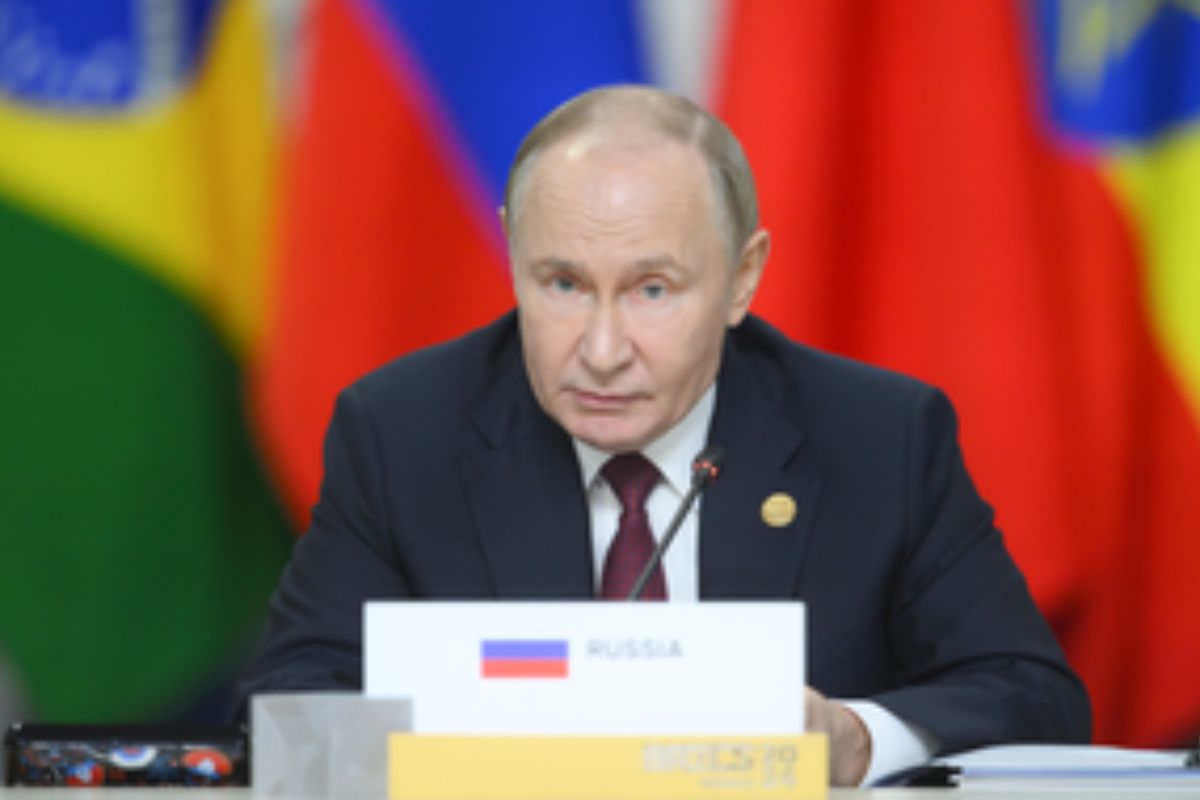
Geopolitics is a game of masks, and the latest Russian "warning" regarding the Iran-Israel escalation is the most transparent mask in the drawer. The mainstream media is currently hyperventilating over headlines suggesting Moscow is ready to drop the hammer on Washington and Tel Aviv if the conflict doesn't cease immediately. This isn't just a misreading of the situation; it’s a complete fundamental failure to understand how power, debt, and logistics actually function in 2026.
Russia isn't coming to save Tehran. Russia is barely keeping its own house in order.
The lazy consensus suggests that we are on the precipice of World War III because Vladimir Putin wagged a finger. That narrative ignores the cold, hard reality of the "Axis of Convenience." Russia and Iran aren't soulmates; they are cellmates. And right now, the Kremlin is more interested in milking Iran for Shahed drones than it is in getting dragged into a kinetic sandbox war that would incinerate its remaining liquidity.
The Myth of Russian Intervention
Let's dismantle the primary delusion: the idea that Russia has the surplus capacity to intervene in a meaningful way. Since the escalation of the conflict in Ukraine, the Russian military apparatus has shifted from a global expeditionary force to a regional meat-grinder.
- Logistical Bankruptcy: To provide a credible military threat to Israel or U.S. assets in the region, Russia would need to secure Mediterranean supply lines that are currently under the watchful eye of NATO’s Sixth Fleet.
- The Air Defense Lie: People point to the S-400 systems. If these systems were the "game-changers" (a term I despise but the media loves) they were marketed as, the Russian interior wouldn't be getting peppered by hobbyist-grade drones on a weekly basis.
- Economic Suicide: Russia’s economy is currently a war machine running on fumes and Chinese yuan. Opening a second front, even vicariously, would invite a level of secondary sanctions from the West that would make the current restrictions look like a slap on the wrist.
I’ve spent years analyzing defense procurement and state-level bluffing. When a nation is truly ready to strike, it doesn't hold a press conference to say "or else." It moves assets. It secures its borders. It goes silent. Russia is doing the opposite. It is being loud because it is weak.
Why Iran is Actually On Its Own
The competitor article suggests that Russia is the shield of the Middle East. Wrong. Russia is the spectator.
In the real world, the Kremlin views the Iran-Israel tension as a beautiful distraction. Every Tomahawk missile the U.S. moves toward the Persian Gulf is one less missile pointed at the Donbas. Every dollar the American taxpayer sends to the Iron Dome is a dollar not going to Kyiv.
Moscow doesn't want the war to end; they want it to simmer at exactly $95 a barrel. High oil prices, driven by Middle Eastern instability, are the only thing keeping the Russian ruble from becoming wallpaper. Why would Putin stop a war that is effectively funding his own?
The "Red Line" Fallacy
We hear a lot about "Red Lines." In diplomacy, a red line is usually just a suggestion written in disappearing ink. The media frames Russia's statement as a definitive boundary. It isn't. It’s a marketing pitch.
Russia is currently trying to maintain its status as a global power while its actual influence shrinks to the size of its immediate borders. By "warning" the U.S. and Israel, they are performing for the Global South. They want to look like the anti-imperialist alternative.
But ask yourself this: When Israel strikes IRGC targets in Syria—right under the nose of Russian bases—what does Russia do? They complain. They "condemn." They do nothing. Because the deconfliction line between the Russian military and the IDF is the most solid piece of infrastructure in the Middle East. Moscow knows that a direct confrontation with Israel is a direct confrontation with F-35s they aren't prepared to fight.
The China Factor Everyone Missed
You cannot talk about Russia’s "bold stance" without looking at who holds the leash. China is the silent partner in this triad. Beijing wants stability because they need the oil to flow and the belts and roads to remain open.
Russia’s rhetoric is often a loud-mouth proxy for Chinese concerns. If Russia is barking, it’s because Beijing is annoyed. But China isn't going to let Russia ignite a regional conflagration that destroys the global shipping lanes. Russia is playing the role of the "crazy friend" to see how much the West will flinch.
Stop asking if Russia will start a war. Start asking how much they are charging for the theater tickets.
The Actionable Truth for Investors and Analysts
If you are making decisions based on the fear of Russian boots on the ground in the Levant, you are going to lose money.
- Hedge for Volatility, Not Collapse: The market reacts to headlines, but the fundamentals of the Middle East haven't changed. Russia will continue to sell weapons to anyone with a pulse, but they won't defend them.
- Ignore the "Superpower" Rhetoric: Treat Russia like a medium-sized power with a large nuclear stockpile and a desperate need for attention. Their statements are designed to manipulate the price of Brent Crude, not to signal the start of a naval blockade.
- Watch the Mediterranean: If you don't see massive movements in the Black Sea fleet or the Syrian ports, the "warning" is junk mail.
People love to ask, "What happens if Russia joins the war?" The premise is flawed. Russia is already in a war. They are losing men, equipment, and international standing at a rate that precludes them from any serious secondary engagement.
The media loves a "clash of titans" narrative because it generates clicks. The reality is much more pathetic. It’s a former superpower shouting at a cloud, hoping the cloud gets scared enough to lower interest rates or stop sending tanks to its neighbor.
Russia isn't a threat to the U.S.-Israeli military objectives in the region. They are a nuisance with a microphone.
Stop reading the headlines. Start reading the balance sheets. Moscow is broke, busy, and bluffing.
Ignore the noise and watch the ships. If the ships aren't moving, the words don't matter.