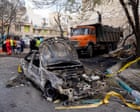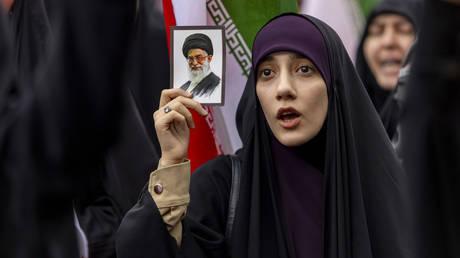
The sky over Tehran isn't just filled with smoke right now; it’s filled with the wreckage of a decades-old geopolitical strategy. On February 28, 2026, the United States and Israel launched a massive, coordinated air campaign dubbed "Operation Epic Fury." They didn't just hit a few warehouses. They went for the throat—targeting nuclear facilities, missile silos, and the very heart of the Iranian leadership.
The big question isn't just about how Iran will retaliate. It's about why Moscow, Iran’s supposed "strategic partner," is sitting on its hands while its ally burns. Russian analysts are sounding the alarm, calling this the spark for the largest regional war in history. But if you look closely at the Kremlin's actual moves, you'll see a very different story. Russia isn't coming to the rescue. Meanwhile, you can explore similar developments here: The Calculated Silence Behind the June Strikes on Iran.
The view from Moscow is colder than you think
Russian military experts are famously blunt. While the Russian Foreign Ministry issued a blistering condemnation of the strikes, calling them a "preplanned and unprovoked act of armed aggression," the reality in the Kremlin's war rooms is far more cynical.
For Vladimir Putin, Iran has been a "partner of convenience." Since the 2022 invasion of Ukraine, Tehran provided the cheap Shahed drones and the sanctions-evasion blueprints that kept the Russian economy afloat. But now? The math has changed. To understand the bigger picture, we recommend the detailed analysis by NPR.
Russian analysts like Fyodor Lukyanov are pointing out that Russia’s primary goal remains the war in Ukraine. Anything that distracts Washington is a win. If the U.S. gets bogged down in a regime-change operation in Iran, that’s less money and fewer Patriot missiles for Kyiv. Russia doesn't need Iran to win; it just needs the Middle East to be a chaotic enough sinkhole to swallow American attention.
Losing a partner but gaining a market
Don't let the "strategic partnership" talk fool you. Russia has repeatedly refused to give Iran its most advanced hardware. While Tehran begged for S-400 air defense systems and Su-35 fighter jets for years, Moscow mostly sent empty promises or low-level tech like the Verba MANPADS.
Why? Because Russia needs those systems for its own front lines. More importantly, Moscow doesn't want to empower a regional rival that could eventually compete for influence in Central Asia.
There’s also the oil factor.
- Price Spikes: If the Strait of Hormuz closes, oil prices will skyrocket.
- Revenue: Russia, as a major oil exporter, stands to make billions from the misery of the global energy market.
- Market Share: Iran is a direct competitor for Chinese oil buyers. If Iranian exports are knocked offline by Israeli strikes, guess who fills the gap? Russia.
It's a grim calculus. Russia loses a diplomatic ally but gains a massive economic windfall and a strategic breathing room in Europe.
The myth of the Russian security umbrella
One of the biggest misconceptions is that the January 2025 Comprehensive Strategic Partnership Treaty between Moscow and Tehran was a mutual defense pact. It wasn't. Unlike Russia’s treaty with North Korea, this agreement has no "boots on the ground" clause.
Russian analysts are making it clear: Moscow will not fight for Tehran.
The fall of Bashar al-Assad in late 2024 already showed Russia’s limits. When the chips were down, Moscow didn't send a massive expeditionary force to save Damascus. They let it fall because they couldn't afford to save it. Iran is facing a similar fate. While the Russian Navy might hold "joint drills" in the Gulf of Oman to look busy, they won't fire a shot at a U.S. carrier group.
What this means for the regional balance
The "Axis of Resistance" is effectively decapitated. With reports confirming the death of Supreme Leader Ali Khamenei, the Iranian regime is facing its most existential threat since 1979. Russian analysts fear a "radiological catastrophe" if nuclear sites are hit, but their real fear is a pro-Western government emerging in Tehran.
If a new, pragmatic government takes over in Iran, Russia’s "North-South Transport Corridor"—a multibillion-dollar project to bypass Western trade routes—goes up in smoke. Moscow would be isolated, losing its last major bridge to the Global South.
Practical steps for navigating the fallout
If you're watching this conflict unfold, stop looking for a Russian military intervention. It’s not happening. Instead, watch these three indicators to understand where the real power is shifting:
- Watch the Oil Spread: Keep an eye on the price difference between Brent crude and Russian Urals. If the gap narrows, Russia is successfully cannibalizing Iran's former customers in Asia.
- Monitor the Caspian Sea: This is where Russia will actually move assets—not to help Iran, but to "secure" its own borders and ensure the conflict doesn't spill into the Caucasus.
- Check the UN Security Council: Expect Russia to use its veto power to obstruct any formal U.S. "regime change" mandates. This is cheap, costs no lives, and keeps the diplomatic friction high.
Russia is betting on a long, slow burn. They want a Middle East that is too broken to help the West, but not so broken that it stops buying Russian grain and hardware. It’s a dangerous game, and as the strikes on Tehran continue, Moscow is finding out that being a "neutral observer" might cost them the only real friend they had left.
If you're invested in energy markets or geopolitical risk, start diversifying away from any projects reliant on the Iranian-Russian transit corridor. That "bridge to the south" is currently under bombardment, and the architect in Moscow isn't coming to fix it.