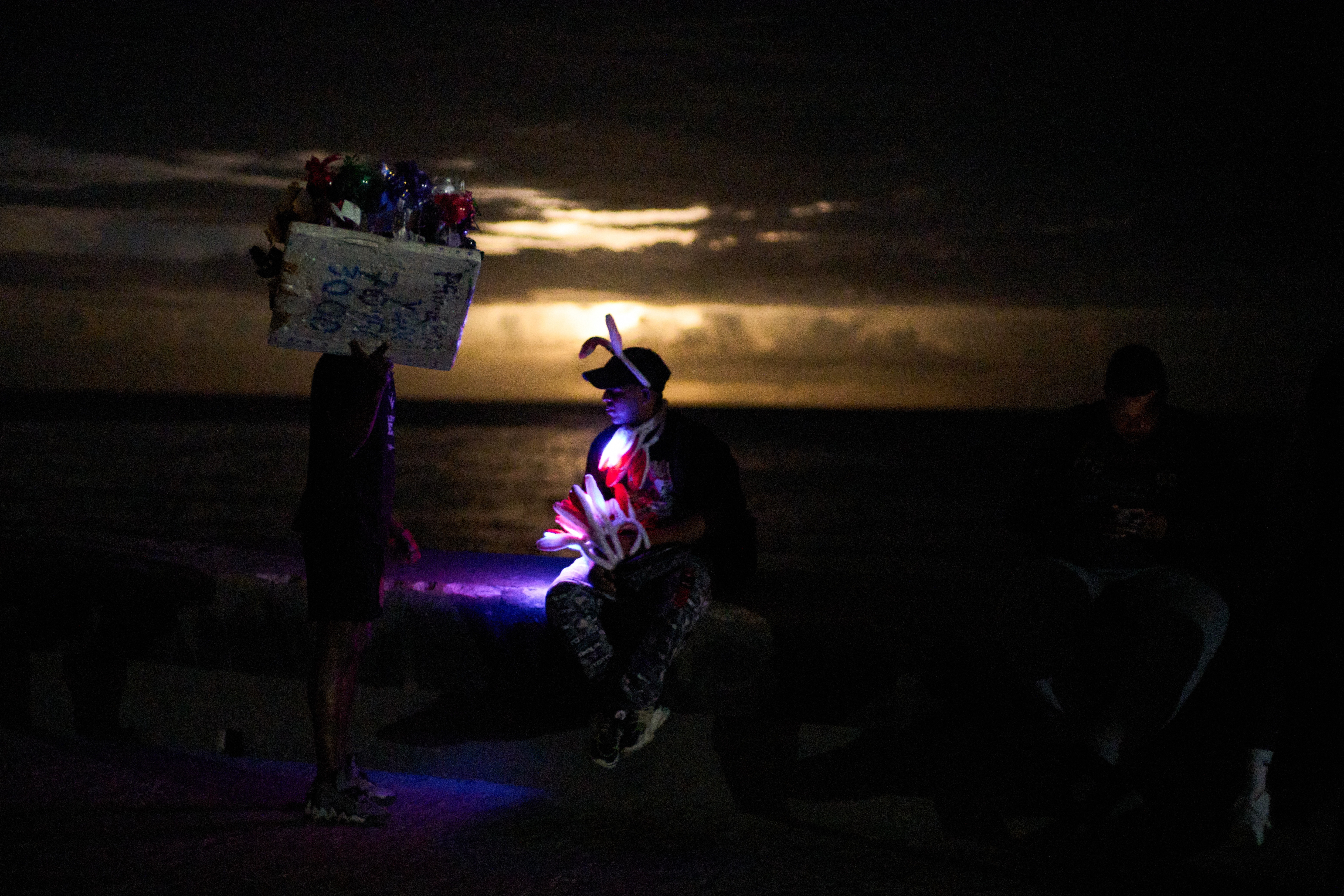
Imagine sitting in a dark, humid room in Havana while the contents of your refrigerator slowly rot. You've been without power for fifteen hours. This isn't a rare occurrence anymore; it's the daily reality for ten million people. The news that a Russian tanker, the Anatoly Kolodkin, is currently churning through the Atlantic with 730,000 barrels of crude oil sounds like a miracle. But if you think this shipment is going to end the 2026 Cuban energy crisis, you're mistaken.
Cuba is currently suffocating under a perfect storm of infrastructure decay and a brutal U.S. energy blockade. The arrival of Russian oil is a band-aid on a gaping wound. It’s a temporary reprieve that buys the government a few days of breathing room while the fundamental system continues to disintegrate.
The math behind the blackout
Let’s look at the numbers because they don't lie. Cuba consumes roughly 100,000 barrels of oil every single day just to keep the basic gears of the country turning. Even with the Anatoly Kolodkin and a second vessel, the Sea Horse, heading toward the island, the math is grim.
- The Shipment: 730,000 barrels of crude.
- The Refinement Lag: This isn't ready-to-use fuel. It has to hit a refinery first, a process that can take up to a month.
- The Yield: Once processed, that crude might produce about 180,000 barrels of diesel.
- The Longevity: Cuba burns through 20,000 barrels of diesel a day. That means this entire "massive" shipment sustains the country for maybe nine or ten days.
When you've had zero major oil imports for three months, a ten-day supply is better than nothing, but it’s hardly a solution. The island reached "zero hour" in February. Since then, the grid has collapsed repeatedly, including the massive March 16 failure that left the entire nation in the dark.
Why the taps ran dry
For decades, Cuba leaned on Venezuela. It was a simple trade: Cuban doctors for Venezuelan oil. That lifeline snapped in January 2026. Following the U.S. intervention in Venezuela and the ousting of Nicolás Maduro, the Trump administration effectively seized control of Venezuelan exports.
Then came the hammer blow. Executive Order 14380, signed on January 29, 2026, authorized tariffs on any country that dares to sell oil to Cuba. Mexico, which had been filling the gaps, immediately backed off to avoid a trade war with Washington. For the first time in recent memory, Cuba's oil imports dropped to virtually zero.
The result is a country in survival mode. Garbage is piling up in Havana because there’s no fuel for the trucks. Hospitals are running on fumes. Even the famous Festival del Habano was scrapped. When the government tells you they’re switching to solar and natural gas, it’s not a green initiative—it’s a desperate attempt to use the only things the U.S. can't easily blockade.
The Russian gamble
Moscow’s decision to send these tankers isn't just about helping a "fraternal" ally. It’s a middle finger to the U.S. energy embargo. By sending the Anatoly Kolodkin—a vessel already sanctioned by the U.S., EU, and UK—Russia is testing how far the Trump administration is willing to go.
But don't expect a continuous flow. Russia’s own oil giants, like Lukoil, are reeling from their own sanctions. Lukoil recently reported a $12 billion loss for 2025. They are selling off overseas assets and tightening their belts. While the Kremlin talks a big game about "unwavering solidarity," their ability to subsidize the Cuban economy indefinitely is questionable at best.
What happens when the oil arrives
When the Sea Horse docks with its 200,000 barrels of diesel, the government won't use it to light up the Malecón for a party. They can't afford to. That fuel is earmarked for "critical sectors."
- Agriculture: Without diesel, tractors don't move. If tractors don't move, the food crisis—already dire—becomes a famine.
- Water: 84% of Cuba’s water pumping equipment requires electricity or fuel. No fuel means no running water for millions.
- Public Transport: Havana is already a ghost town. The few remaining buses need that Russian diesel just to keep the workforce moving.
The reality is that even with these shipments, the rolling blackouts will continue. The Antonio Guiteras power plant, the island's largest, is a Soviet-era relic that breaks down if you look at it wrong. You can't fix forty years of underinvestment with one week's worth of fuel.
The diplomatic end game
President Miguel Díaz-Canel recently admitted that Havana is in talks with the U.S. administration. It’s a rare moment of transparency that signals just how close the regime is to the edge. The U.S. is clearly using the oil blockade as a lever to force political change, demanding Díaz-Canel’s resignation as a "precondition" for lifting the pressure.
While the politicians argue in Washington and Havana, the people are at a breaking point. We’ve seen protesters in Morón burning government offices and residents in Havana banging pots in the dark. This isn't just about "energy" anymore; it's about the basic stability of the Cuban state.
If you're watching this situation, keep your eyes on the ports of Matanzas and Cienfuegos. If we don't see a steady stream of tankers—not just a one-off Russian delivery—the March 16 blackout was just a preview of a much longer darkness.
For those looking to understand the immediate impact, watch for whether the Cuban government can successfully restart its industrial mining operations or if tourism providers like Intrepid Travel extend their cancellations past April. Those are the real barometers of whether the "Russian rescue" has any legs.