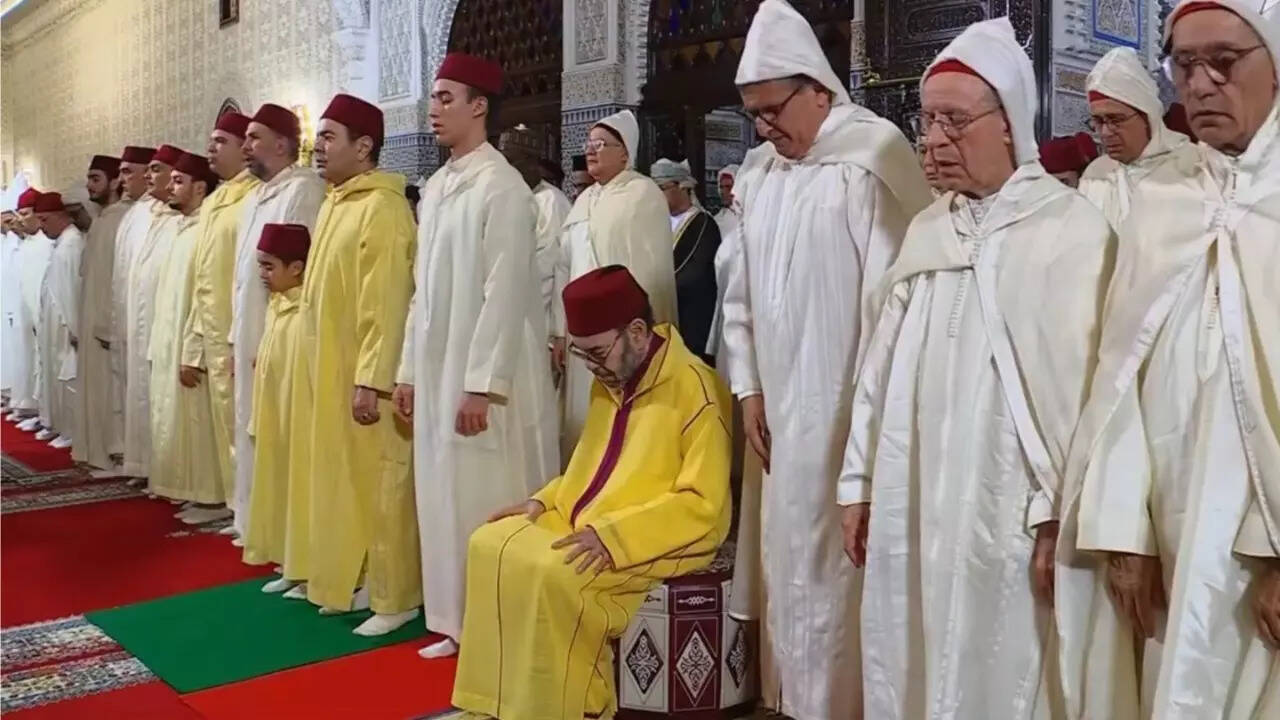
King Mohammed VI just led the Laylat ul Qadr prayers at the Hassan II Mosque, and it wasn’t just another photo op for the palace. If you’ve ever spent Ramadan in Morocco, you know this night carries a weight that’s hard to describe to outsiders. It’s the "Night of Power," believed to be better than a thousand months of worship. When the King appears in his traditional white djellaba to lead these prayers, it’s a massive signal of continuity in a world that feels increasingly fractured.
The atmosphere in Rabat during this specific ceremony is electric. You have the Commander of the Faithful—the Amir Al-Mouminine—fulfilling a role that stretches back centuries. It’s a blend of deep religious devotion and a very specific Moroccan brand of political stability. While most headlines focus on the guest list or the location, they usually miss the actual point of why this matters to the average person on the street in Casablanca or Marrakech.
The Night of Power is more than just a ritual
For those not steeped in Islamic tradition, Laylat ul Qadr marks the night the Quran was first revealed to the Prophet Muhammad. In Morocco, this isn't just a private moment of prayer. It’s a national event. The King presiding over the ceremony at the Royal Palace or a major mosque like the one in Rabat isn't just about tradition. It’s about the "Baraka"—the blessing—that Moroccans believe flows through the monarchy.
I’ve seen how the streets go quiet. Usually, Moroccan nights in Ramadan are loud, filled with the smell of chebakia and the sound of people rushing to cafes. But on this night, the energy shifts. It becomes internal. The King’s presence at the pulpit, surrounded by government officials, foreign diplomats, and religious scholars, serves as a visual anchor. It tells the country that despite modern pressures, the spiritual core remains untouched.
What the media gets wrong about the Royal Presence
Most news outlets report on this like it’s a standard ribbon-cutting ceremony. That's a mistake. They list who attended—Crown Prince Moulay El Hassan, Prince Moulay Rachid—and they stop there. But you have to look at the religious lectures, the Durus Hassania, that lead up to this night. These aren't just dry academic talks. They are high-level intellectual exercises where scholars from across the globe discuss everything from social justice to modern ethics under the King's patronage.
The Laylat ul Qadr prayer is the climax of this month-long intellectual and spiritual marathon. When the King sits on the floor among the worshippers, it sends a message of humility that resonates deeply with the Moroccan psyche. It’s a rare moment where the hierarchy feels flattened by the shared act of prostration. It’s not just a show of power; it’s a show of belonging.
Rabat becomes the spiritual capital for a night
Rabat is often seen as the stiff, administrative heart of Morocco, but during the Royal prayer, it transforms. The security is tight, obviously, but the vibe is one of intense focus. The King often uses this occasion to fulfill specific religious duties, like presiding over the Quranic school graduation ceremonies or honoring those who have memorized the holy book.
- The Quranic connection: The King often awards prizes to young children who have mastered tajweed (the art of recitation). This keeps the tradition alive for the next generation.
- The Diplomatic angle: Seeing ambassadors from across the Islamic world praying alongside the Moroccan leadership isn't a coincidence. It’s soft power in its purest form.
- The Social impact: This night often coincides with acts of massive charity across the kingdom, spurred by the Royal example.
Many people think these traditions are fading. They aren't. If anything, the digital age has made these ceremonies more viral. You’ll see clips of the King’s prayer shared on WhatsApp groups and TikTok within minutes. It’s how Moroccans check in with their identity.
Tradition isn't a relic it's a strategy
You might wonder why a modern state in 2026 still puts so much emphasis on a medieval-looking ceremony. Honestly, it’s because it works. Morocco has stayed remarkably stable compared to its neighbors, and a huge part of that is the religious legitimacy of the King. By leading the Laylat ul Qadr prayer, he isn't just acting as a head of state. He’s acting as the spiritual glue for the nation.
Critics might call it performance. But when you see thousands of people gathered, not because they were told to, but because they genuinely value the sanctity of the night, you realize it’s much more than that. It’s a collective breath. It’s the one night of the year where the entire country, from the palace to the smallest village in the Atlas Mountains, is doing exactly the same thing at exactly the same time.
How to witness this if you are in Morocco
If you happen to be in Rabat during the end of Ramadan, don't expect to get anywhere near the Royal Palace. The perimeter is strictly managed. However, you can feel the ripple effect. Every mosque in the city will be overflowing. People will be out until dawn.
- Dress the part: If you're visiting a mosque, wear a djellaba. It’s not required, but it’s a sign of respect that locals deeply appreciate.
- Stay for Suhoor: The meal before dawn on the morning after Laylat ul Qadr is special. Most local spots will be serving harira and dates long into the night.
- Watch the broadcast: Even if you aren't religious, watching the ceremony on SNRT (the national broadcaster) gives you a front-row seat to the intricate Moroccan architecture and the hauntingly beautiful Andalusian-style chanting.
The King’s role in this isn't just about leading a prayer; it’s about maintaining a specific Moroccan "exception." In a region where religious authority is often contested or radicalized, the Moroccan model—centered on the monarchy—offers a version of Islam that is traditional yet strangely suited for the modern world.
If you want to understand the soul of Morocco, stop looking at the tourist brochures for Marrakesh. Look at the King in Rabat on the 27th night of Ramadan. That’s where the real story is. To truly experience this, plan your next trip to coincide with the last ten days of Ramadan and head to the capital. You’ll see a side of the country that the typical influencer-style travel guides never manage to capture. Just be prepared for the crowds and the intense, quiet energy that defines the most important night in the kingdom.


