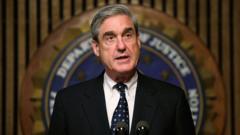
Robert Mueller was the last of a dying breed in Washington. He died Friday night at 81, leaving behind a legacy that effectively spans the two most traumatic eras of modern American history: the aftermath of 9/11 and the internal fracturing of the Trump years. If you're looking for a simple hero or a clear-cut villain, you're looking in the wrong place. Mueller was a man of the "old school" in a town that has since burned that school to the ground.
His family confirmed his passing on Saturday morning, noting he died in Charlottesville, Virginia. While the specific cause of death wasn't immediately released, it's no secret he'd been battling Parkinson’s disease since at least 2021. His departure marks the end of a specific type of public service—the kind that prioritizes the institution over the individual, often to its own detriment in the court of public opinion.
The man who reinvented the FBI overnight
Mueller took the reins of the FBI on September 4, 2001. He had exactly one week to get his bearings before the world changed. Before 9/11, the Bureau was basically a high-end police department focused on catching bank robbers and mobsters. Mueller was the one who dragged it into the 21st century, turning it into a domestic intelligence agency.
He didn't just tweak the system; he gutted it. He moved thousands of agents off traditional crime beats and put them on counterterrorism. It wasn't always popular. People within the Bureau hated the paperwork and the new "intelligence-led" metrics. But Mueller didn't care about being liked. He cared about the fact that on his watch, a second major attack on U.S. soil didn't happen.
That 12-year tenure—the longest since J. Edgar Hoover—was defined by a "prevent at all costs" mentality. He lived with the weight of the 99% success rate being a failure. If one plot got through, like the Boston Marathon bombing in 2013, he took it personally. I've heard stories of him sitting with victims' families, stony-faced but clearly gutted by the "what ifs."
The investigation that satisfied nobody
Fast forward to 2017. Most people thought Mueller was heading for a quiet retirement of law school lectures and private practice. Instead, he was tapped as Special Counsel to investigate Russian interference in the 2016 election. This is where the Mueller of legend met the reality of 21st-century tribalism.
Democrats expected him to be a knight in shining armor who would deliver a signed confession from the Oval Office. Republicans viewed him as the leader of a "deep state" witch hunt. Mueller, being Mueller, did neither. He ran the tightest ship in the history of Washington. No leaks. No press conferences. Just 22 months of silence followed by a 448-page report that was a masterclass in legal nuance.
The report didn't say "Trump is guilty." It also pointedly refused to say "Trump is innocent." Mueller’s famous line—"If we had confidence... that the president clearly did not commit obstruction of justice, we would so state"—is still argued about today.
The problem was that Mueller was playing by 1950s rules in a 2020s world. He believed the report should speak for itself. He thought the public would read the evidence and reach a reasoned conclusion. He was wrong. In the end, his refusal to be a "performer" during his 2019 congressional testimony made him look frail and uncertain to some, even though he was simply sticking to the Four Corners of his document.
A Marine to the very end
To understand why Mueller acted the way he did, you have to look at his time in Vietnam. He wasn't some draft-dodging D.C. elite. He was a Marine who led a rifle platoon through some of the nastiest fighting of the war. He earned a Bronze Star for valor and a Purple Heart after taking a bullet to the thigh.
That military discipline never left him. It’s why he wore the same white shirts and dark suits every single day. It’s why he expected his staff to be at their desks by 6:00 AM. He viewed the law as a set of orders to be followed, not a tool to be manipulated for political wins.
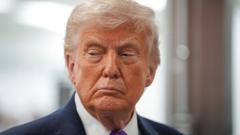
When news of his death broke, the reactions were as split as the country he served. Former President Barack Obama called him one of the finest directors in FBI history. Meanwhile, Donald Trump took to social media to say he was "glad" Mueller was dead, calling him a man who "hurt innocent people." That contrast tells you everything you need to know about the era Mueller helped define.
Why his legacy is more than just a report
Mueller’s real legacy isn't the Russia investigation. It's the standard he tried to uphold. He belonged to a generation that believed you could be a Republican and still serve a Democratic president without it being a betrayal. He was nominated by Bush and kept on by Obama. That feels like a fairy tale in 2026.
We often mistake his silence for weakness or his nuance for indecision. Honestly, he was just a man who believed that the facts were enough. He didn't think he needed to "sell" the truth.
If you want to understand the impact of his life, don't just look at the headlines about the "witch hunt" or the 9/11 response. Look at the people he trained. An entire generation of DOJ prosecutors and FBI agents still operate under the "Mueller way"—straight-backed, strictly by the book, and completely uninterested in the noise on Twitter.
He is survived by his wife, Ann, and their two daughters. He lived a life of immense pressure and very little public gratitude. Whether you think he was a hero or a disappointment probably says more about your own politics than it does about the man himself.
If you’re interested in the actual mechanics of the Bureau he built, start by reading the unredacted portions of the 9/11 Commission Report. It shows exactly how broken the system was before he took over. From there, compare the FBI’s current counter-intelligence budget to the 2001 figures. The shift is staggering and it’s entirely his doing. You can also look into the history of the "Seven Floor" at the FBI to see how he centralized power to prevent the kind of communication breakdowns that allowed the 2001 hijackers to go undetected.