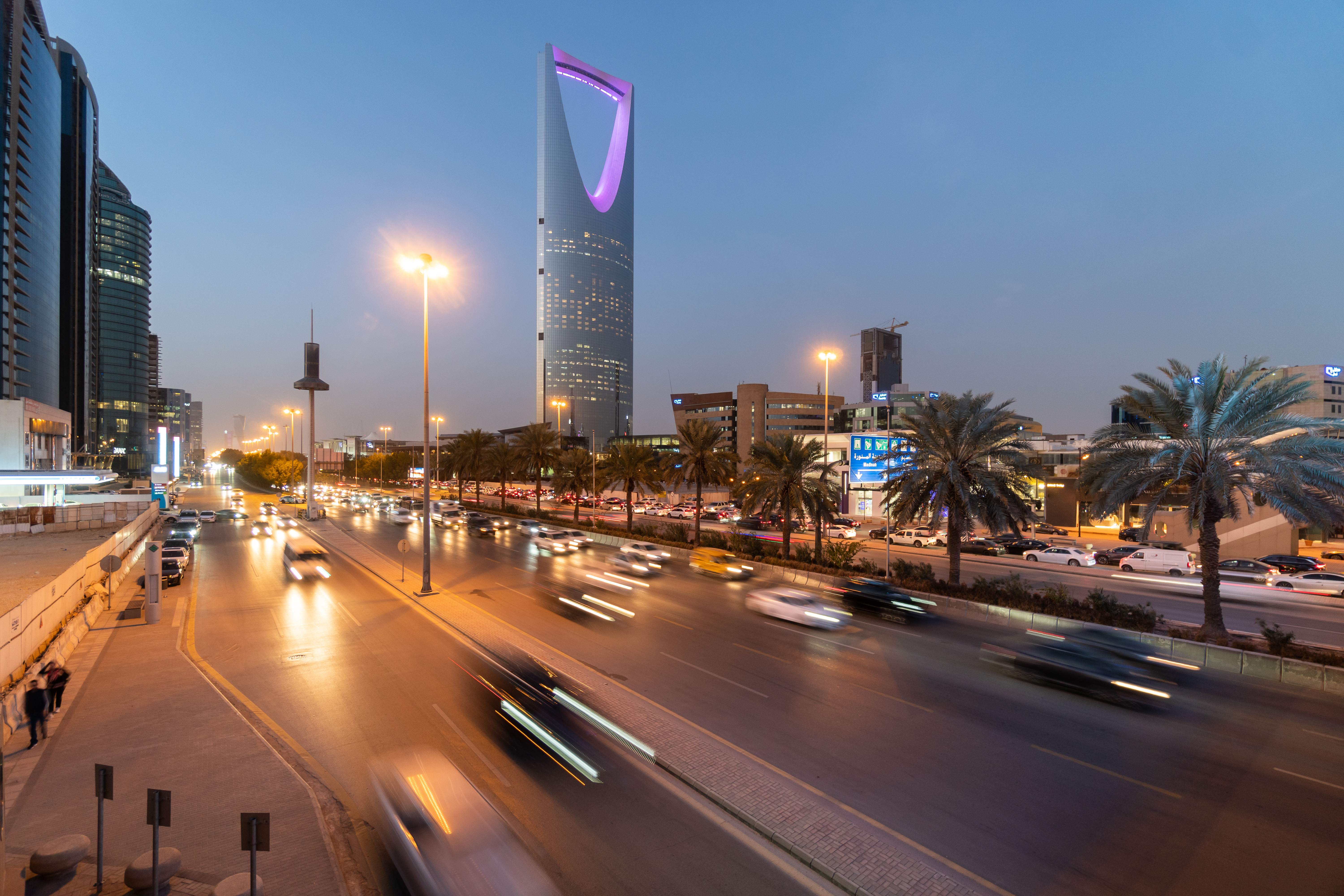
The interception of three ballistic missiles over Riyadh marks more than just a momentary surge in regional friction. It represents a calculated stress test of Saudi Arabia’s multi-billion dollar air defense infrastructure. While the official narrative focuses on the successful neutralization of these threats by the Royal Saudi Air Defense Forces, the persistent nature of these launches reveals a grim reality about the limits of modern missile defense. You cannot defend every square inch of a kingdom indefinitely against an adversary that views failure as a data point.
The Houthi movement in Yemen has evolved. What began as a disorganized insurgency has transformed into a sophisticated proxy force capable of striking deep into the heart of the Saudi capital. This isn't just about the hardware being fired; it’s about the strategic intent to puncture the image of Saudi stability. When sirens wail in Riyadh, the target isn't just a government building or a military base. The target is the investor confidence underpinning the kingdom's massive economic overhaul.
The Calculus of Asymmetric War
Modern warfare is often a math problem where the variables are skewed in favor of the cheaper option. A ballistic missile, even one derived from older Soviet or Iranian designs, costs a fraction of the interceptor used to bring it down. Saudi Arabia relies heavily on the MIM-104 Patriot system. Each PAC-3 interceptor carries a price tag upward of $3 million. The missiles being fired from Yemeni soil—often the Burkan or Samad series—are built using a mix of smuggled components and localized manufacturing that costs the Houthis significantly less.
This creates an economic drain. For every three missiles intercepted, the kingdom spends nearly $10 million in direct munitions alone, not counting the operational costs of maintaining 24-hour radar surveillance and crew readiness. The attackers are playing a long game of financial and psychological attrition. They do not need to hit the target to win; they only need to stay in the air long enough to force a response.
Why Interception Isn't a Total Victory
The public often views a "successful interception" as a total erasure of the threat. It is not. When a Patriot missile strikes an incoming ballistic warhead, the kinetic energy creates a massive debris field. These fragments, often traveling at several times the speed of sound, must fall somewhere. In a densely populated urban center like Riyadh, falling shrapnel is a lethal hazard.
Investigative looks at previous strikes show that property damage and civilian anxiety are frequently caused by the "success" of the defense system. Furthermore, the radar signatures of these intercepts provide the Houthi technical advisors with invaluable intelligence. They watch how the Saudi batteries react, where they are positioned, and how long it takes for them to reset. Every launch is a reconnaissance mission.
The Iranian Shadow and Supply Lines
The technical leap in Houthi capabilities cannot be explained by domestic Yemeni engineering alone. The "Qiam" missile family from Iran bears a striking resemblance to the hardware being recovered from Saudi intercept sites. Analysts have identified specific welding patterns and electronic components that point directly to a sophisticated supply chain originating in Tehran.
Smuggling these components through the blockade is a feat of logistical persistence. Parts are broken down, moved via dhows through the Gulf of Aden, and reassembled in underground workshops. This decentralization makes it nearly impossible to stop the flow of weapons through traditional military pressure. The kingdom is fighting a ghost in the machine.
Technical Gaps in the Shield
Despite the high success rates reported by the Ministry of Defense, the system has "blind spots." Ballistic missiles follow a predictable arc, making them relatively easy for advanced radar to track. However, the shift toward low-altitude cruise missiles and suicide drones presents a different challenge entirely.
These smaller, slower threats fly under the radar horizon of traditional long-range defense systems. During the 2019 Abqaiq–Khurais attack, the world saw how even the most expensive defense networks could be bypassed by a swarm of low-cost drones. The three missiles over Riyadh suggest a return to high-altitude tactics, perhaps as a way to distract or deplete the PAC-3 batteries before a more complex multi-vector attack is attempted.
The Human Element and Readiness
Maintaining a high state of alert for years on end is taxing. The crews manning the batteries in Riyadh must make split-second decisions. A false positive could mean wasting a multi-million dollar interceptor; a delayed response could mean a catastrophe in the city center.
The Saudi military has poured resources into training, but the psychological pressure of defending the capital is immense. There is no room for error. A single missile getting through could change the political trajectory of the entire Middle East. This pressure is exactly what the Houthi command intends to exploit. They are waiting for the one moment when a technician is tired or a radar system glitches during a routine update.
The Economic Toll on Vision 2030
Saudi Arabia is currently attempting the most ambitious economic pivot in modern history. The goal is to move the country away from oil dependency and toward a future as a global hub for tourism, tech, and logistics. This requires a massive influx of foreign direct investment.
Investors loathe instability. While the Saudi government is quick to downplay the impact of these missile strikes, the visual of smoke trails over the Riyadh skyline is a difficult image to market. The kingdom is forced to spend more on "invisible" security—defense systems, cyber-hardening, and intelligence—at a time when every riyal is needed for infrastructure and social programs.
A Regional Arms Race Without a Finish Line
The escalation in Riyadh is forcing neighboring states to re-evaluate their own security. We are seeing a surge in interest for the THAAD (Terminal High Altitude Area Defense) system and the latest iterations of the Aegis sea-based defense. But more hardware doesn't necessarily mean more safety. It often just invites a more creative offense.
The Houthis have already demonstrated that they can adapt. When their missiles were intercepted, they moved to drones. When drones were jammed, they moved to waterborne IEDs. The three missiles targeted at Riyadh represent just one limb of a many-headed hydra.
The Myth of the Iron Dome Analogy
Many observers mistakenly compare the Saudi situation to Israel’s Iron Dome. This is a flawed comparison. The Iron Dome is designed for short-range, low-velocity rockets fired from a few miles away. The threats hitting Riyadh are sophisticated, long-range ballistic weapons traveling at hypersonic speeds upon reentry. The physics are different, the stakes are higher, and the cost of failure is absolute.
Riyadh isn't just defending against a rocket; it is defending against a geopolitical statement. The statement is that the Saudi heartland is no longer a sanctuary.
Countermeasures Beyond the Battery
To truly secure the capital, the Saudi strategy must move beyond just firing interceptors. This involves:
- Deep-strike capabilities: Neutralizing the mobile launchers in Yemen before they can fire. This has proven difficult due to the rugged terrain and the Houthis' ability to hide launchers in civilian infrastructure.
- Cyber-interdiction: Disrupting the digital links between Iranian advisors and Yemeni assembly teams.
- Diplomatic leverage: Forcing the international community to acknowledge the breach of weapons embargoes.
The current "intercept and report" cycle is sustainable in the short term, but it is not a solution. It is a holding pattern.
The Reality of Prolonged Conflict
As long as the war in Yemen remains unresolved, the skies over Riyadh will remain a frontline. The three missiles recently shot down are not the end of a chapter; they are a sentence in a much longer, more dangerous book. The kingdom has shown it has the technology to protect its people for now, but technology is a fickle master.
Every successful interception is a relief, yet every launch is a reminder of a porous border and an emboldened enemy. The true test of the Saudi shield isn't whether it can stop three missiles today, but whether it can survive the exhaustion of stopping three thousand over the next decade.
The tactical victory of a hit-to-kill interception often masks the strategic reality of a kingdom under siege. The missiles are being neutralized, but the threat is maturing. If the Saudi defense strategy doesn't evolve beyond the "interceptor" mindset, they are merely paying a very high price to delay an inevitable breach.
Move the focus from the fire in the sky to the supply lines on the ground.