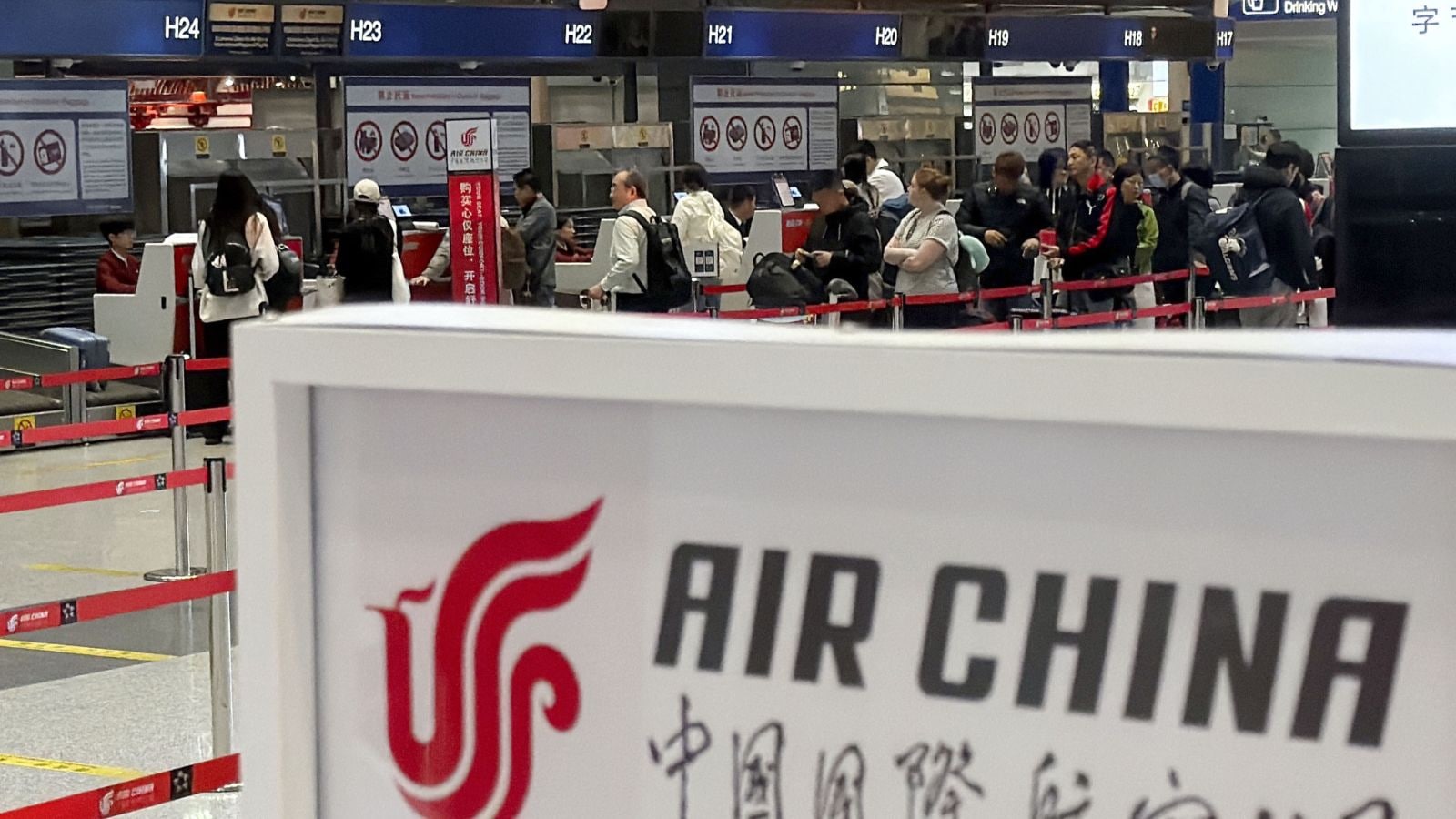
Air China planes are finally touching down in Pyongyang again. After a six-year hiatus that felt like an eternity in geopolitical terms, the flight path between Beijing and the North Korean capital is officially active. This isn't just about clearing a backlog of stuck travelers or making life easier for a few diplomats. It’s a massive signal. When the world’s second-largest economy decides to reopen a direct aerial bridge to the most isolated nation on earth, you need to pay attention to the timing.
The first flight, CA121, departed Beijing Capital International Airport and landed at Pyongyang's Sunan International Airport earlier this week. It marks the formal end of a deep freeze that began long before the rest of the world even knew what a lockdown was. North Korea slammed its borders shut in early 2020, effectively turning the country into a total vacuum. Even as other nations moved on, Kim Jong Un kept the bolts tightened. Now, those bolts are loosening, and the implications for regional stability—and the global shadow economy—are profound.
The Longest Layover in History
Six years is a long time to wait for a flight. To understand why this matters, you've got to look at what happened during the gap. When North Korea closed its borders in January 2020, it didn't just stop tourism. It choked off the lifeblood of its informal trade networks with China. For years, the only things moving across the border were strictly controlled rail shipments and the occasional truck convoy, usually carrying essential grains or fuel.
This resumption of Air China services follows a series of incremental steps. We saw the North Korean state carrier, Air Koryo, make a few tentative trips last year, but having a major international player like Air China back in the mix is different. It provides a level of regularity and "normalcy" that Air Koryo simply can't offer. It also suggests that the health protocols and security concerns that kept the North isolated are finally being set aside in favor of economic and political necessity.
The "why now" is the part that gets interesting. We're seeing a massive shift in how the Moscow-Beijing-Pyongyang triangle functions. With Russia and North Korea forming an increasingly tight military embrace, China doesn't want to be the odd man out. Reopening the skies is a low-cost, high-visibility way for Beijing to say they're still the primary gatekeeper for the Kim regime.
More Than Just Passenger Seats
Don't be fooled into thinking this is about leisure travel. You won't see many weekend warriors booking a quick getaway to Pyongyang for the sights. These flights serve a very specific, very elite demographic. We're talking about government officials, technicians, and the "business" travelers who facilitate the complex exchange of goods and services between the two nations.
There’s also the matter of North Korean workers. For years, thousands of North Koreans have been working in Chinese factories and restaurants to send hard currency back home. Many were stuck in China throughout the pandemic, unable to return. Others are waiting to replace them. Resuming direct flights makes this labor exchange—which, let's be honest, is a vital source of cash for Pyongyang—much more efficient.
The logistics of these flights also offer a peek into the regime's current priorities. Reports from ground observers indicate that the initial flights weren't just carrying people. High-value, low-weight cargo often hitches a ride on these routes. In a country under heavy international sanctions, every direct link to a global hub like Beijing is a potential loophole for restricted items. It’s a lifeline that goes beyond the manifest.
Breaking the Trilateral Tension
The timing of this reopening coincides with some of the highest tensions on the Korean Peninsula in decades. South Korea, Japan, and the United States have tightened their military cooperation, frequently conducting joint drills that send Pyongyang into a frenzy of missile tests. By restarting flights, China is effectively providing a pressure valve.
It’s a classic Beijing move. They aren't necessarily endorsing every missile Kim Jong Un launches, but they’re making it clear that they won't participate in a "maximum pressure" campaign that could lead to a regime collapse on their doorstep. A stable, functioning North Korea—even a nuclear-armed one—is often seen as preferable in Beijing to the chaos of a unified peninsula under pro-Western leadership.
Experts at the Peterson Institute for International Economics have often pointed out that China accounts for over 90% of North Korea's total trade. When you have that much leverage, you don't just open a flight route for the fun of it. You do it because it serves a strategic purpose. It tells the West that sanctions only work if everyone plays along, and China is currently choosing to play a different game.
What Happens to the Tourism Pipe Dream
For a brief window before 2020, China was sending hundreds of thousands of tourists to North Korea. It was a weird, curated, but highly profitable enterprise. While the current Air China schedule is limited, the infrastructure is being dusted off for a potential return of the tour bus.
If you're looking for a sign that the North is "back," watch the tour operators in Dandong and Beijing. Once they start selling packages again, the floodgates are truly open. However, there’s a catch. The North has become even more paranoid about "ideological pollution" during its period of isolation. Even if the flights are back, the experience for any traveler will likely be more restricted and monitored than ever before.
Key Factors for the Relaunch
- Health Clearance: Pyongyang finally feels confident enough in its internal "anti-epidemic" measures to allow regular foreign aircrews.
- Economic Desperation: The North needs specialized Chinese parts and expertise to keep its aging industrial base from crumbling further.
- Political Signaling: A snub to the U.S.-led sanctions regime, proving that the "Hermit Kingdom" isn't actually alone.
The Reality of Sanctions Evasion
We have to talk about the elephant in the room. The UN Security Council has a litany of resolutions aimed at curbing North Korea's nuclear ambitions. These include bans on luxury goods, certain industrial machinery, and various financial services. Historically, direct flights have been a primary vector for moving small, high-value prohibited items that would be too easily spotted in a shipping container.
By re-establishing this link, the monitoring of sanctioned goods becomes exponentially harder. You can't exactly have UN inspectors crawling through the cargo hold of an Air China jet in Pyongyang. This move effectively creates a "grey zone" where goods can move with minimal oversight. It's a calculated risk for China, but one they seem perfectly willing to take to keep their neighbor's economy on life support.
Checking the Radar
If you're watching this situation, don't just look at the flight tracking apps. Watch the diplomatic calendar. Usually, these kinds of logistical shifts precede a high-level summit or a major policy announcement. There's been talk of a potential visit by Xi Jinping to Pyongyang, or vice versa. The resumption of flights is the technical groundwork required for that kind of pageantry.
Keep an eye on the frequency of the flights as well. Right now, it's a trickle. If it moves to a daily schedule, it means the trade volume is surging. For those interested in regional security, this is the most honest metric we have for the health of the China-North Korea relationship.
The next time you see a headline about a missile test or a heated speech at the UN, remember that the real story is often happening on the tarmac. Follow the flight paths, and you'll find where the power actually lies. Check the latest flight schedules via official CAAC (Civil Aviation Administration of China) bulletins if you want to see how fast this is scaling up. It’s the most direct way to see if the "Hermit Kingdom" is truly ready to join the world again, or if it's just opening the door wide enough to let its best friend in.