The shockwaves from the October 7 attacks did more than shatter the illusion of Israeli invincibility. They dismantled a decade of American diplomatic strategy built on the hope that economic ties could bypass the Palestinian issue. While Washington spent years trying to stitch together a coalition of Sunni Arab states and Israel to counter Tehran, the erupting violence proved that the region's old grievances still possess the power to torch modern blueprints. We are no longer watching a localized conflict. We are witnessing the violent birth of a regional order where the United States is being forced into a confrontation with Iran that neither side can afford but neither side knows how to avoid.
The previous status quo relied on a specific kind of quiet. Israel believed it could "manage" the conflict through technology and high-wall barriers. The Gulf monarchies were ready to trade political solidarity for tech transfers and security guarantees. Tehran was content to build its "Ring of Fire" while waiting for sanctions to erode. That era is dead. What has replaced it is a volatile environment where non-state actors like Hamas, Hezbollah, and the Houthis dictate the timing and scale of escalation, effectively dragging superpowers into the mud.
The Failure of Regional Containment
For years, the West operated under the assumption that Iran could be boxed in. The strategy was simple. Bolster the internal defenses of allies, use economic pressure to starve the Islamic Revolutionary Guard Corps (IRGC), and wait for internal dissent in Iran to do the rest. This failed to account for the sheer adaptability of the Iranian proxy model. By the time the first missiles flew toward Israel from Gaza, Tehran had already spent decades diversifying its risk across multiple fronts.
The IRGC does not operate like a traditional military. It functions as a venture capital firm for regional instability. They provide the initial investment—drones, missile components, and tactical training—then allow their local partners to manage the daily operations. This gives Iran the ultimate prize in modern warfare: plausible deniability mixed with devastating reach. When the Houthis shut down shipping in the Red Sea, they weren't just attacking tankers. They were proving that a group of fighters in sandals could bypass the billion-dollar defenses of a global superpower and choke the world economy.
This puts the United States in an impossible position. Every time an American destroyer intercepts a $20,000 drone with a $2 million missile, the math of war shifts in favor of the insurgents. The Pentagon is currently playing a defensive game that drains resources while failing to address the source of the hardware. To stop the cycle, Washington would have to strike Iran directly, an act that would likely ignite a global energy crisis and a multi-front war that would make the occupations of Iraq and Afghanistan look like minor skirmishes.
The Arab Street and the Death of the Abraham Accords
Before the current escalation, the narrative was focused on the normalization of ties between Israel and Saudi Arabia. It was supposed to be the "deal of the century." The logic was that younger Arab leaders cared more about GDP growth and artificial intelligence than the plight of Gaza. That logic ignored the visceral power of the Arab street.
Images of destruction in Gaza have made the political cost of normalization nearly unbearable for regional leaders. While the ruling elites in Riyadh, Amman, and Cairo still view Iran as a mortal threat, they cannot ignore the groundswell of public anger. This creates a paralysis. They want the U.S. to stay engaged to protect them from Tehran, but they cannot be seen cooperating with a U.S. policy that provides the munitions falling on Palestinian neighborhoods.
The Result is a tactical retreat. Diplomatic channels that were once buzzing with potential deals are now used primarily for crisis management. The "New Middle East" that was promised—a region of interconnected trade and high-speed rail—has been replaced by a map of fortifications and checkpoints. The economic integration that was supposed to act as a deterrent against war has instead become a series of targets.
The Houthi Variable and the Red Sea Chokepoint
Perhaps the most significant shift in the regional balance of power is the emergence of the Houthis as a top-tier geopolitical player. Historically viewed as a local Yemeni insurgent group, they have transformed into a force capable of projecting power far beyond their borders. By targeting the Bab el-Mandeb Strait, they have effectively seized a lever on the global supply chain.
This isn't just about shipping costs. It is about the demonstration of Western impotence. The U.S. and its allies launched Operation Prosperity Guardian to keep the lanes open, yet the attacks continued. This reveals a fundamental truth about modern warfare: when a combatant is willing to endure immense pain and has nothing to lose, traditional deterrence fails. The Houthis aren't worried about sanctions; they have been under them for years. They aren't worried about air strikes; they survived a decade of bombing by a Saudi-led coalition.
By successfully challenging the U.S. Navy, the Houthis have provided a template for other Iranian-backed groups. They have shown that you don't need a blue-water navy to project sea power. You just need a few dozen mobile launch sites and a steady supply of guidance systems. This realization is currently being studied by every anti-Western actor from the Levant to the South China Sea.
The Iranian Calculation
Inside Tehran, the mood is likely one of cautious vindication. The regime has watched as the U.S. is pulled back into a region it desperately wanted to leave. Every day that the conflict continues, the focus remains on Israel’s actions rather than Iran’s nuclear program or its domestic crackdown on protesters.
Tehran’s strategy is a slow-motion strangulation. They aren't looking for a "Big Bang" war. Instead, they want to make the cost of Western presence in the Middle East so high that the American public eventually demands a full withdrawal. They are betting that they can outlast the political will of a divided Washington. This is a gamble based on the understanding of the American election cycle versus the Iranian decades-long revolutionary outlook.
However, this strategy carries immense risk. The IRGC may be overestimating its ability to control the escalation. In a region where a single misdirected rocket or a panicked commander can trigger a chain reaction, the "Ring of Fire" could easily turn back on its creator. If Hezbollah and Israel enter a full-scale war, the resulting destruction in Lebanon would likely force Iran to either intervene directly or watch its most valuable asset be dismantled.
The Intelligence Vacuum
The biggest casualty of the last several months has been the myth of technological omniscience. The failure to see the October 7 attack coming was an intelligence disaster of historic proportions. It proved that signals intelligence (SIGINT) and satellite surveillance cannot replace human intelligence (HUMINT) and a deep understanding of cultural psychology.
We are seeing a return to "old school" warfare. Underground tunnels, messengers on foot, and decentralized command structures are neutralizing the advantages of high-tech surveillance. This shift forces modern militaries to fight in ways they aren't trained for. When your enemy communicates through handwritten notes instead of encrypted apps, your billion-dollar listening posts become expensive paperweights.
The West is currently flying blind in many parts of the region. The networks of informants that were built during the War on Terror have largely dried up or been compromised. Without reliable eyes on the ground, policy is being made based on guesswork and reactive optics rather than proactive strategy.
The Economic Aftershocks
We have to stop looking at this conflict as a purely kinetic or political event. It is a massive economic disruption that is permanently altering trade routes. The "de-risking" of the Red Sea means that the Suez Canal—a vital source of foreign currency for Egypt—is seeing a massive drop in revenue. This is pushing an already fragile Egyptian economy toward the brink of collapse.
If Egypt destabilizes, the entire Mediterranean becomes a security nightmare for Europe. We are looking at the potential for a massive new wave of migration and the collapse of a key regional intermediary. This is the interconnected reality of the modern Middle East. A drone strike in the Gulf of Aden can cause a bread riot in Cairo, which in turn can lead to a political crisis in Berlin or Paris.
The diversification of energy sources has provided some cushion, but the world still relies on the Strait of Hormuz. If the "war of attrition" currently taking place in the Levant and the Red Sea spreads to the Persian Gulf, the global economy will face a shock that makes the 1973 oil embargo look mild. The tools to prevent this—diplomacy, deterrence, and economic incentives—are all currently failing or being ignored.
The Reality of a Multi-Front War
The U.S. is now fighting a shadow war across four different countries simultaneously: Yemen, Iraq, Syria, and the maritime routes of the Red Sea. This is not a hypothetical scenario; it is the current daily reality for the Department of Defense. The attempt to keep these conflicts separated is failing. Each theater is feeding into the next.
In Iraq and Syria, U.S. troops are targets for militias looking to pressure Washington into forcing an Israeli ceasefire. In Yemen, the U.S. is trying to degrade Houthi capabilities without becoming the "air force" for the Saudis again. All of these actions are reactive. There is no clear "end state" because the political goals of the various actors are fundamentally irreconcilable.
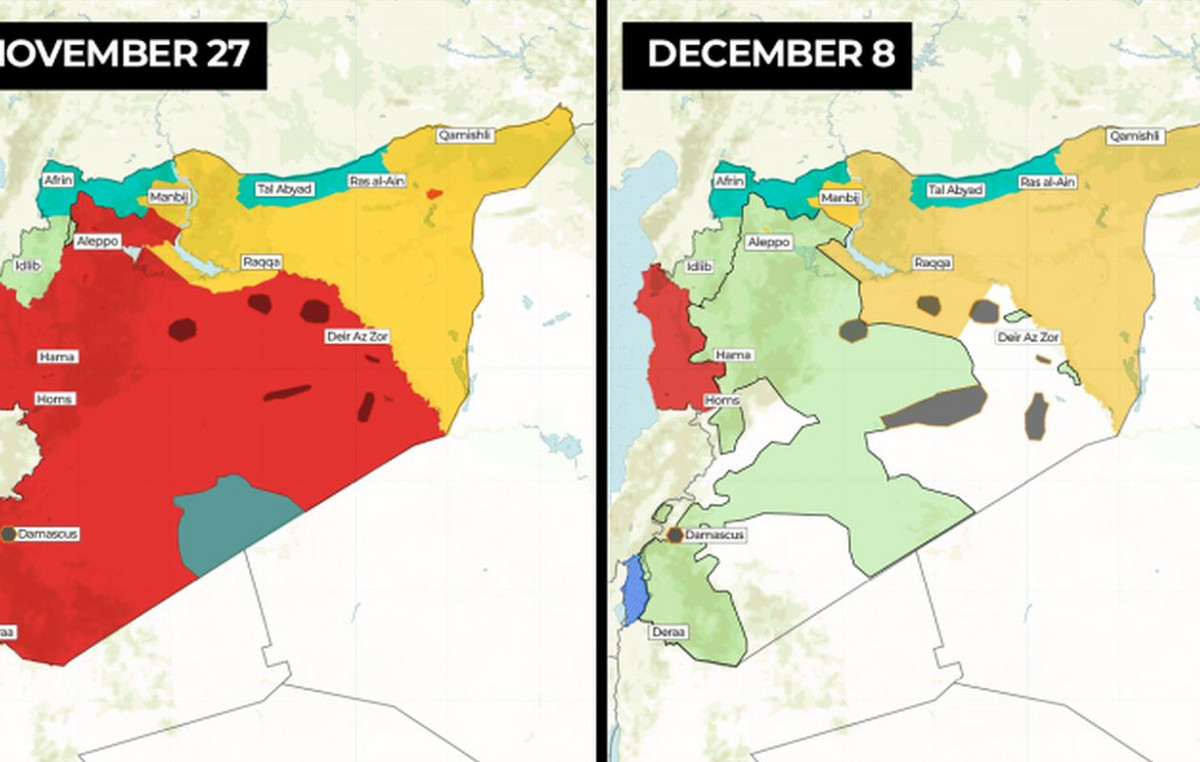
The hope for a "Two-State Solution" or a "Regional Security Architecture" currently feels like a relic from a different century. On the ground, the reality is one of fragmentation. The Middle East is being carved into zones of influence held together by checkpoints and militia loyalty. The central governments of Lebanon, Syria, Iraq, and Yemen are largely bystanders in their own sovereign territories.
The Irrelevance of Traditional Diplomacy
The UN and other international bodies have been relegated to the sidelines. The veto power at the Security Council has ensured that no meaningful collective action can be taken. Instead, we are seeing the return of "minilateralism"—small groups of states acting outside of traditional frameworks to protect their specific interests.
This leads to a chaotic environment where there are no "rules of the road." When there is no clear arbiter, the only thing that matters is raw power. This encourages every actor in the region to maximize their military capabilities, leading to an arms race that further destabilizes the area. The influx of Russian and Chinese influence in the wake of American struggles only adds more variables to an already unsolvable equation.
Moscow and Beijing are not looking to solve the Middle East's problems. They are looking to exploit the U.S. entanglement. For Russia, every American shell sent to the Middle East is one less shell sent to Ukraine. For China, the chaos proves their narrative that the U.S.-led global order is failing and that a new, more transactional "multipolar" world is necessary.
The conflict has moved beyond the borders of Gaza and the ideological battles of the past. It is now a systemic test of the West's ability to maintain its influence in a world that has learned how to fight back without ever meeting a superpower on a traditional battlefield. The map hasn't just been redrawn; the paper it was printed on is currently on fire.
The United States must decide if it is willing to engage in a generational struggle to maintain its position, or if it will accept a diminished role in a region that has historically been the graveyard of empires. There is no middle ground left. The "manageable" Middle East is gone, and in its place is a reality that demands either total commitment or a strategic retreat that will have consequences for the rest of the century.