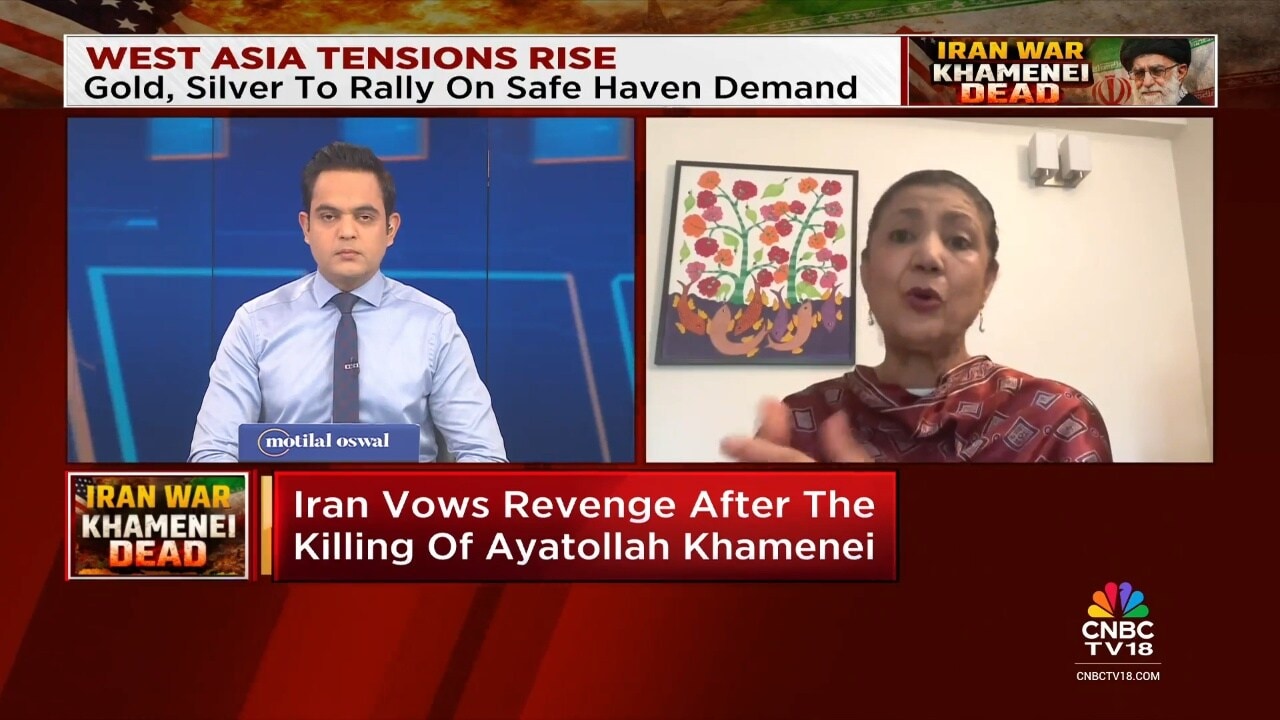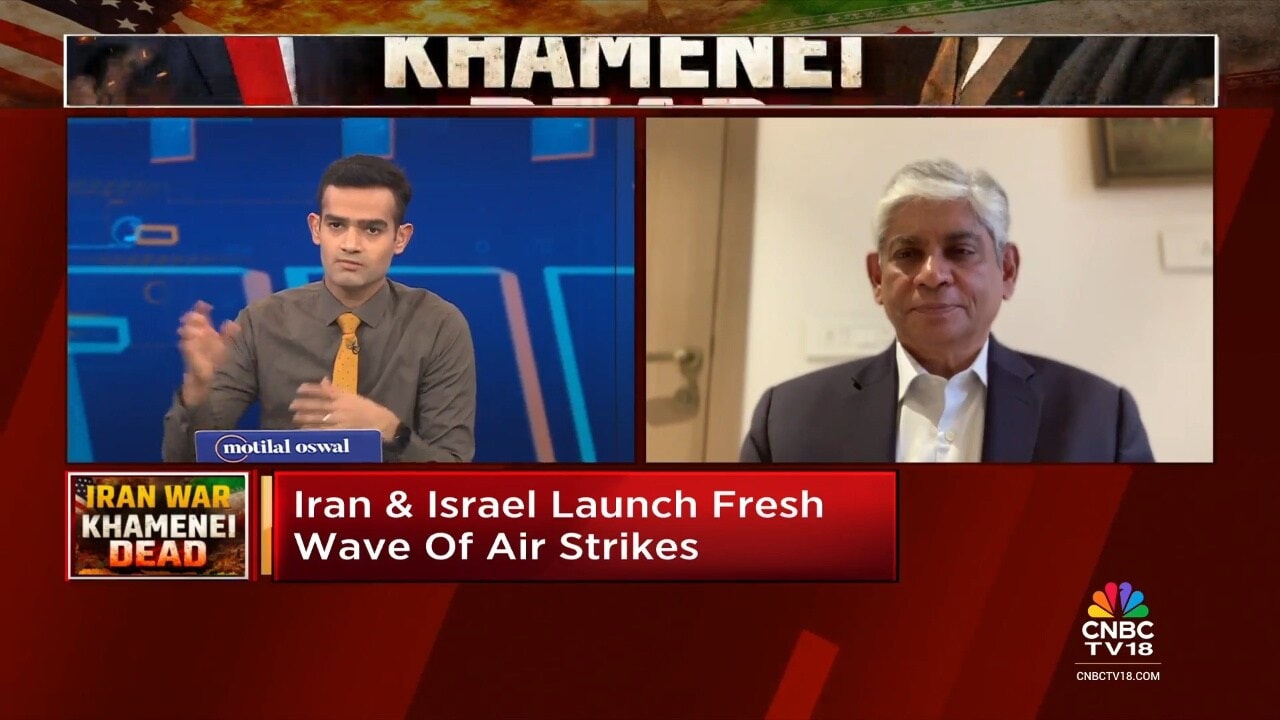
The pre-dawn silence over Isfahan didn’t just break; it evaporated. When the joint US-Israeli kinetic operations hit Iranian enrichment facilities and command nodes earlier this week, the technical objective was clear: degradation of immediate nuclear and conventional threats. However, the retaliatory missile barrage that followed—stretching from the Bekaa Valley to the outskirts of Erbil—reveals a terrifying shift in the mechanics of Middle Eastern warfare. We are no longer watching a shadow war. We are witnessing the failure of "containment" as a functional military doctrine.
While mainstream outlets focus on the flashes of light and the count of intercepted projectiles, the real story lies in the collapse of the redline system. For decades, the unspoken agreement between Washington, Jerusalem, and Tehran was built on a predictable ladder of escalation. You hit a proxy; we hit a supply line. You sabotage a ship; we hack a port. That ladder has been kicked away. By striking directly at Iranian soil with high-altitude precision munitions, the US and Israel have signaled that the "proxy buffer" is dead. Iran’s response—a saturation strike involving hundreds of ballistic missiles and loitering munitions—proves they are willing to burn the neighborhood to prove they can still reach the suburbs of Tel Aviv.
The Physics of Saturation
Military analysts often talk about "intercept ratios" as if they are sports statistics. This is a mistake. The recent barrage wasn’t designed to destroy specific buildings so much as it was designed to break the math of air defense.
When you launch 300 drones and missiles, you aren't just aiming at a runway. You are aiming at the inventory of the Iron Dome, David’s Sling, and the ship-borne SM-3 interceptors. Each interceptor costs between $50,000 and $2 million. The drones triggered to exhaust them cost less than a used sedan. This is asymmetric attrition.
The technical reality is that no defense system is 100% effective against a coordinated, multi-vector swarm. By launching from Yemen, Iraq, and Iran simultaneously, the Islamic Revolutionary Guard Corps (IRGC) forced the regional defense grid to look in three directions at once. This isn't just about explosions; it’s about data saturation. The radar arrays have to track, categorize, and prioritize thousands of signals in seconds. If the software glitches or the operator tires, a "dumb" missile gets through. One missile hitting a high-density civilian area or a chemical plant changes the political calculus of the entire hemisphere.
The Silicon Vein of Iranian Ordinance
There is a persistent myth that Iran’s missile program is a collection of "Scud" leftovers and duct-taped Soviet tech. That narrative is dangerously obsolete. The wreckage being analyzed in the wake of the latest strikes shows a sophisticated integration of global supply chains.
Despite decades of sanctions, the guidance systems in the Kheibar Shekan and the Fattah-1 hypersonic missiles rely on commercially available microelectronics. We are seeing high-speed integrated circuits and GPS-denied inertial navigation units that were never intended for military use.
- Commercial Off-the-Shelf (COTS) components: The brain of a modern suicide drone is often powered by the same chips found in high-end hobbyist drones or even smart appliances.
- Dual-use smuggling routes: Parts flow through third-party entities in Southeast Asia and Eastern Europe, making it nearly impossible to "choke off" the supply.
- Indigenization: Iran has moved from assembling kits to manufacturing the composite airframes and solid-fuel rocket motors themselves.
This means that even if the US-Israel strikes destroyed significant manufacturing capacity, the "blueprints" and the "know-how" are decentralized. You cannot bomb an engineering degree. You cannot kinetic-strike a clandestine procurement network that exists on encrypted Telegram channels and in shell companies in Dubai.
The Collapse of the Proxy Buffer
For years, the IRGC utilized the "Axis of Resistance" as a lightning rod. If Iran felt pressured, Hezbollah would fire rockets from Lebanon, or the Houthis would harass shipping in the Red Sea. This gave Tehran plausible deniability and a layer of physical insulation.
The recent strikes changed that. By bypassing the proxies and hitting the source, the US and Israel have effectively told the Iranian leadership that their "human shields" in Lebanon and Yemen no longer provide immunity.
However, the counter-logic is equally grim. If Iran feels that its proxies are no longer an effective shield, it has every incentive to accelerate its nuclear timeline. When conventional deterrence fails, the nuclear option moves from a "theoretical lever" to an "existential necessity." We are entering a phase where the Iranian leadership may decide that the only way to stop direct strikes on Isfahan or Tehran is to possess a weapon that makes such strikes unthinkable.
The Intelligence Gap and the "Invisible" Missiles
One of the most concerning aspects of the recent barrage was the sheer volume of mobile launchers. Traditional satellite surveillance is excellent at watching fixed silos. It is significantly less effective at tracking thousands of "TELs" (Transporter Erector Launchers) hidden in civilian tunnels, under highway overpasses, or inside nondescript warehouses.
The IRGC has spent the last decade building what they call "missile cities"—vast underground complexes carved into the mountains. These aren't just storage facilities; they are fully integrated launch pads. The intelligence community likely underestimated the speed of mobilization. The transition from "storage" to "launch" happened in a window far shorter than what was predicted in white papers five years ago.
This speed creates a "use it or lose it" mentality. If the US and Israel see movement, they have to strike immediately to prevent a launch. If Iran sees the US preparing a strike, they have to launch immediately to ensure their assets aren't destroyed on the ground. This is the definition of an unstable equilibrium.
Economic Aftershocks in the Strait
While the missiles fly over land, the real economic war is being fought at sea. The Strait of Hormuz remains the world’s most sensitive carotid artery for energy.
- Insurance Premiums: Even if no tankers are sunk, the mere threat of a missile barrage drives maritime insurance rates to levels that make shipping certain grades of crude unprofitable.
- Strategic Reserves: The US has been tapping the Strategic Petroleum Reserve (SPR) to stabilize prices, but that well isn't bottomless. A prolonged conflict means the global economy is one "lucky" missile strike away from a stagflationary shock.
- The China Factor: China is the primary buyer of Iranian oil. If the US-Israel strikes significantly cripple Iranian export capacity, Beijing loses a vital, non-Western-controlled energy source. This forces China to choose between its economic stability and its "no-limits" partnership with anti-Western blocks.
The Myth of Surgical Precision
We often hear the term "surgical strike" used to sanitize the reality of modern war. There is no such thing as a surgical strike when you are hitting a hardened target in a populated province.
Secondary explosions—where the target's own fuel or munitions ignite—frequently cause damage far beyond the intended radius. The environmental impact of striking enrichment facilities, even if the "core" isn't breached, involves the release of toxic chemicals and heavy metals. The local population in Isfahan isn't just dealing with the trauma of the blast; they are dealing with the long-term degradation of their living environment.
This collateral damage serves as a powerful recruitment tool. Every "precision" strike that shatters a civilian storefront or kills a non-combatant fuels the next twenty years of regional resentment. It creates a cycle where tactical success (destroying a radar dish) leads to strategic failure (radicalizing a new generation).
The Missing Diplomatic Exit
The most frightening part of the current escalation isn't the technology or the tactics. It’s the total absence of a "backchannel." During the Cold War, the Red Phone existed for a reason. There were established protocols to prevent a mistake from turning into an apocalypse.
Today, the communication between Washington and Tehran is filtered through the Swiss or the Qataris, a process that adds minutes—and sometimes hours—to a conversation that needs to happen in seconds. In the time it takes to relay a "stop" order through a third party, a battery commander in the desert might have already turned his key.
The US-Israel coalition is operating on the assumption that Iran can be "cowed" into submission through superior firepower. Tehran is operating on the assumption that "resistance" is the only way to survive a regime-change agenda. Both sides are reading from different books, and neither side is looking for the "off" switch.
The barrage we saw this week was a demonstration of capability, but more importantly, it was a demonstration of will. Iran is willing to risk a total war to maintain its regional standing. The US and Israel are willing to risk a regional firestorm to prevent a nuclear Iran. When two immovable objects meet with this much kinetic energy, the result is never a "win." It is a managed catastrophe.
If you want to understand the future of this conflict, stop looking at the maps of the strikes. Start looking at the inventory of the interceptors. The moment the defensive magazines run dry is the moment the map changes forever. Examine the procurement logs of the regional powers; they are buying for a decade-long war, not a weekend skirmish.