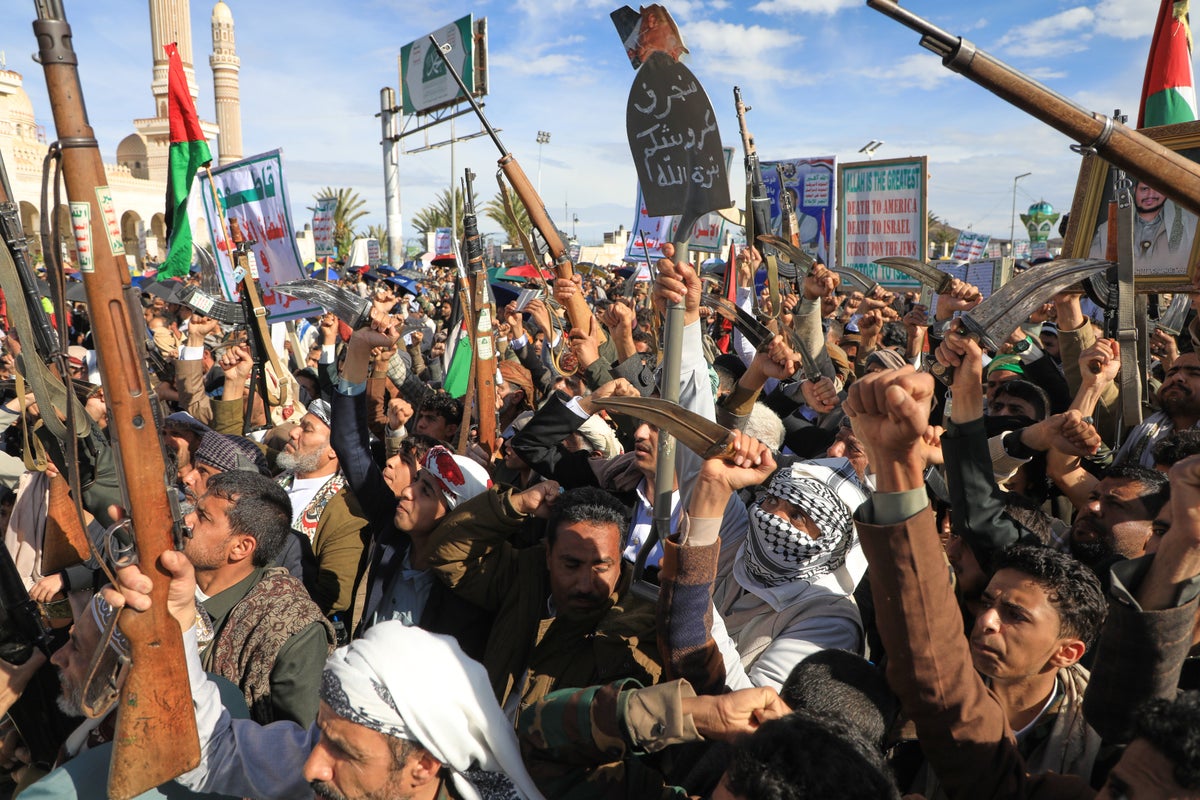
The arrival of a Houthi-launched ballistic missile in central Israel marks a definitive shift in the geography of Middle Eastern warfare. For months, the narrative surrounding the Ansar Allah movement in Yemen centered on maritime harassment—a nuisance to global shipping but a manageable one. That illusion vanished the moment air raid sirens echoed through Tel Aviv. The strike demonstrates that the "Ring of Fire" strategy orchestrated by Tehran is no longer a theoretical threat; it is a functioning, long-range reality.
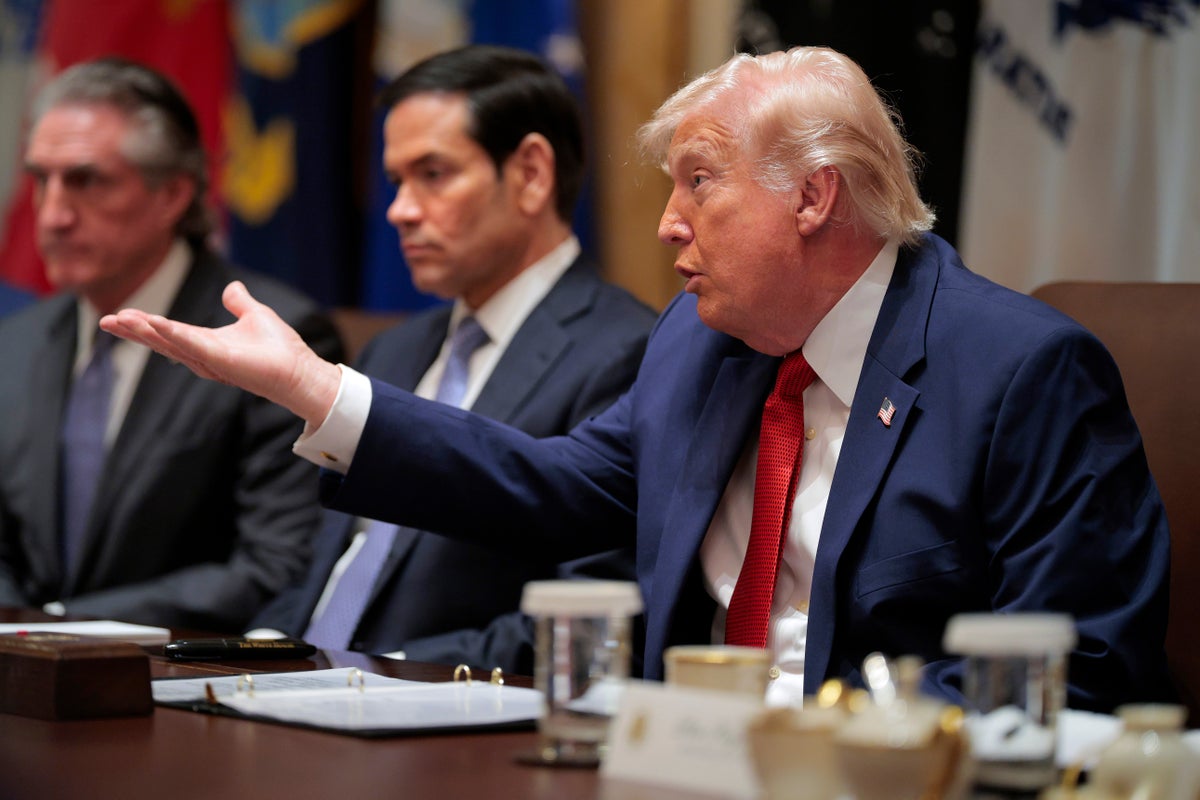
The Pentagon’s response, involving the deployment of additional U.S. troops and specialized hardware to the region, aims to project strength and deter a total regional collapse. However, this buildup brings its own set of dangers. Instead of cooling the situation, the presence of more boots on the ground provides a dense thicket of targets for Iranian-backed proxies. We are witnessing a collision between asymmetric insurgent tactics and traditional superpower projection, and the traditional playbook is failing.
The Technological Leap from Caves to Clouds
The missile that bypassed one of the world's most sophisticated air defense arrays was not a backyard firework. It was a sophisticated liquid-fueled projectile, likely a variant of the Iranian Ghadir or Khorramshahr, modified for the 2,000-kilometer journey from Yemen. This reveals a massive intelligence gap.
Western analysts previously characterized the Houthis as a ragtag militia. They are not. They have become a testing ground for advanced Iranian rocketry and drone technology. By firing into the heart of Israel, they proved they can navigate the complex electronic warfare and radar environments maintained by both the IDF and the U.S. Navy.
The "how" is found in the saturation of the battlespace. When the Houthis launch, they often use a mix of cheap suicide drones, cruise missiles, and ballistic projectiles. The goal is to force the Iron Dome, David’s Sling, and Arrow systems to make a choice. If the defense system targets the drone, the missile gets through. If it waits for the missile, the drone hits a power plant. It is a mathematical war of attrition where the interceptors cost millions and the threats cost thousands.
The Logic of Deployment
The United States is moving assets not because it wants a war in Yemen, but because it is terrified of a war in Lebanon. The deployment of thousands of troops, alongside carrier strike groups, serves as a massive, floating insurance policy. Washington is attempting to tell Hezbollah and Tehran that any attempt to escalate the northern front will meet the full weight of the American military.
But this strategy assumes the other side is thinking rationally. From the perspective of the Houthi leadership in Sana’a, U.S. intervention is a propaganda victory. It allows them to frame themselves as the sole defenders of regional interests against "Western imperialism." Every American soldier moved into the theater is another piece of leverage for the Houthi PR machine.
The Logistics of a Wider War
If the conflict expands, the logistics will be a nightmare. The Red Sea is a narrow corridor. U.S. ships are currently burning through munitions at a rate that the industrial base cannot easily replace. We are seeing the use of Standard Missile-2 and SM-6 interceptors—high-end assets designed to fight a peer-competitor like China—to swat down drones made of plywood and lawnmower engines.
The financial cost is staggering, but the strategic cost is higher. Every missile fired in the Red Sea is one less missile available for the Pacific or Eastern Europe. The Houthis know this. They are playing a game of global resource exhaustion.
Why Deterrence is Currently Dead
Deterrence only works if the target fears losing something. The Houthis have survived a decade of intense bombing by a Saudi-led coalition. Their infrastructure is decentralized, hidden in mountain tunnels, and integrated into civilian populations. There are no "silver bullet" targets left to hit that would force a surrender.
When the U.S. and UK carry out strikes on launch sites, they are playing a game of "whack-a-mole." The launchers are mobile. They can be fired from the back of a civilian truck and moved into a garage within minutes. The intelligence required to stop these launches in real-time is near-infinite, and the political will to conduct a full-scale ground invasion of Yemen is non-existent.
The Miscalculation of the Proxies
There is a persistent myth that the Houthis are merely puppets of Iran. While the technical support and funding come from Tehran, the Houthi leadership often acts on its own internal logic. They are driven by a domestic need to consolidate power and a religious ideology that views this conflict as a divine mandate.
This makes them more dangerous than a standard proxy. If Tehran asked them to stop today, they might not. They have tasted the prestige of being a global player. They have forced the world's most powerful navy into a defensive crouch. That is a hard drug to quit.
The Shadow of the 1970s
The current situation mirrors the instability of the late 20th century, where regional "brushfire wars" threatened to pull superpowers into a direct confrontation. The difference today is the speed of information and the proliferation of precision weaponry. In the past, a militia in Yemen couldn't touch a city in the Mediterranean. Now, they can do it with the push of a button.
The U.S. troop deployment is meant to be a stabilizing force, but history suggests that more foreign troops in the Middle East often lead to more friction, not less. We are looking at a scenario where a single stray missile hitting an American barracks or a crowded Israeli market could trigger a chain reaction of "retaliatory cycles" that no diplomat can stop.
The Economic Shrapnel
While the world watches the explosions, the global economy is feeling the pressure. Shipping rates are climbing as vessels take the long way around the Cape of Good Hope. This isn't just about higher prices for consumer electronics. It's about the security of the global supply chain.
If the Houthis can prove that the Red Sea is permanently closed to Western-aligned shipping, they have effectively redrawn the map of global trade. They have turned a geographic chokepoint into a political weapon. No amount of troop deployments can "fix" the fact that insurance companies are now wary of the Suez Canal.
Hardware vs. Willpower
The U.S. military has the best hardware in the world. Its soldiers are the best trained. But the Houthis have the advantage of time and geography. They are playing a home game. The U.S. is playing an away game with an increasingly distracted home crowd.
The effectiveness of the U.S. presence depends entirely on whether it is used as a shield or a sword. As a shield, it is expensive and porous. As a sword, it risks igniting the very "wider war" it was sent to prevent. There is no middle ground in a region that is currently defined by extremes.
The Inevitable Friction
As more U.S. personnel move into bases in the region, the risk of "accidental escalation" skyrockets. A drone from an Iraqi militia or a Houthi missile could easily hit a base, forcing a massive U.S. response. This is the nightmare scenario for the White House: being dragged into a multi-front war during an election cycle, all because of a conflict that started thousands of miles away.
The Houthi strike on Israel was a proof of concept. It proved that the geography of the Middle East has been flattened by technology. Distance no longer provides security. For the U.S. troops arriving in the theater, the mission is clear, but the exit strategy is non-existent. They are being dropped into a pressure cooker where the lid is already rattling.
The reality of 2026 is that the era of "contained" regional conflicts is over. When a missile is launched from the sands of Yemen, the shockwaves are felt in the halls of the Pentagon and the markets of London. The U.S. is not just deploying troops; it is deploying its remaining credibility as the guarantor of global order. If this buildup fails to stop the missiles, the world will know that the old era of superpower dominance has finally reached its expiration date.
The next move isn't on a chessboard; it's on a radar screen. Keep a close eye on the Mediterranean naval traffic over the next forty-eight hours.
.png?width=1200&auto=webp&trim=0%2C200%2C0%2C0)