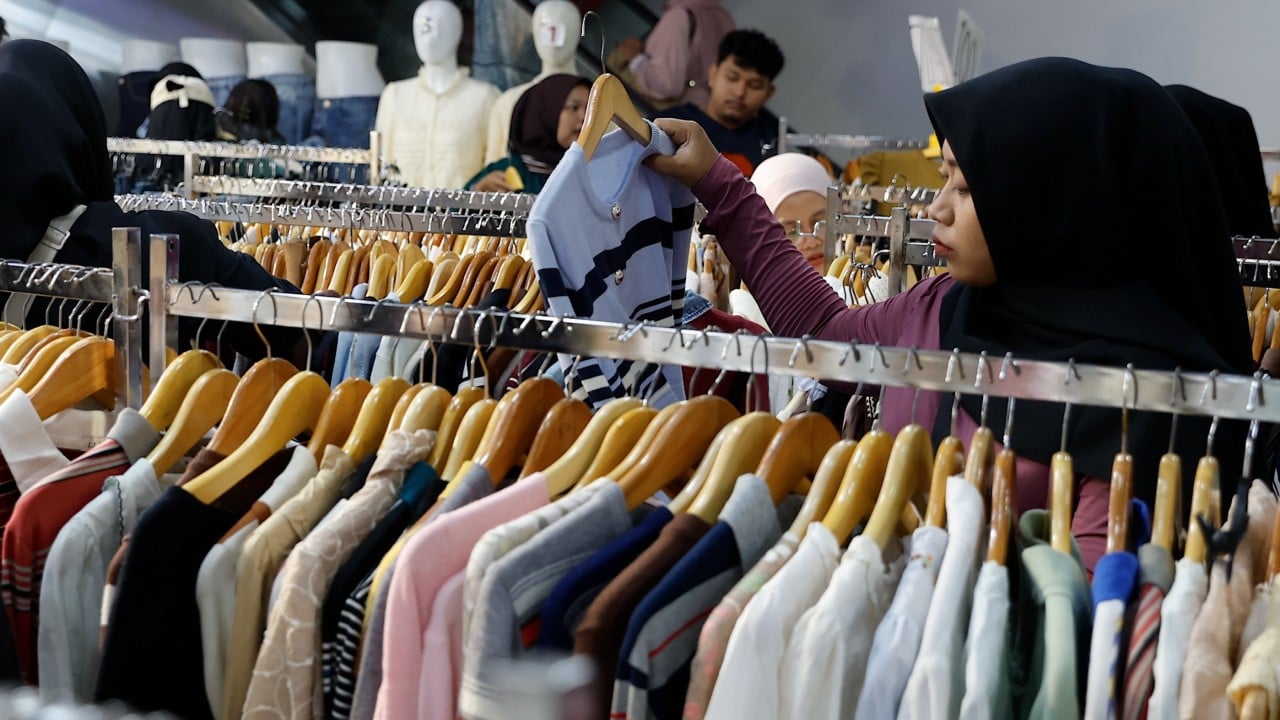
The morning ritual is usually mindless. You reach for the favorite cotton T-shirt, the one that’s survived forty washes and still feels like a second skin. You pull on those denim jeans that cost sixty dollars two years ago. You don't think about the Suez Canal. You don't think about the Bab el-Mandeb Strait, a narrow choke point between Yemen and Djibouti whose name translates, chillingly, to the "Gate of Tears."
But the Gate of Tears is starting to live up to its name. And soon, the price tag on that next T-shirt is going to make you blink.
Most of us view geopolitics as a distant thunder—a noise on the evening news that doesn't actually get us wet. We hear "War on Iran" or "Red Sea instability" and our brains categorize it under Tragedies That Happen Elsewhere. We assume the fallout is limited to oil prices or political speeches. We are wrong. The modern global supply chain is a nervous system, and right now, that system is screaming.
The Invisible Bridge
To understand why your wardrobe is about to get more expensive, you have to look at a map. Not the one from your high school geography book, but the one used by the giants of fast fashion and high-end retail.
Roughly 12% of all global trade passes through the Red Sea. For the garment industry, that percentage is a lifeline. Massive container ships, stacked high with colorful metal boxes, act as a bridge between the giant textile mills of Vietnam, Bangladesh, and China and the hungry ports of Europe and the American East Coast.
When a conflict involving Iran-backed factions heats up in this corridor, that bridge doesn't just shake. It closes.
Imagine a hypothetical logistics manager named Sarah. She works for a mid-sized clothing brand in Chicago. Her job is to ensure that the spring collection—the linen dresses, the lightweight hoodies—arrives in warehouses by March. For years, Sarah’s world was a clockwork of efficiency. A ship leaves Ho Chi Minh City, slips through the Indian Ocean, glides through the Red Sea, passes the Suez Canal, and hits the Atlantic. It takes about thirty days. It is cheap. It is predictable.
Then, the drones start flying. The missiles follow.
Suddenly, the shipping companies Sarah relies on—the Maersks and MSCs of the world—decide the Red Sea is a "no-go" zone. They aren't being dramatic. They are protecting multibillion-dollar assets and the lives of their crews. So, they pivot. They tell Sarah her "spring" collection is going to take a detour.
The Long Way Around
The detour isn't a slight turn. It is a massive, grueling journey around the Cape of Good Hope at the southern tip of Africa. It adds 3,500 nautical miles to the trip. It adds ten to fourteen days of pure, engine-burning travel.
Think about the math of a detour. A single large container ship can burn 150 tons of fuel a day. Adding two weeks to a journey doesn't just delay the clothes; it burns through millions of dollars in extra fuel, labor, and insurance premiums. Insurance is the silent killer here. When a region becomes a war zone, the cost to insure a vessel can jump from a negligible fee to 1% of the ship's total value. When the ship is carrying $100 million in cargo, that’s a million dollars gone before the anchor is even lifted.
Sarah sits at her desk and watches the spreadsheets turn red. The cost of shipping a single forty-foot container from Asia to the West has tripled in some cases. It used to be $1,500. Now it's $5,000.
Who pays for that? Not the shipping company. Not the brand’s board of directors, if they can help it.
You do.
The Fabric of War
There is a temptation to think this is just about shipping lanes. It isn't. The "War on Iran" is a phrase that encompasses a much broader, more volatile energy reality.
Polyester.
Most people don't realize that their favorite workout leggings and "moisture-wicking" shirts are essentially made of oil. Synthetic fibers account for over 60% of global fiber production. They are derived from petrochemicals. When tensions with Iran escalate, the oil markets panic. Crude prices spike.
Suddenly, it’s not just more expensive to move the clothes; it’s more expensive to make the fabric itself. The raw plastic pellets used to spin that polyester thread become a luxury commodity. The factory in Dhaka, which already operates on razor-thin margins, has to raise its prices just to keep the lights on.
This is the "compounding interest" of geopolitical strife. It’s a tax on the very fabric of our lives, hidden behind headlines about drone strikes and diplomatic sanctions.
The Empty Hanger
We live in a culture of "Just-in-Time" delivery. We expect the shelves to be full, the sizes to be available, and the sales to be frequent. But that model relies on a world that is quiet. It relies on the assumption that a narrow strip of water in the Middle East will always be open for business.
When that assumption fails, we see the "Bullwhip Effect."
A small disturbance at the start of the chain—a ship slowing down to avoid a missile—creates a massive wave by the time it reaches the consumer. Retailers, fearing they won’t have enough stock, start over-ordering. This clogs up the ports that are open. The delay grows from two weeks to four.
By the time the linen dresses arrive in Chicago, it’s no longer spring. It’s summer. The retailer has to mark them down immediately to move them, but they’ve paid double the shipping costs to get them there. To make up for the loss, they raise the base price of the next season’s items.
The $20 T-shirt becomes $28. The $80 boots become $110.
It feels like inflation, but it’s actually the cost of a world on edge. It’s the price we pay for a globalized economy that is physically tethered to some of the most unstable geography on Earth.
The Human Weight
Behind every price hike is a series of human choices. There is the sailor in the Red Sea, checking the radar for incoming threats, wondering if his ship is the next target. There is the garment worker in Vietnam whose factory might see hours cut because the orders are slowing down due to high shipping costs.
And then there is you.
You stand in the department store, looking at a price tag that seems "off." You feel that slight pinch in your wallet, that subtle erosion of your purchasing power. You might blame the store. You might blame the economy. You might not even realize that the extra ten dollars you're paying is helping to fund the fuel for a ship currently rounding the stormy coast of South Africa because a sea 7,000 miles away has turned into a graveyard of logistics.
We like to think we can opt out of the chaos of the world. We like to think that what happens in the Strait of Hormuz stays in the Strait of Hormuz.
But our clothes tell a different story. They are woven from the threads of global stability, and right now, those threads are being pulled tight. Every time we zip up a jacket or button a shirt, we are wearing the consequences of a conflict we thought we could ignore.
The next time you look into your closet, realize it isn't just full of fabric. It's full of history, risk, and the silent, rising cost of a world that has forgotten how to be still.
The Ghost in your closet isn't a person; it’s the realization that there is no such thing as a "distant" war anymore. We all pay for the fire, even if we are standing miles away from the flames.