A heavy silence sits in the corridors of power in Tehran. It isn’t the silence of peace, but the calculated quiet of a grandmaster staring at a chessboard that has suddenly grown new, unfamiliar pieces. For decades, the back-and-forth between the United States and Iran has followed a predictable, if violent, rhythm. There were channels. There were known quantities. But as the political tides in Washington shift toward a new administration, the Iranian leadership is making a choice that reveals more about their internal anxieties than any official press release ever could.
They are looking for a specific kind of listener.
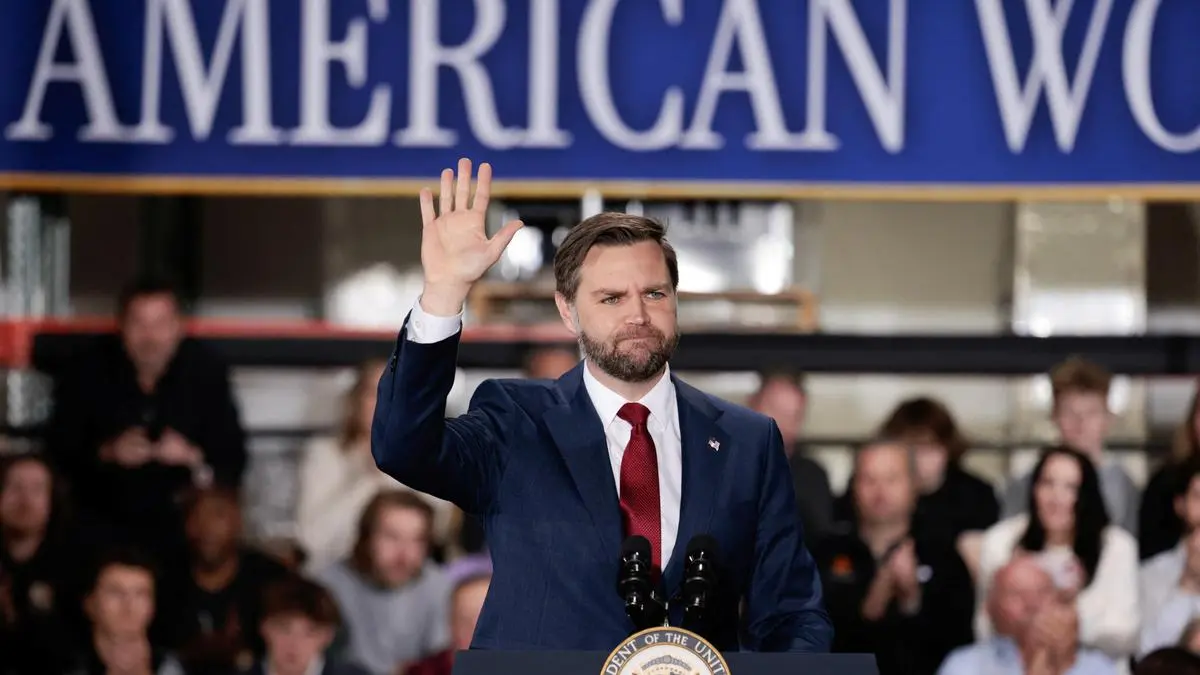
Reports have begun to surface that Tehran has sent a quiet, firm signal to the incoming American leadership. They don’t want the deal-makers of the past. They aren’t interested in the familiar faces of the real estate moguls or the loyal family confidants who defined the first Trump era. Specifically, they have signaled a preference to engage with JD Vance, bypassing figures like Jared Kushner or Steve Witkoff.
This isn’t just a preference for a different personality. It is a fundamental shift in how a revolutionary state views the mechanics of American power.
The Architect and the Ideologue
To understand why Iran would pivot toward Vance, you have to look at what they are running away from. Jared Kushner represents a specific brand of diplomacy: the transactional. In the first Trump term, Kushner was the architect of the Abraham Accords. His approach was built on the belief that everyone has a price, that regional stability can be bought with investment, and that historical grievances can be paved over with high-rise hotels and sovereign wealth fund allocations.
To a Western business mind, this is logical. To an Iranian revolutionary, it is an insult.
The leadership in Tehran views themselves as the guardians of a theological and historical legacy. When they look at a "transactional" diplomat, they see someone who will never truly understand their core motivations. They see someone who will try to buy them off while simultaneously strengthening their regional rivals through business ties. Transactionalism is unpredictable. It changes with the market.
Then there is JD Vance.
Vance represents something different: the New Right. He is a man who has written and spoken extensively about the "forever wars" and the exhaustion of the American empire. To the strategists in Tehran, Vance is an ideologue, and paradoxically, ideologues are easier to talk to. They operate on a set of first principles.
If Vance’s first principle is "America First" in a literal, isolationist sense—a desire to disentangle the United States from the thorny, expensive, and blood-soaked knots of the Middle East—then Tehran sees a window. They aren't looking for a friend. They are looking for a neighbor who finally wants to mind his own business.
The Ghost in the Machine
Consider a hypothetical mid-level official in the Iranian Foreign Ministry. We’ll call him Ahmad. Ahmad has spent twenty years watching American policy flip-flop like a fish on a pier. He saw the JCPOA signed under Obama, shredded under Trump, and left in a coma under Biden. For Ahmad, the most dangerous thing in the world isn't an American enemy; it’s an American hobbyist.
Ahmad doesn't want to talk to a businessman who views the Middle East as a "project" to be completed. He wants to talk to someone who views the Middle East as a place the U.S. should simply leave.
Vance’s skepticism of foreign intervention is a siren song to the hardliners in Tehran. They believe that if they can convince the "Restraint" wing of the Republican party that Iran is not a direct threat to the American homeland, they can secure a sphere of influence that has been contested for forty years. They are betting that Vance cares more about the rust belt of Ohio than the oil fields of Basra.
It is a gamble on the soul of American conservatism.
The Risk of the Unknown
However, this preference for Vance reveals a profound Iranian misunderstanding of the man himself. Iranian intelligence often falls into the trap of believing that "anti-interventionist" means "passive."
It doesn't.
Vance’s brand of nationalism is rooted in a fierce protection of American interests. While he may be skeptical of nation-building, he has shown little patience for actors he perceives as actively harming American workers or security. The "human element" here is the friction between two different types of pride. Iranian pride is ancient, rooted in the soil and the mosque. Vance’s version of pride is populist, rooted in the factory floor and the sovereignty of the border.
If these two forces meet, they might find a common language of "realism." Or, they might find that their respective versions of "staying out of each other's way" are actually in direct conflict.
The exclusion of Steve Witkoff is equally telling. Witkoff, a real estate mogul and a close personal friend of the President-elect, represents the "inner circle" of loyalty. By signaling they want to bypass the inner circle in favor of the Constitutional successor, Iran is attempting to institutionalize the conversation. They are trying to move away from the "Palace Diplomacy" of the first Trump term, where everything felt like a personal favor or a personal grudge.
They want a state-to-state dialogue. They want gravity.
The Invisible Stakes
Why does this matter to a person in Peoria or Pittsburgh?
Because the choice of who sits across the table determines whether the next decade is defined by "The Great Reset" or "The Great Fire." If the U.S. engages through a transactional lens, we might see a superficial peace that collapses the moment a check bounces or a leader feels slighted. If we engage through the lens of the New Right realism, we are looking at a fundamental redrawing of the map.
We are talking about the possibility of the U.S. stepping back from its role as the regional policeman. This isn't a "game-changer"—it’s a tectonic shift. It means the security of global energy markets and the stability of the Mediterranean could suddenly rest on the shoulders of local powers who haven't played nice in centuries.
The Iranian preference for Vance is an admission that the old ways of lobbying and back-channel business deals are dead. They see the populist wave in the West and they are trying to surf it.
The Narrow Path
The danger in Tehran’s strategy is that they are projecting their own desires onto a man they barely know. They see a critic of the Iraq War and assume they see a partner. They see a critic of neoconservatism and assume they see a path to hegemony.
But the "human element" of JD Vance is his unpredictability. He is a man who transformed himself from a Silicon Valley venture capitalist into a champion of the working class. He is adaptable. He is sharp. And he is unlikely to be moved by the poetic grievances that Iranian diplomats have used to stall for time in the past.
The Iranians are tired of the "deal." They want a "doctrine."
They are betting that Vance has one.
As the sun sets over the Alborz mountains, the lamps stay on in the offices of the Supreme Leader. They are reading books. They are watching old interviews. They are trying to decipher the cadence of a voice from Middletown, Ohio, hoping it holds the key to a future where they are finally left alone to dominate their corner of the earth.
But they should be careful what they wish for. When you ask to speak to the person who wants to bring the soldiers home, you might find that he is also the person most willing to burn the bridge behind them.
The red phone is ringing. It’s not in a hotel suite or a boardroom. It’s in a quiet office where the maps on the wall are being redrawn, not for profit, but for a new, colder kind of reality.


