The quiet suburban streets of Florida provide a deceptive backdrop for a horror that plays out behind closed doors more often than the public wants to admit. When a mother discovers her son is a killer, the immediate narrative usually focuses on the shock. We see the tearful interviews and the neighbors expressing disbelief that a "typical" boy could harbor such darkness. But as an investigative journalist who has spent decades peeling back the layers of domestic tragedies, I know that "typical" is a mask. The true story isn't the confession itself. It is the systemic failure of intuition, the biological blindness of maternal love, and a mental health infrastructure that treats ticking time bombs like simple mood swings.
We are conditioned to believe that monsters look like monsters. They don’t. They look like the kid next door playing video games or the son who forgets to take the trash out. When that facade cracks and a confession follows, the question shouldn't be how a mother didn't know. The question is how society has failed to provide a framework for parents to identify and act on the subtle, non-violent precursors of psychopathy before a life is lost. Recently making news lately: Finland Is Not Keeping Calm And The West Is Misreading The Silence.
The Blindness of Blood
The biological bond between a parent and a child is more than just emotional. It is a neurological filter that actively screens out evidence of danger. Studies in behavioral psychology suggest that parents are the least likely people to objectively assess their children's mental state when that state involves antisocial or violent tendencies. This isn't negligence. It is a survival mechanism that keeps families together, even when one member is fundamentally broken.
In many of these Florida cases, the signs were there, tucked away in the corners of childhood. Cruelty to animals, a complete lack of remorse for small infractions, or a chilling ability to lie without a spike in heart rate. These are the building blocks. However, a mother doesn't see a burgeoning murderer. She sees a "difficult" child or a "sensitive" boy who hasn't found his place yet. We have a vocabulary for bad behavior that intentionally softens the edges of potential evil. Further insights on this are covered by Al Jazeera.
The disconnect occurs because we want to believe in the power of nurturing. We tell ourselves that enough love, enough patience, and enough "typical" upbringing can override a faulty brain. But neuroimaging shows that some individuals are born with a reduced amygdala or a prefrontal cortex that simply doesn't process empathy. You cannot hug the psychopathy out of someone. When a son confesses to a murder, the mother isn't just mourning the victim. She is mourning the realization that her love was never a shield against her son's nature.
A Failed Mental Health Filter
If the family can't see it, the system should. Yet, the American mental health system is designed for crisis management, not prevention. In Florida particularly, the "Baker Act" is used as a revolving door. A teenager shows signs of aggression or detachment, they are held for 72 hours, and then they are sent back to the same environment without a long-term strategy.
The industry lacks a middle ground for the "high-functioning" violent actor. These are the individuals who can pass a standard psychological evaluation because they understand the rules of social engagement. They know what the doctor wants to hear. They mimic the "typical" son perfectly. This leaves the parent in a terrifying vacuum where they feel something is wrong but have no clinical validation to back it up.
We see a pattern where parents reach out for help and are told their child is just going through a phase. Or worse, the parent is blamed for "strictness" or "lack of connection." This gaslighting of parental intuition creates a silence that allows a killer to grow in plain sight. When the confession finally comes, it isn't the first time the red flag was waved. It is just the first time someone was forced to look at it.
The Anatomy of the Confession
Why do they tell their mothers? It seems counterintuitive for a killer to go to the one person who represents the law and order of their childhood. But for many of these young men, the confession isn't an act of remorse. It is an act of possession. By telling the mother, the son binds her to his crime. He forces her to choose between the child she raised and the truth of what he has become.
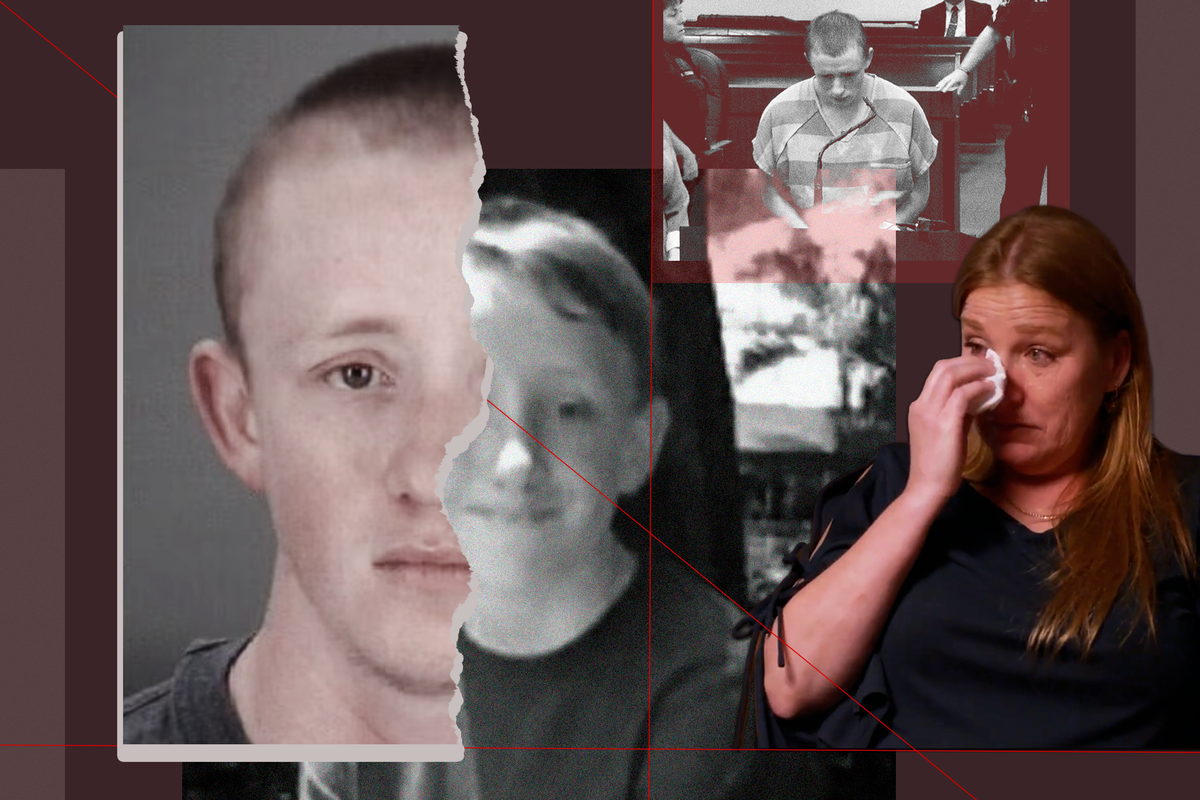
In the Florida case that captured headlines, the mother’s experience was a masterclass in psychological devastation. The confession wasn't a whisper. It was a shattering of reality. These moments often happen in the dead of night or during a mundane activity, highlighting the surreal nature of the transition from "son" to "murderer." The mother becomes an accidental accomplice to the secret before she even has time to process the horror.
This isn't just about one family. It’s about the vulnerability of the home as a sanctuary. When the threat is inside the house, there is nowhere to run. The legal system often treats these mothers with suspicion, questioning why they didn't report suspicions earlier. This ignore the profound psychological paralysis that occurs when you realize your own flesh and blood is a predator.
Beyond the Typical Narrative
The media loves a story about a "shattered family," but they rarely talk about the specific cultural pressures in places like Florida that contribute to these outcomes. There is a culture of rugged individualism and a "mind your own business" ethos that prevents neighbors from speaking up when they see a child spiraling. We prioritize the privacy of the nuclear family over the safety of the community.
If we want to stop these confessions from happening, we have to change how we talk about antisocial behavior in children. We need to stop using the word "typical" as a blanket for any kid who isn't currently in handcuffs. A typical child has a conscience. A typical child feels a weight when they hurt others. If those things are missing, it is a medical and social emergency.
We also have to equip parents with the tools to report their own children without the fear that they will be treated like criminals themselves. There needs to be a "pre-crisis" path that doesn't involve the police as the first point of contact, yet provides the level of security required for a potentially violent individual.
The Cost of Denial
The cost isn't just measured in the life of the victim. It is measured in the hollowed-out lives of the families left behind. The mother who hears a murder confession never truly sleeps again. She spends the rest of her life replaying every diaper change, every birthday party, and every conversation, looking for the moment she could have changed the trajectory.
But often, there is no such moment.
Some people are simply born without the internal brakes that prevent the rest of us from committing atrocities. When the biological bond meets a biological defect, the result is a tragedy that no amount of suburban normalcy can mask. The "typical" son was a ghost. The killer was the reality all along.
If you suspect someone in your home is capable of violence, stop looking for reasons to be wrong and start looking for the exit. The bond of blood is a powerful thing, but it is not a bulletproof vest. Trust the chill you feel when they look at you with eyes that don't match their smile. That is your instinct trying to save you from a confession you don't want to hear.

.webp?width=1200&auto=webp&trim=0%2C0%2C0%2C0)