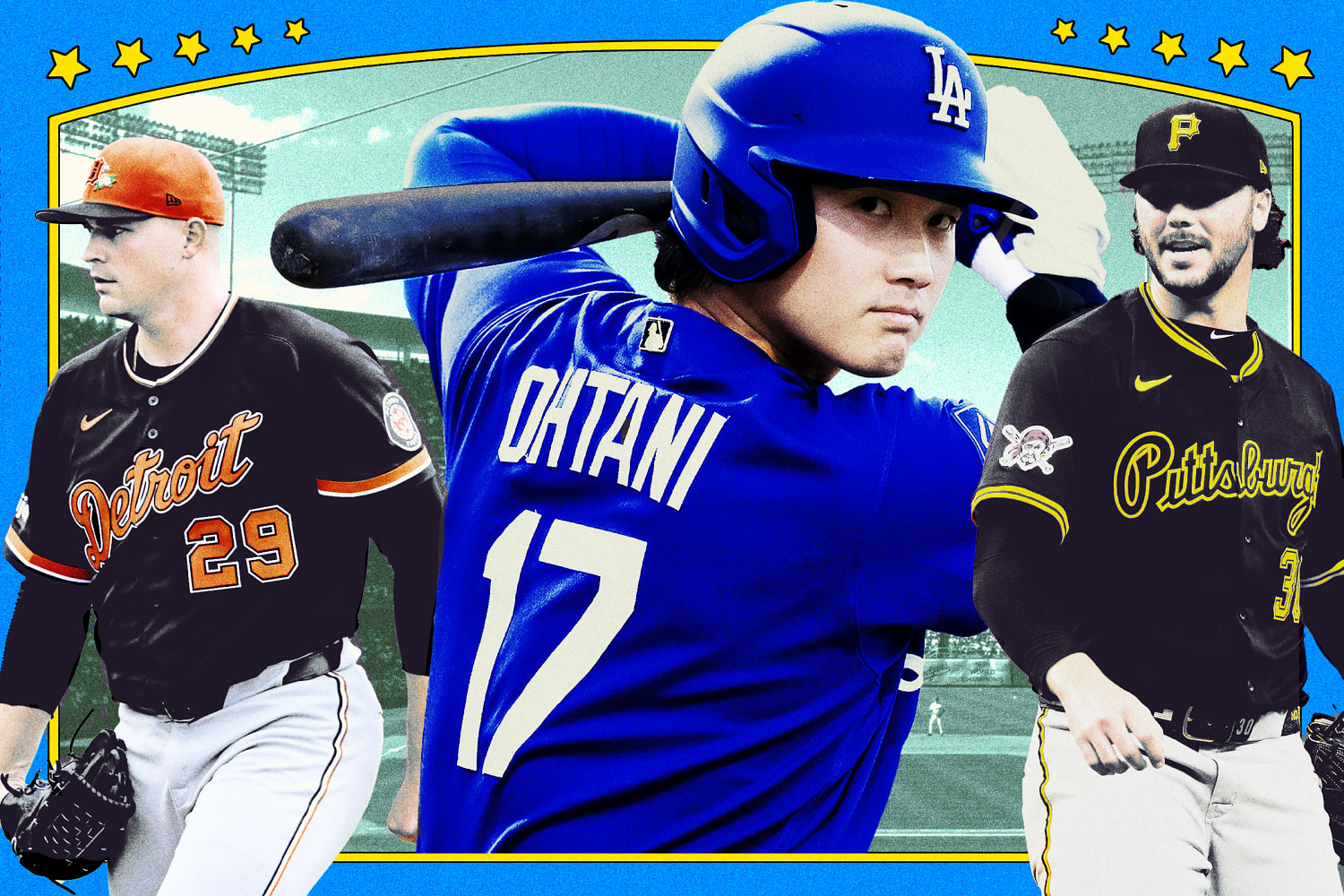
The air in Arizona during February doesn’t smell like baseball yet. It smells like damp fertilizer and the generic citrus of industrial-strength sunscreen. But if you stand close enough to the backfield fences at the Dodgers’ spring complex, you can hear it. It isn't the crack of the bat. Not yet. It’s a rhythmic, mechanical hum—the sound of a $700 million investment warming up its arm.
Shohei Ohtani doesn’t just walk onto a field. He shifts the local gravity. Meanwhile, you can find other developments here: The Dog Power Revolution On Colorado Slopes.
We have spent the winter talking about deferred payments and luxury tax thresholds until our eyes bled. We treated the greatest athlete on the planet like a line item in a corporate merger. But standing there, watching him unsheathe a bat, you realize the spreadsheet was a lie. The story of this season isn't about money. It’s about the terrifying, fragile pursuit of immortality. Ohtani is coming off a second major elbow surgery. He won’t pitch a single competitive inning this year. For any other human, that’s a tragedy. For him, it’s an invitation to see if he can become the most feared pure hitter since Barry Bonds.
The stakes are invisible until you see the scar on his ulnar collateral ligament. That thin line of tissue is the only thing standing between a dynastic era in Los Angeles and the most expensive cautionary tale in the history of North American sports. To understand the full picture, we recommend the detailed analysis by Sky Sports.
The Ghosts in the Bronx
Three thousand miles away, the pressure has a different scent. It smells like stale coffee and the weight of a 15-year drought.
Juan Soto is a New York Yankee now. Think about that. A man who treats the batter’s box like a private stage, dancing and shuffling as he stares down pitchers, is now wearing the same pinstripes as Ruth and Mantle. It’s a marriage of convenience that feels like a collision. Soto is entering the final year of his contract. He is a mercenary with a smile that masks a cold, calculating eye for the strike zone.
The Bronx is a place that eats "stars" for breakfast if they don't produce by May. If Soto and Aaron Judge don't become the modern-day version of the M&M Boys, the narrative won't be about their combined On-Base Percentage. It will be about the suffocating silence of a stadium that expects a parade every autumn and hasn't seen one since 2009. Imagine the tension in the ninth inning of an August night against Boston. The humidity is 90 percent. The bases are loaded. Soto is at the plate. That moment isn't a statistic. It’s a heartbeat. It’s the sound of 40,000 people holding their breath, wondering if the savior they traded their future for is actually real.
The Kids Who Don't Know How to Fear
While the giants settle their debts in the big markets, there is a vibrating energy coming from the desert and the coast. It’s the rookies.
Jackson Chourio is 20 years old. When most of us were 20, we were struggling to figure out how to do laundry or pass a mid-term. Chourio is carrying the weight of a $82 million contract before he has even seen a Major League curveball in the regular season. The Milwaukee Brewers didn't just bet on his talent; they bet on his composure. They are asking a kid who was born in 2004 to be the face of a franchise.
Then there’s Jackson Holliday.
If you closed your eyes and listened to the sound of his swing, you’d swear you were back in the 90s watching his father, Matt, punish baseballs in Colorado. But the younger Holliday has a twitchier, more electric presence. He is the crown jewel of an Baltimore Orioles system that has spent years in the basement, meticulously hoarding talent like a dragon guarding gold. The Orioles are no longer a "feel-good story." They are a threat. Watching Holliday take shortstop isn't just about watching a rookie; it’s about watching the final piece of a puzzle click into place. It’s the signal that the rebuild is over and the hunt has begun.
The 100-Mile-Per-Hour Question
In the middle of all this glamour, there is a darker, more frantic subtext to the season. It’s the arms.
We are living in an era where throwing 98 miles per hour is considered the baseline. Pitchers are pushing the human body past its structural limits every single night. The casualty list from last year reads like an All-Star roster. This season, the storyline isn't just who wins the Cy Young; it’s who survives until September.
Consider the plight of the pitcher in 2024. The pitch clock has stripped away their recovery time. The hitters are more disciplined. The analytics departments are demanding more spin, more velocity, more violence in every delivery. Every time a pitcher like Spencer Strider or Corbin Burnes lets go of the ball, they are flirting with a season-ending "pop." It’s a high-wire act performed without a net. We cheer for the triple-digit heat, but we rarely talk about the toll it takes on the shoulder blades and the elbows of the men providing the entertainment.
The South Side Heartbreak and the Texas Grit
If you want to understand the soul of the game, look at the places where the light isn't as bright.
The Chicago White Sox are staring into an abyss. After years of promised greatness, the floor fell out. Now, they are a team searching for an identity in a city that has run out of patience. Their season isn't about a trophy; it’s about dignity. It’s about whether a group of professionals can look each other in the eye in July when they’re 20 games back and still find a reason to play the right way.
Contrast that with the Texas Rangers. They reached the mountain top last year, but the air is thin up there. They are starting the season without their aces, waiting for Max Scherzer and Jacob deGrom to heal. They are the defending champions, but they feel like underdogs. That’s the beautiful cruelty of baseball. You can win it all on a Tuesday in November, and by Wednesday morning in April, you’re just another team trying to remember how to hit a slider.
The Invisible Stakes
We call it a game because that’s the easiest way to categorize it. But for the 26 men on a roster, it’s a grueling, 162-day psychological experiment.
It’s the quiet of the clubhouse after a loss in late May when the team is on a five-game slide. It’s the flight from Seattle to Tampa at 3:00 AM. It’s the rookie who gets sent down to Triple-A and has to call his parents to tell them the dream is on hold. These are the moments that the box scores miss.
This season is a collection of 2,430 individual dramas. It’s Ohtani trying to prove he’s worth the GDP of a small country. It’s the Orioles trying to prove that youth can outlast experience. It’s the veteran pitcher trying to find one more year of life in an arm that feels like it’s made of glass.
The dirt is being raked. The chalk lines are being laid down. The scouts are opening their notebooks, and the fans are buying their first overpriced beer of the spring. We think we know what’s going to happen. We think the Dodgers are inevitable or that the Braves are untouchable.
But baseball has a funny way of ignoring our scripts.
The real story will happen in the bottom of the seventh on a random Tuesday in August, when a kid no one has heard of hits a line drive off a pitcher who was supposed to be unhittable. That’s why we watch. Not for the facts, but for the moment the facts fail us.
The light is hitting the grass just right. The first pitch is coming. Everything else is just noise.