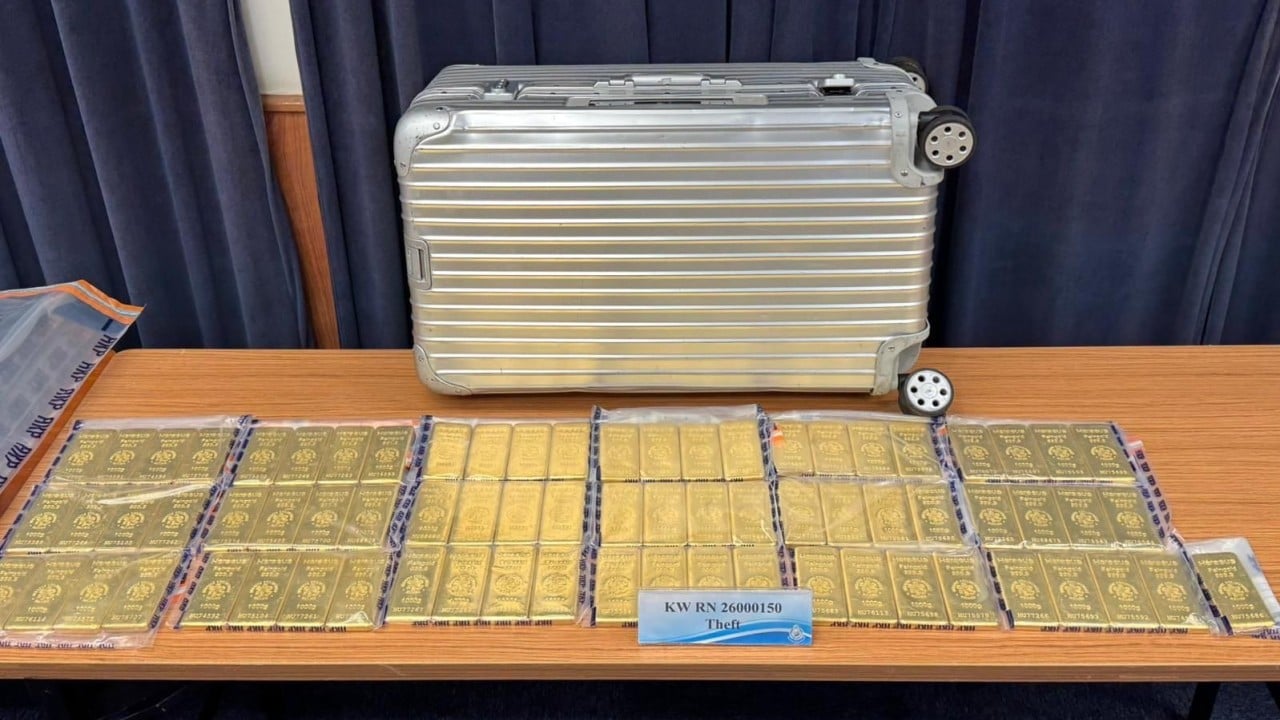
You’d think a HK$100 million gold heist would involve masked gunmen, high-speed chases, and Hollywood-style theatrics. But the reality of what just happened in Hung Hom is far more grounded—and honestly, a bit more calculated. On March 20, 2026, a group walked away with 73 kilograms of gold bars from an office in Peninsula Square. They didn't need a vault cracker. They just needed a good story and a convincing "buyer."
Hong Kong police have already rounded up five suspects and, in a rare win for high-value recovery, managed to claw back nearly every single bar. If you’re following the local crime beat, you know that recovering $12.7 million USD worth of physical bullion within 24 hours is almost unheard of. It suggests the perpetrators weren't exactly international masterminds.
The Illusion of a Legitimate Trade
The setup was classic. A staff member at a gold shop in Peninsula Square was preparing for what they thought was a standard high-value transaction. One man, acting as the buyer, showed up to inspect the goods. Because the "client" requested privacy—a common ask in the world of heavy metal trading—other staff members were asked to clear the room.
That’s when the "buyer’s" friends showed up.
Several men entered the unit, but they didn't pull out weapons. Instead, they claimed the company’s owner owed them a massive debt. They weren't "robbing" the place, they argued; they were simply "collecting." While the lone staff member was caught in the confusion of this supposed commercial dispute, the group packed 73 one-kilogram gold bars into suitcases and walked out.
A fifth accomplice was chilling outside as a lookout. They loaded the haul into two private cars and vanished into the Kowloon traffic.
Big Data vs. Old School Theft
The thieves made a fatal mistake. They underestimated how quickly the Kowloon West Regional Crime Unit can move when nine figures are on the line. Chief Inspector Alex Yau Yu-sing noted that investigators leaned heavily on "big data" and the city's extensive security camera network.
Within hours, the police were tracking the vehicles across districts. By the next day, they raided locations in Central and Tai Po. They didn't just find the suspects; they found the gold. All 73 kilograms.
Here is the breakdown of the arrests:
- Four men and one woman were taken into custody.
- The suspects are aged between 31 and 58.
- One individual is reportedly a former business partner of the shop.
This confirms what many suspected from the start. This wasn't a random hit. It was an inside job, or at least a dispute born from previous professional ties. When a "heist" involves people claiming they are owed money, you're usually looking at a messy business breakup rather than a professional criminal syndicate.
Why Gold Scams are Surging in 2026
You might wonder why anyone tries this in a city as surveilled as Hong Kong. Gold is currently hovering near record highs, making it a massive target for anyone with a grudge or a debt. But physical gold is incredibly heavy and hard to move.
Dragging 73kg of metal—about 160 pounds—through a commercial building and into a getaway car isn't subtle. The weight alone slows you down. If you're going to steal that much value, you'd think you'd have a better plan than "we're here to collect a debt" while cameras record your every move.
The police have been seeing a trend of "deception-based" thefts. Instead of smashing glass, criminals are using social engineering. They exploit the "privacy" and "discretion" that the gold industry prides itself on to isolate victims.
How to Protect Your Assets During a Handover
If you're in the business of moving high-value assets, this incident is a loud wake-up call. The "privacy" excuse is a security hole you could drive a truck through.
- Never Isolate Staff: The moment a client asks for "total privacy" that requires other security or staff to leave the room, your alarm bells should go off.
- Verify the Buyer: In this case, the buyer was an accomplice. Background checks aren't just for employees; they're for anyone you're handing $100 million to.
- Third-Party Escrow: For transactions of this scale, moving physical bars in a standard office building is a 1980s solution to a 2026 problem. Use secured vaults or professional transit services like Brink's or G4S.
The Hong Kong police deserve credit for the speed of this recovery. They've proven that while the methods of theft are evolving into these weird "pseudo-legal" debt collection scams, the city's tracking capabilities are still a step ahead.
If you are operating a business in Peninsula Square or any commercial hub in Hung Hom, it's time to audit your visitor logs and security protocols. Don't let a "business dispute" become a headline-grabbing heist.