Dnipro functions not as a passive sanctuary, but as the primary kinetic and logistical valve for the Ukrainian war effort. While Kyiv remains the political center of gravity and Lviv the western gateway, Dnipro serves as the high-pressure junction where civilian life, military logistics, and internal displacement converge into a singular, high-friction ecosystem. After four years of sustained conflict, the city has evolved from a regional industrial center into a sophisticated "rear-hub" model defined by three critical variables: logistical proximity to the Donbas front, the saturation of critical infrastructure, and the economic absorption of internally displaced persons (IDPs).
The Dual-Use Urban Framework
The stability of Dnipro is predicated on its capacity to maintain a functional civilian economy while simultaneously operating as a massive military throughput station. This creates a high-density environment where the distinction between "front" and "rear" is a matter of administrative designation rather than physical reality. The city’s survival hinges on a specific structural tension: it must remain "normal" enough to attract investment and retain its workforce, yet "militarized" enough to support 24-hour logistics for the eastern defense lines.
The Proximity-Response Loop
Dnipro sits approximately 100 to 150 kilometers from the most active combat zones. This distance is a deliberate strategic compromise. It is far enough to remain outside the range of most conventional tube artillery, yet close enough to serve as the "Golden Hour" medical destination.
The city’s medical infrastructure—specifically the Mechnikov Hospital—operates as the primary stabilization node for the entire eastern theater. This creates a unique urban metabolic rate. The city does not sleep because the flow of wounded and the rotation of units follow a rhythm dictated by front-line intensity rather than traditional business cycles.
Infrastructure as a Target Vector
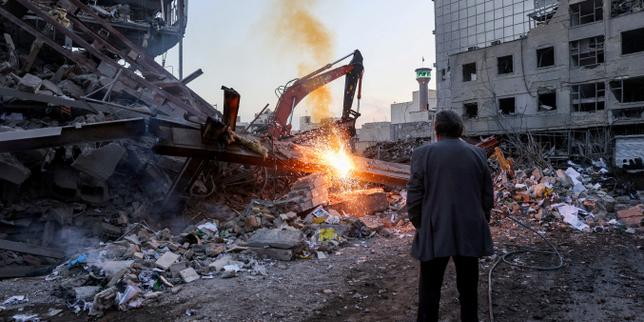
The city’s industrial legacy, once its economic engine, now serves as a primary vulnerability. The presence of the Pivdenmash aerospace plant and various metallurgical facilities transforms the urban center into a high-priority target for long-range precision munitions. This necessitates a decentralized approach to urban management.
- Energy Redundancy: The city has had to implement micro-grid strategies to prevent total collapse during strikes on the Dnipro Hydroelectric Station and associated thermal plants.
- Logistical Dispersion: Warehousing and troop staging are no longer centralized in large hubs but are distributed across the city's residential and commercial districts to minimize the impact of any single strike.
The Economics of Internal Displacement
Dnipro has absorbed more IDPs per capita than almost any other Ukrainian city. This demographic shift is not merely a humanitarian challenge; it is a fundamental restructuring of the city’s labor market and consumer base.
The IDP Absorption Function
The integration of hundreds of thousands of refugees from the Donbas and Zaporizhzhia regions follows a specific economic logic. Initially, these populations represent a drain on municipal resources. However, over a four-year horizon, they have become essential to the local economy.
- Labor Market Expansion: Many displaced persons bring specialized skills from the industrial East, filling gaps left by residents who have joined the military or fled abroad.
- Rental Market Distortion: The influx of military personnel with combat pay and IDPs with international aid or remote income has created a bifurcated housing market. Prices in Dnipro often rival those in Kyiv, despite the significantly higher risk profile.
- Entrepreneurial Resilience: Small businesses—cafes, repair shops, and tactical gear retailers—have sprouted to serve the specific needs of a transient, militarized population.
Social Stratification in the Rear
A visible friction exists between the "Old Residents," the "New Displaced," and the "Transient Military."
The "Old Residents" maintain the pre-war social fabric but face the highest psychological burden of witnessing their city transform. The "New Displaced" are often trapped in a state of permanent transience, unable to return home but not yet fully integrated. The "Transient Military" represent the city’s primary source of liquidity, driving the hospitality and retail sectors while remaining physically and emotionally detached from the city’s long-term future.
The Military-Civilian Feedback Loop
The presence of the military in Dnipro is not limited to checkpoints. It is an integrated feature of the city’s daily operations. This creates a feedback loop that accelerates innovation but also increases societal stress.
Tactical Procurement and the Volunteer Economy
Dnipro is the heart of Ukraine’s volunteer supply chain. Because of its proximity to the front, the city has become a laboratory for "jury-rigged" military technology.
- Drone Prototyping: Local engineering firms and hobbyist collectives utilize the city’s industrial base to assemble FPV (First-Person View) drones and electronic warfare (EW) components.
- Vehicle Modification: Hundreds of civilian garages have been repurposed into workshops for reinforcing pick-up trucks and repairing damaged armored vehicles.
This informal military-industrial complex operates largely on private donations and horizontal networks, bypassing traditional bureaucratic bottlenecks. It represents a decentralized model of defense production that is difficult for an adversary to target effectively.
The Psychological Cost of Proximity
Living in a city that serves as a military back-stop requires a specific type of cognitive dissonance. Residents dine in upscale restaurants while military ambulances pass every ten minutes. This environment produces "hyper-normalization," where high-intensity conflict becomes the background noise of civilian life.
The primary risk to this social contract is "exhaustion-induced apathy." When the state of emergency becomes permanent, civilian compliance with safety protocols (like air-raid sirens) diminishes. This behavioral shift increases the casualty rate of missile strikes, as the "crying wolf" effect takes hold in a population that has endured four years of alerts.
Logistical Bottlenecks and Strategic Risks
While Dnipro is currently stable, several structural bottlenecks threaten its role as the primary rear hub.
The Bridge Vulnerability
The city is bisected by the Dnipro River. Its bridges are the literal arteries of the war effort. Any significant degradation of these crossings would split the city in two, severing the connection between the industrial East bank and the administrative West bank. This would not only collapse local logistics but would also isolate the eastern front-line units from their primary supply nodes.
Resource Depletion
The city’s infrastructure was not designed for the current population density or the intensity of use.
- Sewage and Water Systems: The increased load from IDPs is straining Soviet-era piping, leading to frequent localized failures.
- Power Grid Volatility: The transition to a "rear-hub" model requires massive amounts of electricity for 24-hour workshops and military facilities, often at the expense of residential stability.
The "Front-Line Drift"
As the front line fluctuates, Dnipro’s status is constantly recalibrated. If the line of contact moves westward, the city transitions from a "rear hub" to a "front-line city." This shift would trigger a mass exodus of the very civilian labor and investment that currently sustains the military effort.
The resilience of Dnipro is therefore not an inherent quality but a function of the distance between the city center and the nearest Russian artillery battery.
The Strategic Playbook for Urban Resilience
To maintain Dnipro’s functionality as the war enters its fifth year, the focus must shift from reactive crisis management to proactive structural hardening.
- Decentralized Utility Production: Transitioning the city toward a modular energy model—utilizing industrial-scale solar arrays and gas-piston engines—to reduce dependency on centralized, vulnerable power stations.
- Hardened Social Infrastructure: Schools and hospitals must be moved into reinforced underground structures. The "Mechnikov Model" of medical care needs to be replicated in smaller, more dispersed facilities across the city to mitigate the risk of a single catastrophic strike.
- Formalizing the Volunteer Supply Chain: The state must provide legal frameworks and tax incentives for the "garage-industry" drone and repair shops. This would allow these entities to scale and integrate more effectively into the formal defense procurement system.
- Targeted IDP Housing Integration: Shifting from temporary shelters to permanent modular housing in the city’s outskirts will stabilize the labor force and reduce the inflationary pressure on the central rental market.
The survival of the Ukrainian defense in the East is inextricably linked to the operational efficiency of Dnipro. As long as the city can balance its role as a sanctuary and a forge, the logistical backbone of the front remains intact. The moment this balance tilts toward total militarization or systemic infrastructure collapse, the eastern front enters a state of terminal risk.