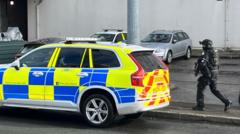
Police in Edinburgh don't usually see this level of daylight chaos, but a recent stabbing in the heart of the city has changed the conversation. Officers have officially charged a man following a violent incident that left bystanders shaken and a victim in the hospital. If you're living in the capital, you've likely noticed the shift in the atmosphere. It's not just "another news story" when it happens on a street you walk down to get your morning coffee.
The incident occurred in a busy residential and commercial pocket, sparking an immediate and massive emergency response. Local residents reported seeing a heavy police presence, with cordons quickly cutting off access to the public. For a city that prides itself on being a safe, walkable global destination, this kind of sharp-object violence hits different. It's a wake-up call for local authorities and a terrifying moment for those involved.
What we know about the Edinburgh stabbing charges
A 31-year-old man is now facing the legal music. Following the attack, Police Scotland launched an intensive investigation that led to a swift arrest. He's expected to appear at Edinburgh Sheriff Court, where the specific details of the petition will be laid out. Sources indicate the victim, a 24-year-old male, suffered serious but non-life-threatening injuries. He was rushed to the Royal Infirmary of Edinburgh, a facility that has unfortunately seen an uptick in these types of admissions lately.
The area stayed locked down for hours. Forensic teams in white suits combed the pavement, looking for anything—a discarded weapon, blood patterns, or even a stray piece of clothing. It’s a clinical, slow process that frustrates drivers and locals, but it’s the only way to make a charge stick in a Scottish court.
Why street safety in Scotland is becoming a political flashpoint
You can't talk about this arrest without looking at the bigger picture. Knife crime in Scotland is a weirdly polarizing topic. For years, the "Glasgow Model" of treating violence as a public health issue was hailed as a global gold standard. It worked. Numbers dropped. But lately, the trend feels like it's reversing.
People are worried. Whether it's the cost-of-living crisis pushing more people toward desperation or a simple lack of visible policing, the vibe on the street has sharpened. The Scottish Government’s latest justice statistics show that while overall crime is historically low, "non-sexual crimes of violence" have seen uncomfortable spikes in specific urban corridors.
The immediate impact on the Leith and City Centre corridor
When an arrest happens after a stabbing, the police often use the phrase "isolated incident." They say it to calm people down. Sometimes it's true. Other times, it feels like a convenient way to avoid talking about gang friction or the drug trade that bubbles under the surface of Edinburgh’s posh exterior.
In this case, the police were quick to reassure the public that there was no ongoing threat. That’s standard. But for the businesses near the cordon, the damage is done. A whole afternoon of trade lost, replaced by the sight of yellow "Police Line Do Not Cross" tape. It creates a lingering sense of unease that doesn't just vanish once the tape is rolled up and the sirens fade.
Breaking down the legal process in Edinburgh Sheriff Court
If you aren't familiar with the Scottish legal system, here’s how this goes down for the accused. He’ll likely be brought from custody to the court on Chamber Street. At the first hearing, he’ll be "committed for further examination." He can apply for bail, but in cases involving serious violence and weapons, the Crown often opposes it—especially if there's a risk of reoffending or witness intimidation.
- The Petition Stage: This is the initial appearance where the charges are read.
- The Full Committal: Happens about eight days later.
- The Trial: Depending on the complexity, this could be months away.
How to stay informed and stay safe
Living in a city means accepting a certain level of unpredictability. However, you shouldn't have to look over your shoulder every time you turn a corner. If you witnessed the incident or have dashcam footage from the area at the time of the attack, the police still want to hear from you. They often rely on "the public's eyes" to fill the gaps that CCTV misses.
Don't assume someone else already called it in. Small details—the color of a jacket, the direction someone ran, the way they held their arm—can be the difference between a conviction and a case being dropped for lack of evidence. You can contact Police Scotland via 101 or use Crimestoppers if you want to stay totally anonymous.
Check the local police social media feeds for cordoned-off areas before you head out for your commute. Most updates regarding road re-openings happen there first. Keep your wits about you in crowded areas, and if something feels off, it usually is. Trust your gut.