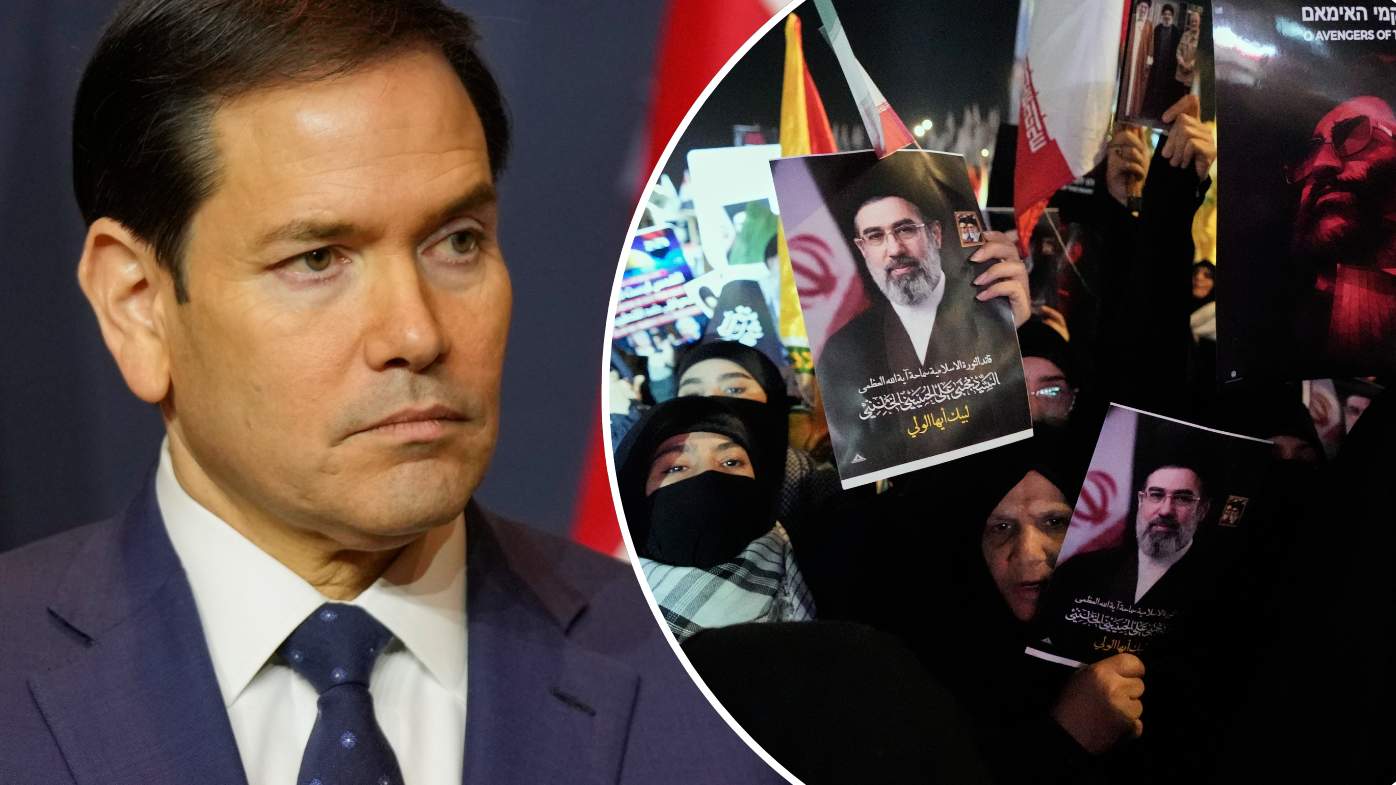
The smoke over the Persian Gulf is thick, but the rhetoric coming out of the West Wing is thicker. Today, the administration's top diplomat, Secretary of State Marco Rubio, echoed a sentiment that has become the unofficial slogan of the current conflict, characterizing the Iranian leadership as a collection of "idiots" who have effectively abdicated their right to govern. This isn't just a casual insult hurled across a digital fence. It is a calculated piece of the "Maximum Pressure 2.0" strategy designed to justify a war that has already seen 13,000 targets neutralized across the Iranian plateau.
The primary objective of the White House is no longer just containment or even the permanent dismantling of nuclear centrifuges. It is the total economic and physical seizure of Iranian assets. In a revealing exchange earlier today, President Trump made it clear that "taking the oil" is his preferred endgame, modeled after the long-term control of Venezuelan resources. This shift from diplomatic pressure to resource acquisition marks a fundamental change in how Washington views the Middle East. If you enjoyed this piece, you should check out: this related article.
The Mirage of a Vacuum
While the administration insists it is dealing with a "new and more reasonable" regime, the reality on the ground suggests a more chaotic transition. Military intelligence reports indicate that many of Iran's top-tier decision-makers are either dead or incapacitated following the waves of Operation Epic Fury. This has created a vacuum that is being filled by third-string bureaucrats and local commanders rather than a cohesive new government.
The danger of labeling an entire leadership class as "idiots" is that it ignores the surviving institutional memory of the Iranian state. If the goal is a stable, post-war Iran that can sign a binding peace treaty, you need someone on the other side of the table with the authority to make it stick. Currently, Washington is negotiating with shadows and ghosts, mediated by Pakistani envoys who are struggling to find a single person in Tehran who can actually speak for the nation. For another perspective on this development, check out the latest update from The New York Times.
The Cost of Seizing the Tap
Seizing Kharg Island, the terminal through which the vast majority of Iranian crude flows, is the administration's "favored thing," but it comes with a staggering price tag. Global energy markets have already reacted with predictable volatility. U.S. crude has surged by over 40 percent since the start of the year, and American drivers are feeling the pinch at the pump with prices climbing more than a dollar per gallon in less than a month.
The strategy assumes that the U.S. can simply step in and operate a foreign oil infrastructure while in the middle of a hot war. This is a massive gamble.
- Infrastructure Degradation: Months of bombing have likely damaged the very pipelines and refineries the U.S. hopes to control.
- Insurgency Risks: Holding oil fields requires a long-term boots-on-the-ground presence that the American public may not support as the "limited" operation drags on.
- Market Disruption: The closure of the Strait of Hormuz remains the ultimate trump card for what remains of the Iranian navy, regardless of how many "inactive mine-laying boats" the Pentagon claims to have sunk.
The Strategy of Forced Errors
The administration's approach relies on the belief that if you squeeze a regime hard enough, it will eventually commit a terminal mistake. By dismissing the Iranian leadership as incompetent, the State Department is betting that they won't be able to coordinate a meaningful counter-attack or manage their internal dissent.
However, there is a fine line between a regime that is failing and a regime that has nothing left to lose. The volunteer campaigns in Iran, which reportedly include children as young as 12, suggest a desperate but dangerous pivot toward total asymmetric warfare. This isn't the behavior of a leadership that is ready to hand over the keys to the oil fields; it’s the behavior of a Cornered entity.
The Congressional Pushback
Not everyone in Washington is buying the "idiot" narrative. A growing coalition in the Senate is demanding transparency regarding the lack of strategic foresight. The recent decision to ease sanctions on Russian and Iranian oil exports—a move that seems to contradict the "Maximum Pressure" mantra—has raised questions about whether the administration is scrambling to fix an energy crisis of its own making.
The memo from the Senate highlights a "troubling lack of planning" regarding the economic fallout. The administration was warned that the Strait of Hormuz would be closed. They were warned that oil prices would skyrocket. Now that these warnings have become reality, the White House is attempting to frame the war as an inevitable crusade against an incompetent foe to distract from the domestic economic pain.
The End of the Short War Myth
Operation Epic Fury was sold as a decisive, high-tech intervention that would "obliterate" threats and lead to a quick deal. Instead, we are entering a phase of grinding attrition. The U.S. has already hit 13,000 targets, yet the President admits there are "several thousand more" to go. The arrival of the USS Tripoli and the deployment of the 82nd Airborne Division signal that the "short war" is over and a prolonged occupation or containment phase has begun.
The "idiots" in Tehran may be disorganized, and their military may be in tatters, but they have succeeded in pulling the United States into another open-ended conflict in the Middle East. The administration’s focus on seizing oil assets suggests they are prepared for a long stay.
Victory in this context is no longer about a signed piece of paper or a handshake in a neutral capital. It is about whether the U.S. can maintain its own economic stability while attempting to rebuild a nation it has systematically dismantled. The real test isn't whether the Iranian leaders are incompetent; it's whether the American strategy is sustainable once the initial firestorm fades.
Stop looking for a signing ceremony on the deck of a carrier. This conflict has moved past the point of simple resolutions and into the territory of long-term resource management and regional policing. The administration has committed to a path where the only exit is a total transformation of the Iranian state, a task that has historically proven far more difficult than the initial bombing runs.