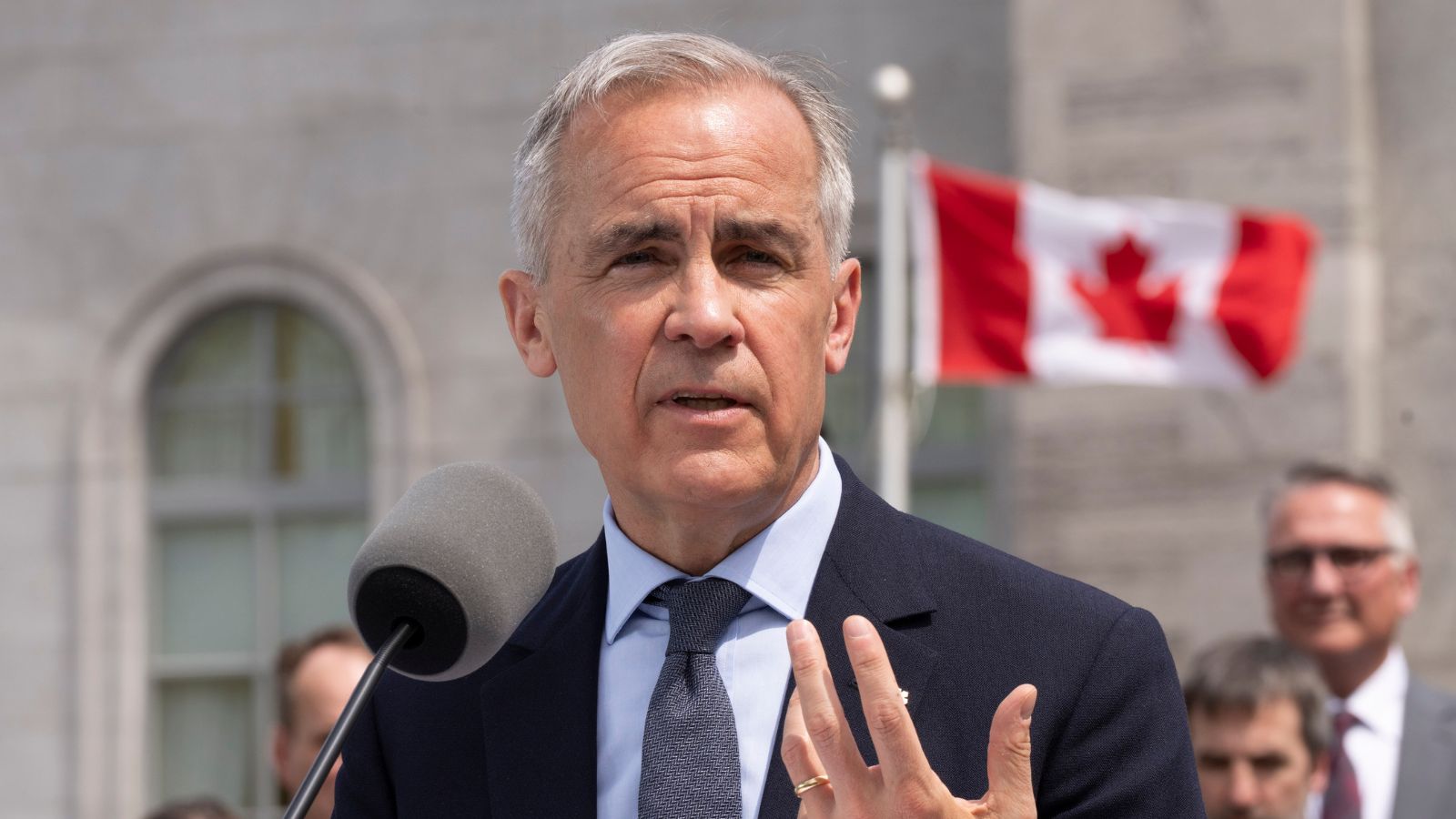
Mark Carney did not fly to Mumbai this week just to exchange pleasantries or sign the usual stack of hollow memorandums. The Canadian Prime Minister is in India because the walls are closing in on the traditional North American trade corridor. Faced with aggressive U.S. tariffs and a fracturing global order, Carney is attempting a high-stakes pivot toward New Delhi to secure Canada’s economic survival. His four-day mission, which moves from the boardrooms of Mumbai to the halls of power in New Delhi today, March 2, 2026, represents the most significant recalibration of Canadian foreign policy in a generation.
The timing is not accidental. Canada is currently locked in a punishing trade conflict with the United States, an "unprovoked" friction that has chilled domestic investment and forced Ottawa to look for exits. India, with its massive growth trajectory and appetite for critical minerals, offers the only exit ramp large enough to matter. But this is more than a simple trade mission. It is a desperate attempt to repair a relationship that was nearly destroyed by years of diplomatic malpractice.
The Cost of the Deep Freeze
For two years, the Canada-India relationship was effectively a corpse. The 2023 allegations surrounding the killing of a Sikh activist on Canadian soil triggered a spiral of expulsions and vitriol that froze trade negotiations and halted diplomatic cooperation. While Carney’s predecessor leaned into the confrontation, the current Prime Minister is playing a different game. He is a technocrat by trade and a banker by temperament. He knows that moral high grounds do not pay for healthcare or infrastructure.
The "Realpolitik" on display in Mumbai over the weekend was startling. Carney told a business audience that Canada is being "pragmatic," a coded admission that the values-first foreign policy of the past decade is being shelved in favor of national interest. This shift is driven by the reality that Canada needs India’s market more than India needs Canada’s friendship. With a population of 1.4 billion and a surging middle class, India is the world's fastest-growing major economy. Canada, meanwhile, is struggling to find buyers for its resources as its southern neighbor turns inward.
Breaking the 90 Percent Dependency
The "One Canadian Economy" strategy Carney championed during his rise to power is finally hitting the international stage. Currently, nearly 75% of Canada's exports go to a single market: the United States. In the current protectionist climate, that is not a partnership; it is a vulnerability.
Carney’s goal is to double non-U.S. exports over the next ten years. To achieve this, he is aggressively pursuing the Comprehensive Economic Partnership Agreement (CEPA) with India. If signed by the end of 2026, as Carney has publicly targeted, it could double bilateral trade to $50 billion by 2030.
What India Wants from Ottawa
- Critical Minerals: India needs lithium, potash, and uranium to fuel its green energy transition and high-tech manufacturing. Canada has them in abundance but has historically been slow to dig them out of the ground.
- Pension Fund Capital: Canadian pension funds already have over $100 billion invested in India. New Delhi wants more of that "patient capital" to flow into its massive infrastructure projects.
- Energy Security: As India seeks to diversify away from Middle Eastern oil and Russian coal, Canada’s LNG and nuclear expertise are back on the table.
What Canada Needs from New Delhi
- Market Access: Lower tariffs on Canadian agricultural products and processed goods.
- Talent Pipelines: A stabilized immigration and visa process that ensures a steady flow of high-skilled tech workers.
- Strategic Autonomy: A partner in the Indo-Pacific that allows Canada to stop being a "security passenger" of the United States.
The Elephant in the Room
Despite the smiles and the CEO forums, the ghost of 2023 still haunts the hallways of Hyderabad House. Foreign interference remains a live wire. When asked in Mumbai if India was still engaged in "foreign interference," Foreign Affairs Minister Anita Anand refused to answer. This silence is the price of admission.
Carney is betting that economic integration will eventually create a "security through prosperity" loop where both nations have too much to lose to engage in clandestine operations against one another. It is a gamble. If another diplomatic crisis erupts before the CEPA is inked, the window for Canada to diversify away from the U.S. might close for good.
The Middle Power Rebellion
The India trip is the first leg of a three-nation tour including Australia and Japan. Carney is attempting to build what he called at Davos earlier this year a "bridge between the middle powers." By aligning with other significant but non-superpower nations, Canada hopes to create a new trade bloc that can withstand the whims of the Great Power rivalry.
This isn't just about selling more lentils or lumber. It is about redefining Canada as an independent economic actor. For decades, Canada has operated as an appendage of the American machine. Carney’s visit to India is a public declaration that the machine is broken, and Canada is looking for a new engine.
The delegation-level talks today will likely focus on the boring but essential details of trade: rules of origin, digital services taxes, and professional certifications. These are the bricks and mortar of the "Strategic Partnership." While the headlines will focus on the handshakes, the real work is happening in the technical annexes where the two countries are trying to find a way to trust each other again.
Success here would mean a fundamental shift in Canada's economic DNA. Failure would mean returning to Ottawa with nothing but a photo op and a growing sense of isolation.
Would you like me to analyze the specific sectors within the CEPA that will see the most immediate tariff reductions?